


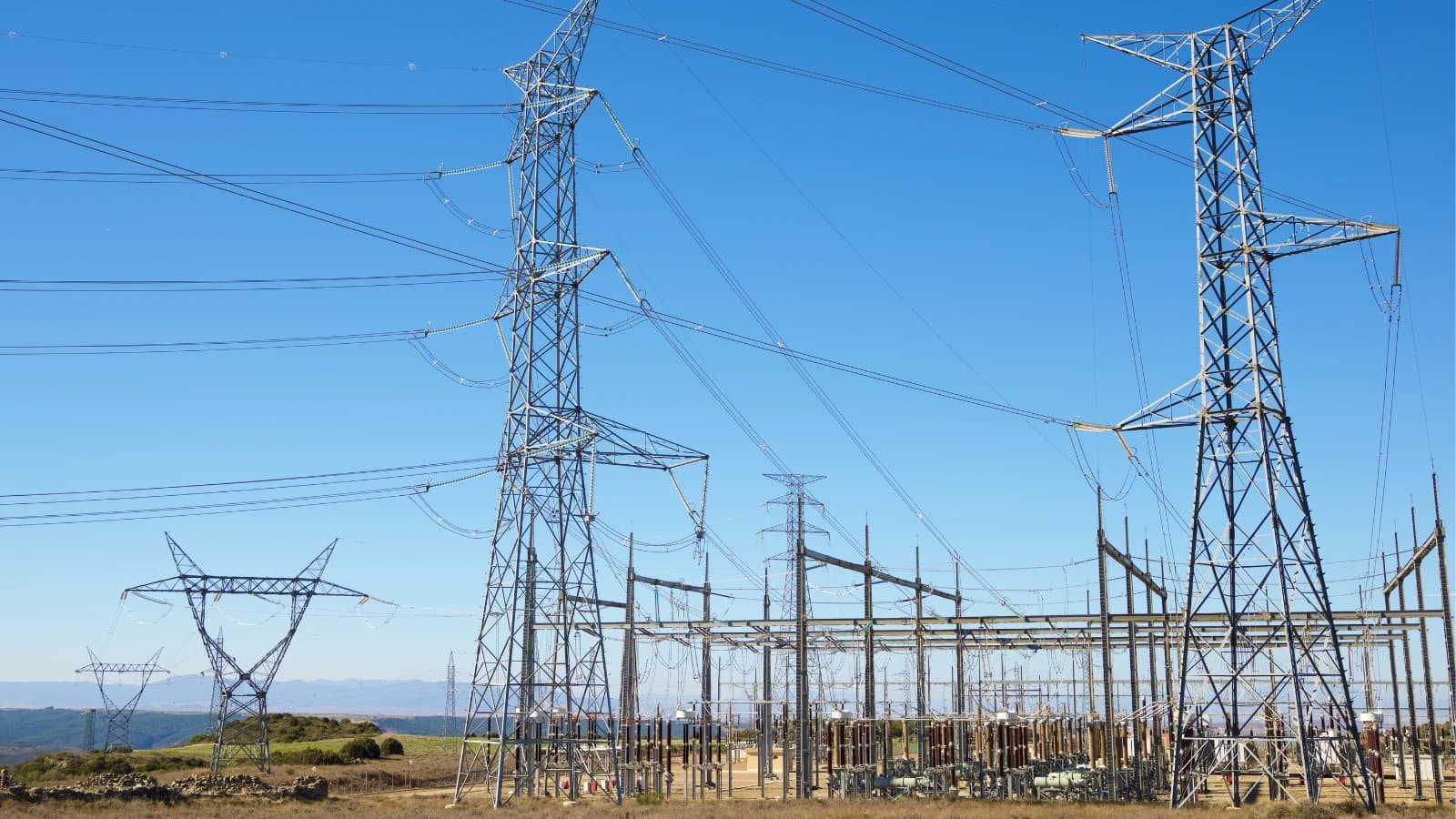
The latest update from Red Eléctrica resulted in a release of up to 12 GW of demand capacity in more than 60 nodes , mainly following the change in criteria that affected installations with power electronics and robustness requirements against voltage dips.
“In a market where the biggest opportunity, perhaps two months ago, was nothing, now suddenly very big opportunities have appeared,” summarizes Pablo Reinoso Lozano, Head of Regulatory Ops at Temos .
The data does not appear in isolation. Red Eléctrica updated its access capacity results for demand on July 1, 2026, within a framework in which the company itself defines this capacity as the maximum active power that can be supplied simultaneously at a node or area of the transmission network compatible with the technical evaluation criteria.
The move comes after Royal Decree-Law 18/2026 expressly repealed Article 13.6 of Royal Decree-Law 7/2026, a provision that had allowed the reservation of released capacity at certain nodes.

The origin: robustness, stress gaps, and a recalculation that changed the map
In February, Red Eléctrica had already warned that the results of the studies confirmed the need to ensure robustness requirements, especially for future demand installations connected via power electronics. It also anticipated that the evolution of these regulations would allow for a significant increase in the capacity available at many nodes limited by dynamic criteria.
Reinoso Lozano translates this into operational terms:
“The Spanish grid was very saturated on the demand side because it was heavily affected by large consumers and generators of power electronics. This meant that many nodes could not allow the connection of a single megawatt from industries, data centers, residential use, or anything else, due to the dynamic criteria of supporting voltage dips.”
The approval of more robust requirements for the facilities allowed for a recalculation of capacity. Initially, part of that capacity was affected by a regulatory reserve. Subsequently, with Royal Decree-Law 18/2026, the repeal of Article 13.6 of Royal Decree-Law 7/2026 lifted that specific restriction.
The result was a complete turnaround: knots that were closed to new demand reappeared with available margin .
Not every available MW becomes a project
The appeal of the number is obvious, but the risk lies in reading it as if it were automatically assignable capacity.
Temos warns that the first precaution is to look at the bankruptcy proceedings regime.
“Many opportunities have arisen, but they are likely to materialize in competitions that take a long time to resolve. The probability of quickly capitalizing on an opportunity is not going to be very high,” Reinoso Lozano points out.
The neck is not just electrical. It's also physical.
There may be available capacity at a substation, but not enough positions to connect all interested projects. In that case, the capacity data serves as an indication of opportunity, not a guarantee of connection.
Red Eléctrica had already indicated in February that only 25% of the nodes in the transmission network had capacity for new demand, while since 2022, 11.8 GW of access capacity for demand had been granted that were not yet in service.
Continue reading
According to Red Eléctrica, this pending volume is equivalent to a 25% increase in the country's current demand .
Therefore, the new capacity does not eliminate the strain on the network: it opens a more sophisticated race to detect where, when and under what conditions access can be requested .
What Temos does: convert regulatory noise into origination signals
That's where Temos' model comes in.
The Spanish company, founded by Xavier Riba Anglada and specializing in technological solutions for the development of energy projects, works on a specific thesis: in a market with high network saturation, constant regulatory changes and monthly official publications, the competitive advantage lies in anticipating the practical consequence of each new development .
“Our vision stems from the fact that there is a lot of noise, constant regulatory changes, and difficulty in keeping up with everything that is happening in real time. What we do is extract the insight, the consequence, or the necessary action so that our clients can stay ahead of the market,” explains Riba.
The current focus is on energy project developers, IPPs, infrastructure funds, and origination or development teams that need to identify nodes with real potential before the opportunity becomes evident to the entire market.
“ We help predict where new connectivity capabilities will emerge ,” Riba summarizes.
“ The idea is to get ahead of the official announcement with the missing piece. For those looking for an opportunity, when the opportunity arises, they'll already be prepared to be the first to apply ,” Reinoso Lozano maintains.
The race is now about performance, not just ability.
Red Eléctrica's monthly publication ceased to be a technical procedure and became a strategic input.
Capacity maps no longer just show where there is margin. They also reveal which nodes may be put out to tender, where capacity may appear after a regulatory change, which substations have available slots, and which projects may be blocked due to a lack of coordination between power, permits, and deadlines.
Red Eléctrica points out that its studies are based on scenarios from the final horizon of the current planning and that the granting of permits depends on compliance with criteria of safety, regularity, quality of supply and economic efficiency of the system.
In that context, the advantage lies not only in reading the published map, but in anticipating the next map.
For Temos, the 12 GW that have surfaced serve as a test case: the capacity did not appear by chance, but by a combination of technical criteria, regulatory robustness and regulatory derogations .
And that pattern can be repeated.
“We cross-reference all the new projects and regulations and say: at these nodes it is possible that demand capacity will be freed up, at these nodes it is possible that generation capacity will be freed up. This will happen here, this other thing will happen here,” Reinoso Lozano explains.