With nearly 3 GW of photovoltaic power supplied in Chile , Gonvarri Solar Steel projects a better 2027 than 2026 , despite the renewable energy curtailments facing the electrical grid. The company identifies growth opportunities through the hybridization of solar power plants with energy storage and the technical optimization of new developments.
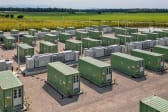
The expectation arises in a scenario of transformation of the Chilean market, where battery storage systems already exceed 5 GW in operation and testing and the National Electric Coordinator projects a decrease of 77% in the reductions of variable renewable generation during December 2026 , compared to the same month of the previous year.
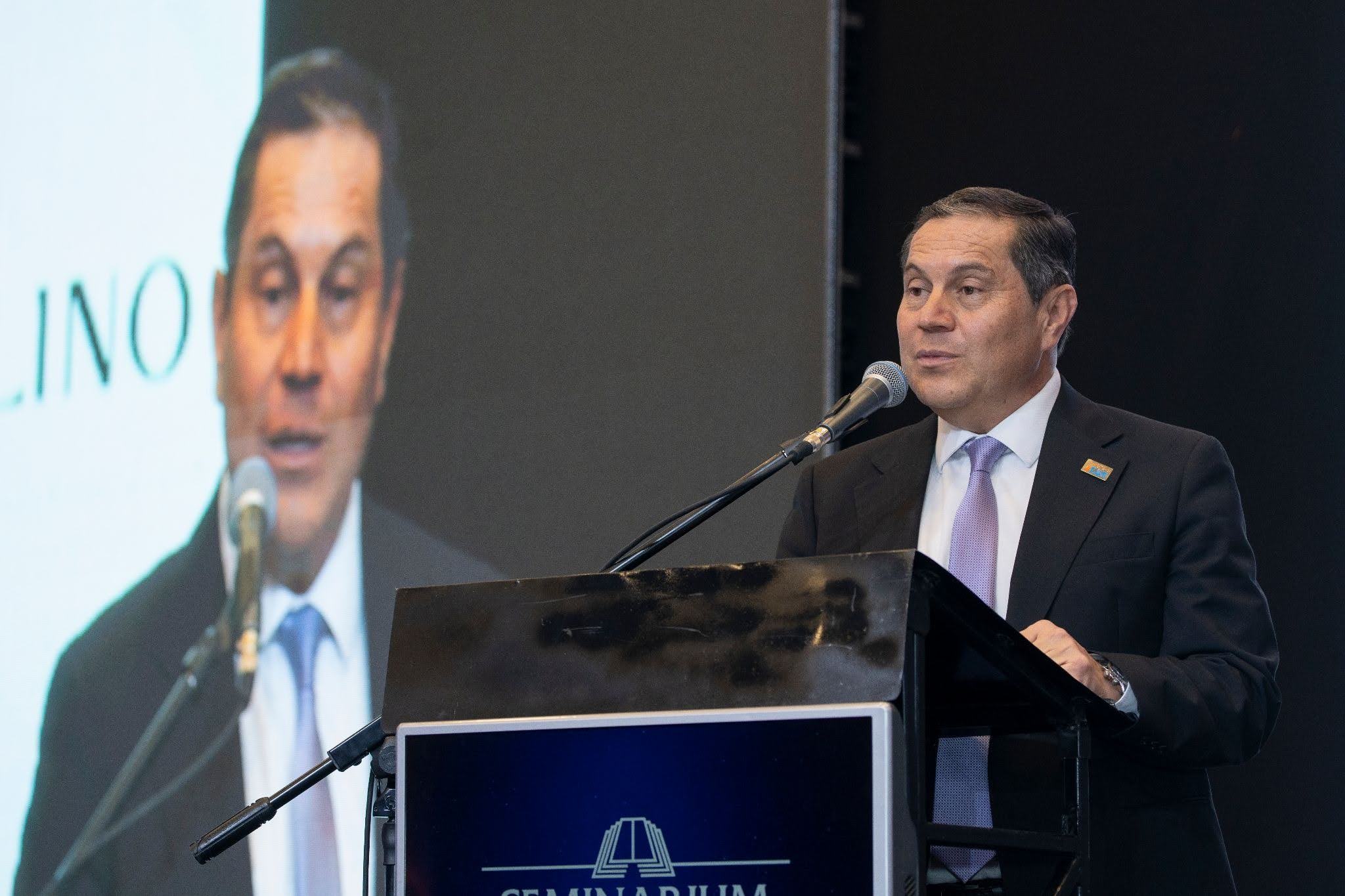
During an exclusive interview at the Future Energy Summit (FES) Chile 2026 , Fernando Micó Valdenebro , Renewable Business Manager at Gonvarri Solar Steel , highlighted that the evolution of the industry is changing both the investment conditions and the design criteria of photovoltaic installations.
“ We are very confident in 2027 and we are sure it will be better than this year, 2026 having been a success for us here ,” said Micó Valdenebro.

The outlook reflects the continued development of new, economically viable projects and the increasing integration of storage into investment decisions, a trend that the executive considers consolidated among industry players.
“ Photovoltaics without hybridization with batteries makes no sense ,” said the Solar Steel representative, referring to the conditions currently facing solar power generation in Chile.
In that context, the executive points out that Chile continues to be one of Solar Steel's main markets in Latin America, where the company has developed a commercial and technical track record with clients who maintain their activity in the country.
The company claims to have recorded a significant volume of deliveries during 2025 and 2026 , supported by business relationships with developers who repeatedly contract their solutions.
Micó Valdenebro also considers Solar Steel to be among the solar tracker manufacturers with the largest share in the Chilean market, although he does not provide a specific percentage of market share.
An example of its recent activity is the 389 MWp photovoltaic project in the Atacama Desert , located in the Antofagasta region, for which Solar Steel announced in September the supply of its TracSmarT+ 1P trackers.
As previously reported by Energía Estratégica , installation work was scheduled to begin in 2026 and continue through the first half of 2027. The plant also includes battery storage .
In addition, the company announced the independent certification, carried out by Enertis, of its solar trackers for hybrid applications with storage, in both alternating current and direct current configurations.
“ When a customer returns, it’s because they are happy with us and we have responded well ,” says Micó Valdenebro, referring to the new hires of developers with whom the company had already worked.
Energy storage redefines the Chilean photovoltaic market
The manufacturer's optimism coincides with a transformation in the operation of the electrical system. According to data from the National Electric Coordinator , as of July 2026, Chile had 5,005 MW of storage capacity in operation or testing , equivalent to 22,260 MWh of energy capacity .
Meanwhile, renewable energies accounted for 64% of the electricity generation accumulated during 2026 , while solar and wind sources accounted for nearly 40% of national production .
As we mentioned previously, the Coordinator's 12-month Operating Program indicates that reductions in variable renewable generation could decrease by 77% in December 2026 compared to December 2025 , under a scenario that considers compliance with the works plan and a PE90% hydrological condition.

Faced with this scenario, Micó Valdenebro identifies the main challenge as the need to improve the configuration of the power plants and adapt their operation to the new market conditions.
“ The big challenge now in Chile is to be able to move the energy during off-peak hours and to make the project as profitable as possible ,” the executive explained.
The Solar Steel representative believes that the penetration of batteries in Chile also offers lessons for other Latin American markets that are advancing in the incorporation of renewable generation.
In particular, the Chilean experience allows us to observe the importance of incorporating flexibility and energy management criteria during the development stages, especially in systems where photovoltaic expansion exceeds the generation absorption capacity at certain times.
The transformation also extends to the scheduling of the electrical system. The Coordinator already comprehensively models 51 storage systems , along with approximately 1,700 generating units, 235 busbars, and 327 transmission lines.
Continue reading
Added to this is the challenge of determining the opportunity cost of stored energy, considering that the discharge of a battery at a given time conditions its subsequent availability.
The technical changes with which Solar Steel seeks to face 2027
The manufacturer's adaptation to the new Chilean scenario is not limited to the growth of energy storage. The company also identifies relevant changes in power plant engineering, especially in the selection and configuration of solar trackers.
For Micó Valdenebro, one of the main achievements of 2026 is having adjusted the company's solutions to the current market conditions and the technical requirements of new developments.
“ We have been able to adapt from a design point of view to the new conditions of the Chilean market, which is not easy ,” said the Solar Steel representative.
The executive noted that optimizing earthworks is becoming increasingly important in park design, which requires reviewing traditional criteria for adapting trackers to terrain characteristics.
This evolution introduces new demands on project engineering, since decisions related to the configuration of structures and the suitability of the site affect construction costs.
“ Designing projects correctly is becoming increasingly important ,” emphasized Micó Valdenebro.
In a previous interview with Energía Estratégica, Cristhian Romero de la Cruz , Head of Business Development for Latin America at Solar Steel, noted that banks and investors are expanding their analyses to consider industrial reliability, execution history, and technical support from manufacturers.
The executive also identified photovoltaic projects exceeding 200 MW whose execution times can be around 18 months , which increases the importance of meeting supply commitments.
In this scenario, technical support during the design phase and the manufacturer's responsiveness become relevant for developers and investors seeking to reduce risks in assets with operational horizons of several decades.
Chile as a platform for regional growth
Solar Steel's commitment to the Chilean market is part of a Latin American strategy that also includes opportunities in Peru and Argentina , two countries where the company identifies possibilities for expansion.
The manufacturer has approximately 20 years of experience in solar tracking solutions and fixed structures and belongs to Gonvarri Industries , a Spanish industrial group with nearly seven decades of activity.
Its production capacity includes three factories dedicated to the solar sector , located in Spain, Turkey and Colombia, from which it supplies different markets.
In Latin America, Chile and Peru represent two of the main historical destinations for its supplies, while Argentina is beginning to play a more prominent role in its commercial strategy.
In the Peruvian case, Solar Steel has accumulated more than 1.2 GW supplied since 2012 , in a market where the company identifies growth prospects associated with new electricity tenders and the development of photovoltaic projects.
According to information from the Ministry of Energy and Mines of Peru released during 2026, the country had 13 solar power plants with definitive concessions , totaling 2402 MW , while the manufacturer identified a potential for incorporation of close to 1 GW of solar per year, subject to market conditions and the materialization of the projects.
In Argentina, Micó Valdenebro confirms that Solar Steel is already developing some operations linked to the renewable sector, although he does not specify committed capacities or specific projects.
However, Chile continues to occupy a central place in the company's expectations for 2027, both because of its commercial trajectory and the evolution of hybrid projects.
“ We continue to have great confidence in the Chilean market ,” the executive stated.
The manufacturer's confidence is based particularly on the incorporation of storage into investment strategies and on the continuity of initiatives that, according to their assessment, maintain profitable conditions.
“ We see that there is still room and that developers continue to present projects that are economically viable ,” concluded Micó Valdenebro.
In this way, Solar Steel projects a new year of growth in Chile after a 2026 that it describes as successful , while the photovoltaic industry adjusts its designs and business models to an electrical system in which storage, technical efficiency and the management of spills acquire an increasingly relevant role.
 By Emilia Lardizabal
 By Energía Estratégica
 By Matías Medinilla
 By Ailén Pedrotti