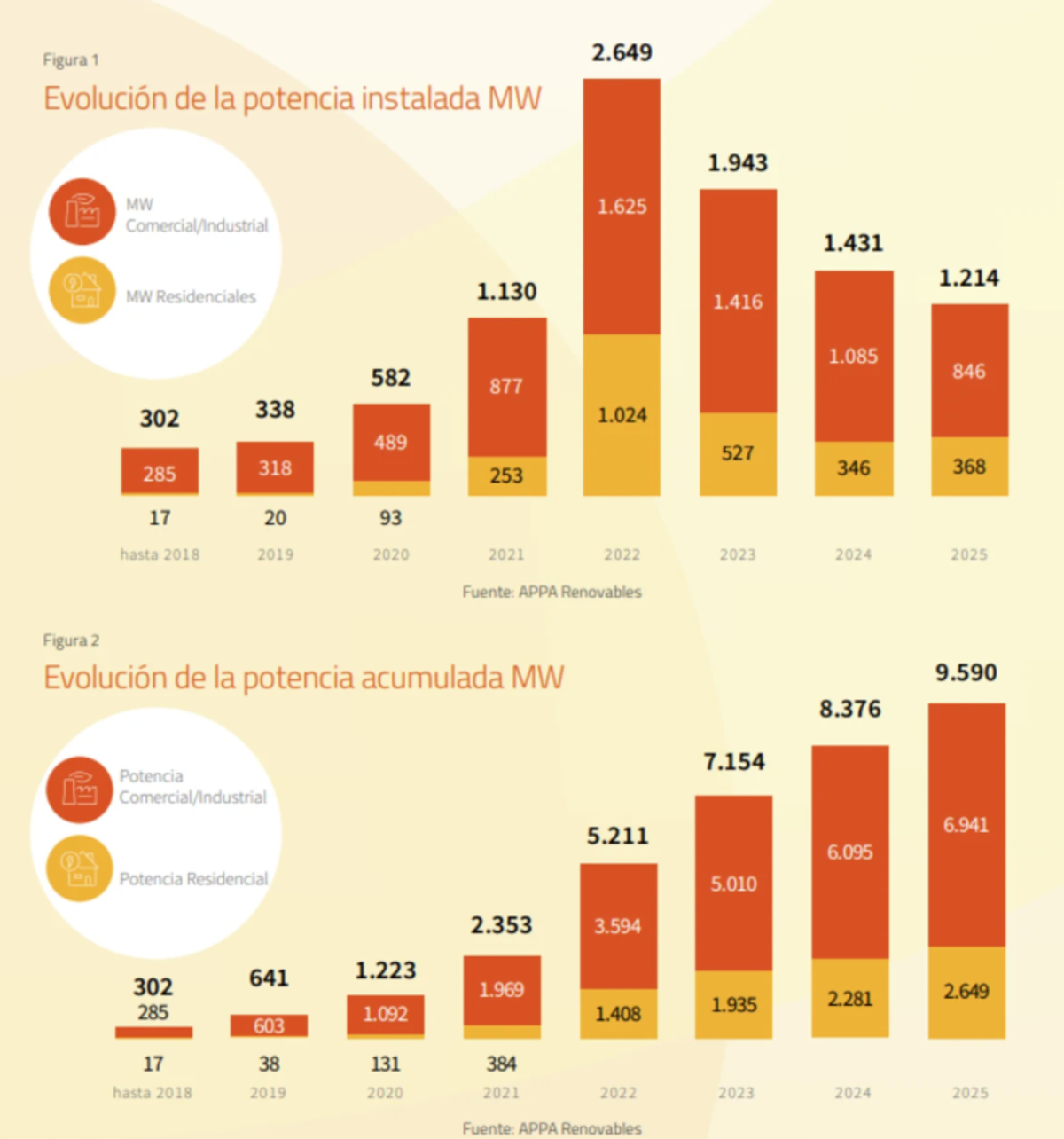
More than a year after the blackout that left much of Spain without electricity, energy storage is becoming a key strategy for companies to strengthen their energy security. This trend is already reflected in market figures: the installation of batteries associated with self-consumption grew by 119% year-on-year, driven mainly by commercial and industrial (C&I) projects, according to the 2025 Annual Report prepared by the Spanish Renewable Energy Companies Association (APPA).
The evolution of the sector coincides with a change in perception that began after the blackout of April 28, 2025. What until then was considered by many users as a complementary technology came to occupy a central place within corporate energy strategies, especially in industries with high electricity consumption and processes sensitive to supply interruptions.
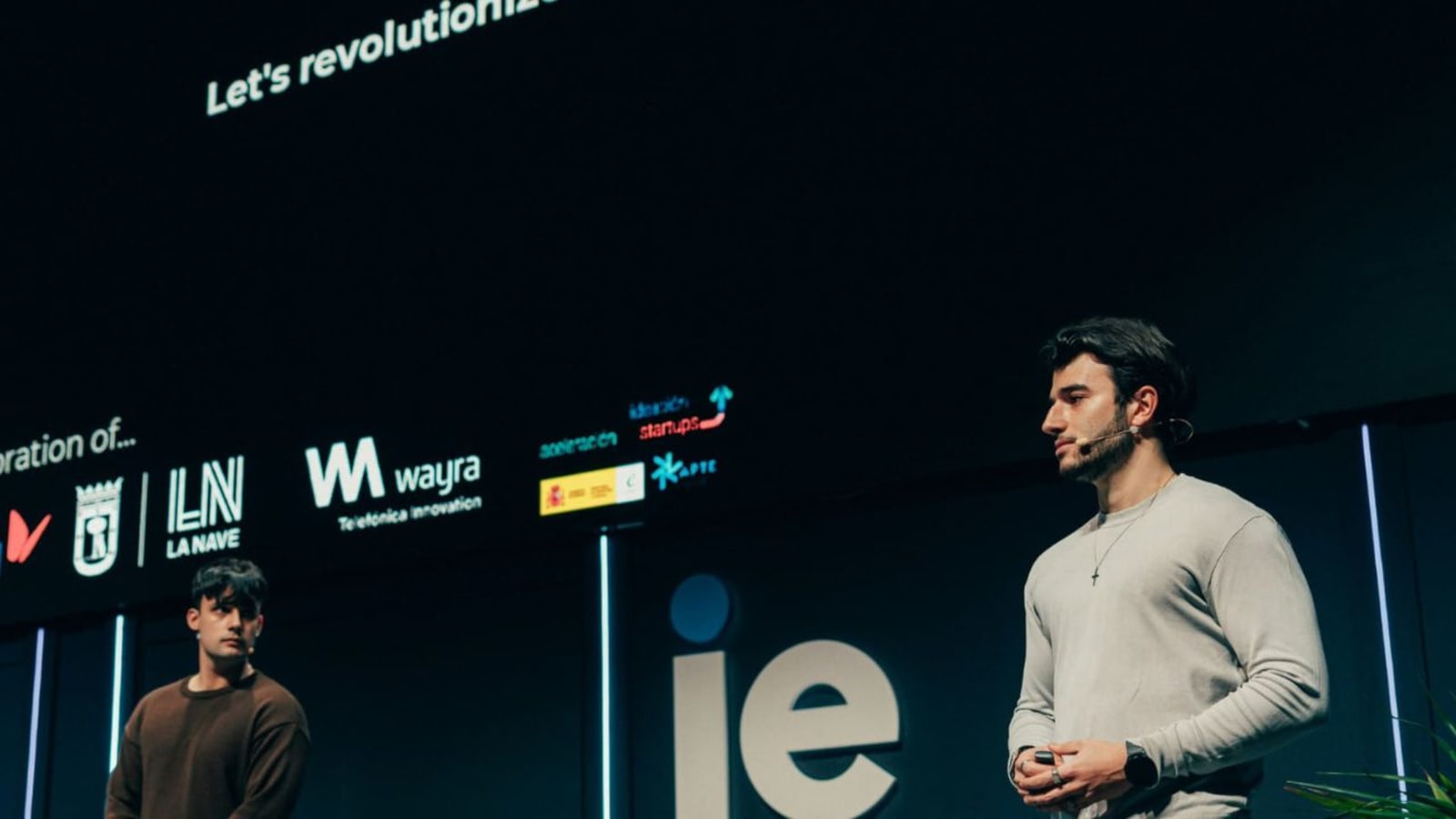
In that context, Alejandro Ausina , CEO and co-founder of NeuraSun , asserted that the blackout marked a turning point for the market. The Spanish company, specializing in artificial intelligence-based software to optimize the operation of photovoltaic systems and batteries, experienced an immediate surge in interest in its solutions.
“Suddenly the blackout hit and we were all left without power. From that moment on, we started receiving interest from all sides. Invitations to events, end customers who wanted to see our solution, battery manufacturers who were also interested even though they had always told us it wasn't a priority. It's clear that a need was identified,” Ausina told Energía Estratégica .

Market data supports this perception. According to APPA, Spain added 339 MWh of behind-the-meter batteries , compared to 155 MWh in 2014. Of the total, the residential segment accounted for 158 MWh, while the commercial and industrial segment reached 181 MWh, consolidating larger-scale projects and individual installations exceeding 5 MWh.
Storage is gaining ground in the industry
The search for energy resilience became one of the main drivers of this expansion. Following the blackout, numerous companies began evaluating systems capable of guaranteeing operational continuity in the event of electrical grid contingencies.
Depending on the system size, batteries can protect critical loads or even back up an entire industrial plant, ensuring the operation of production processes and reducing the economic risk associated with supply interruptions.
According to Ausina, the greatest interest currently comes from commercial and industrial customers, as well as battery manufacturers looking to complement their equipment with advanced management tools.
Continue reading
“We offer extra savings that are gradual, it’s a percentage. So, if your consumption is lower, like residential consumption, there are savings, but it’s not the same as the consumption of a large industry or even a train station, which is massive consumption,” he pointed out.
He emphasized: "We have achieved savings of around 30% extra in results."
The integration of artificial intelligence into battery operation allows for the optimization of charge and discharge cycles based on consumption forecasts, photovoltaic generation, and electricity prices. According to the executive, this advanced management can translate into significant cost savings for end users.
According to the executive, the combination of energy savings, resilience, and operational optimization explains why the C&I segment is concentrating a large part of the new investments in storage.
“All of this means that batteries in C&I environments have a higher return on investment than a utility-scale battery, which is ultimately subject to market forces and what the market can offer,” he stated.
From energy backup to strategic asset
Beyond the individual profitability of each project, Ausina believes that energy storage will play an increasingly important role in the stability of the Spanish electricity system. In their view, the combination of distributed batteries and artificial intelligence will allow for more efficient management of energy resources.
“When you have a series of batteries without intelligence, it can also be a risk if they all charge and discharge at the same time. But if you have a smart battery network that operates taking into account the state of the node and the state of the electrical grid at that moment, you can help to desaturate these nodes,” explained the representative from NeuraSun.
The executive also views positively the regulatory advances that Spain is preparing to facilitate the active participation of storage within the electricity system.
“The regulation that allows batteries to be generators or even consumers is fundamental for the operation of batteries in the electrical grid itself,” he said.
More than a year after the blackout that marked a turning point for the Spanish energy sector, batteries are no longer seen solely as a tool for maximizing self-consumption. The combination of savings, security of supply, and operational flexibility is transforming energy storage into a strategic asset for companies, while the market accelerates its growth and consolidates the commercial and industrial segment as one of its main drivers.
 By Emilia Lardizabal



 By Ailén Pedrotti
 By Florencia Guglielmetti