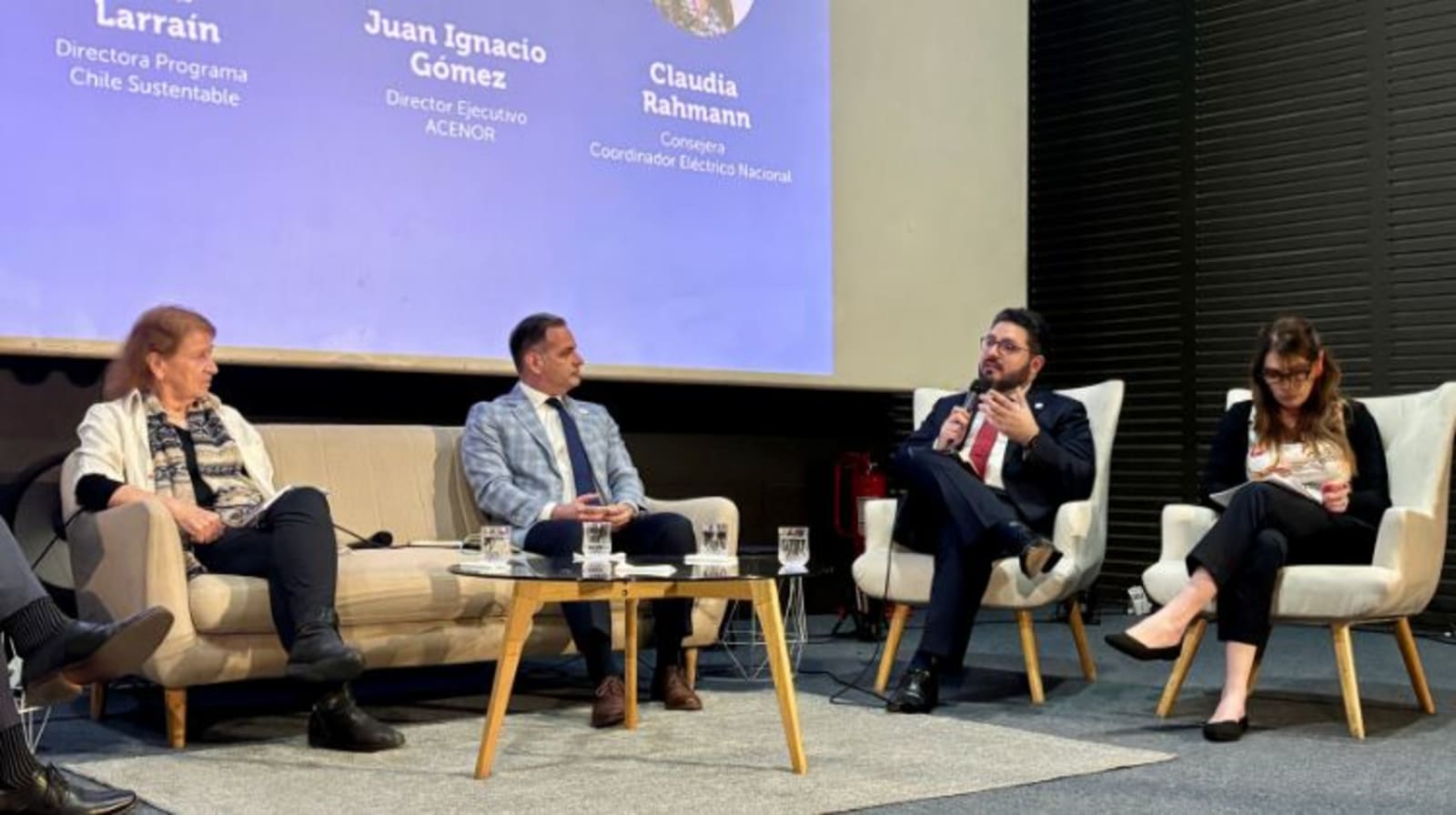
The executive director of the Association of Non-Regulated Electricity Consumers (ACENOR AG), Juan Ignacio Gómez, called for a review of how electricity system costs are allocated. His proposal is based on the principle that "the one who causes it pays": each cost should be borne by the one who generates it, so that the system provides accurate efficiency signals and does not continue to undermine the competitiveness of those who produce in Chile.
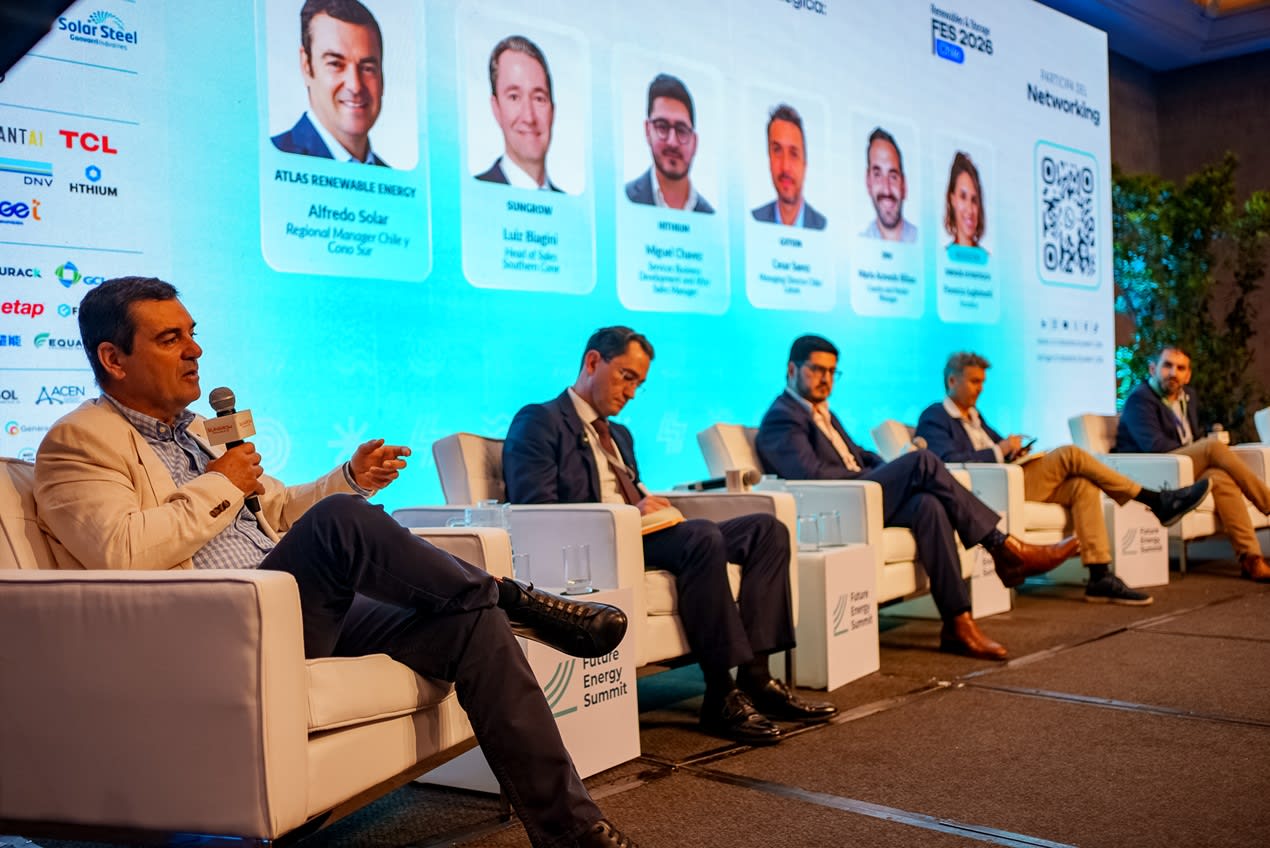
Gómez participated in the panel of the seminar “Generating Diagnoses: Context and Challenge,” held at the La Moneda Cultural Center. The seminar launched the Ministry of Energy's Electricity Generation Agenda. Representatives from the public and private sectors, academia, and civil society attended, and discussions focused on security of supply, demand trends, the energy transition, and electricity market design.
Energy is more expensive than in neighboring countries.
Juan Ignacio Gómez presented data from a comparative price review prepared by ACENOR AG. According to this analysis, the price of energy in Chile, excluding transmission, is 49% higher than in Brazil and 52% higher than in Peru.

He explained that energy costs are increasingly influencing investment decisions. The same industries and products can be established or produced in other countries, and uncompetitive energy prices discourage such investments from coming to Chile.
“The energies are not the same”
Gómez explained that currently, the system's security costs are passed on to customers in proportion to their energy withdrawals through their contracts, without distinguishing who generates them. Therefore, he argued that those who create deficits in the attributes the grid needs to operate safely should pay for these costs.
“The energy sources are not all the same,” he stated. He explained that each generation technology contributes different characteristics to the stability of the system.
Continue reading
He added that today, the cost of energy security depends on variables that customers don't control: depending on the marginal cost at any given time, it's either absorbed by the energy market or paid directly by consumers. "It's a real gamble, and you need predictability to invest," he said. He also noted that deregulated customers don't negotiate a significant portion of their bill because it depends on regulatory decisions and how the system operates.
Transmission: the cost of others' decisions
Regarding transmission financing, Gómez warned that the current scheme allows generation projects to be installed wherever it is most convenient for each developer; meanwhile, the new lines to transport that energy end up being paid for by the customers, a situation that does not lead to an optimal system.
Security of supply and competitiveness
Gómez pointed out that security of supply directly affects productive activity. Free market customers are companies, industries, and businesses that negotiate their electricity contracts directly with a supplier. For them, an interruption can mean halting processes and putting them at a disadvantage compared to their competitors.
Along those lines, he called for a review of power market signals and for economic assessments to be required in regulatory decisions. He also warned that security of supply must be protected in the face of the retirement of power plants that are key to system stability. Furthermore, he urged adjustments to regulatory signals to ensure more natural gas-fired generation is available, especially during the winter months.
Request to Minister Rincón: extend the reduction of peak hours
Gómez appreciated the Energy Ministry's decision to shorten the peak-hour pricing period in September. He explained that the measure allowed companies that can manage their consumption to add work shifts and increase production. Taking advantage of Energy Minister Ximena Rincón's presence, he directly requested that the measure also be applied in April and September of 2027.

 By Emilia Lardizabal
 By Florencia Guglielmetti