


The Chilean Renewable Generation Association (AGR) responded to a proposal from the Chilean Solar Energy Association (ACESOL) to incorporate small distributed generation (PMGD) units into supply tenders for regulated customers.
AGR values “any initiative that contributes to strengthening competition in the electricity market” and, therefore, considers it legitimate to open this discussion, but conditions the access of PMGDs on the renunciation of the stabilized price regime and their full incorporation into the spot market.
“The bidding processes were designed so that different generators can compete by offering the best economic and technical conditions for the benefit of consumers. Those who participate assume the signals of the spot market, manage their commercial risks, and comply with the same operational and regulatory obligations,” said Rafael Loyola, executive director of AGR, in an interview with Energía Estratégica .
“In that context, the participation of PMGDs in this market should be accompanied by the renunciation of the stabilized price regime, fully incorporating themselves into the spot market and competing under the same rules, rights, obligations and risks faced by any other generator,” he added.

The association also rejects the creation of separate tenders for this category of power plants. In its view, restricting the number of bidders would weaken the competitive purpose of the process and could pass on higher costs to end users.
“ Moving towards exclusive tenders for PMGD would deviate from that objective and result in more expensive tariffs for consumers, by restricting competition among the different generators that can supply the demand ,” warns Loyola.
The difference between the two organizations lies not in the possibility of adding distributed generation, but in the regulatory conditions under which their entry into the regulated contracts market should take place.
AGR acknowledges, however, that the entry of new players could broaden the supply options for distributors and increase pressure on offered prices.
“If PMGDs wish to participate in supply tenders for regulated customers, that is a legitimate discussion that can enrich the market and expand supply alternatives,” the executive states.
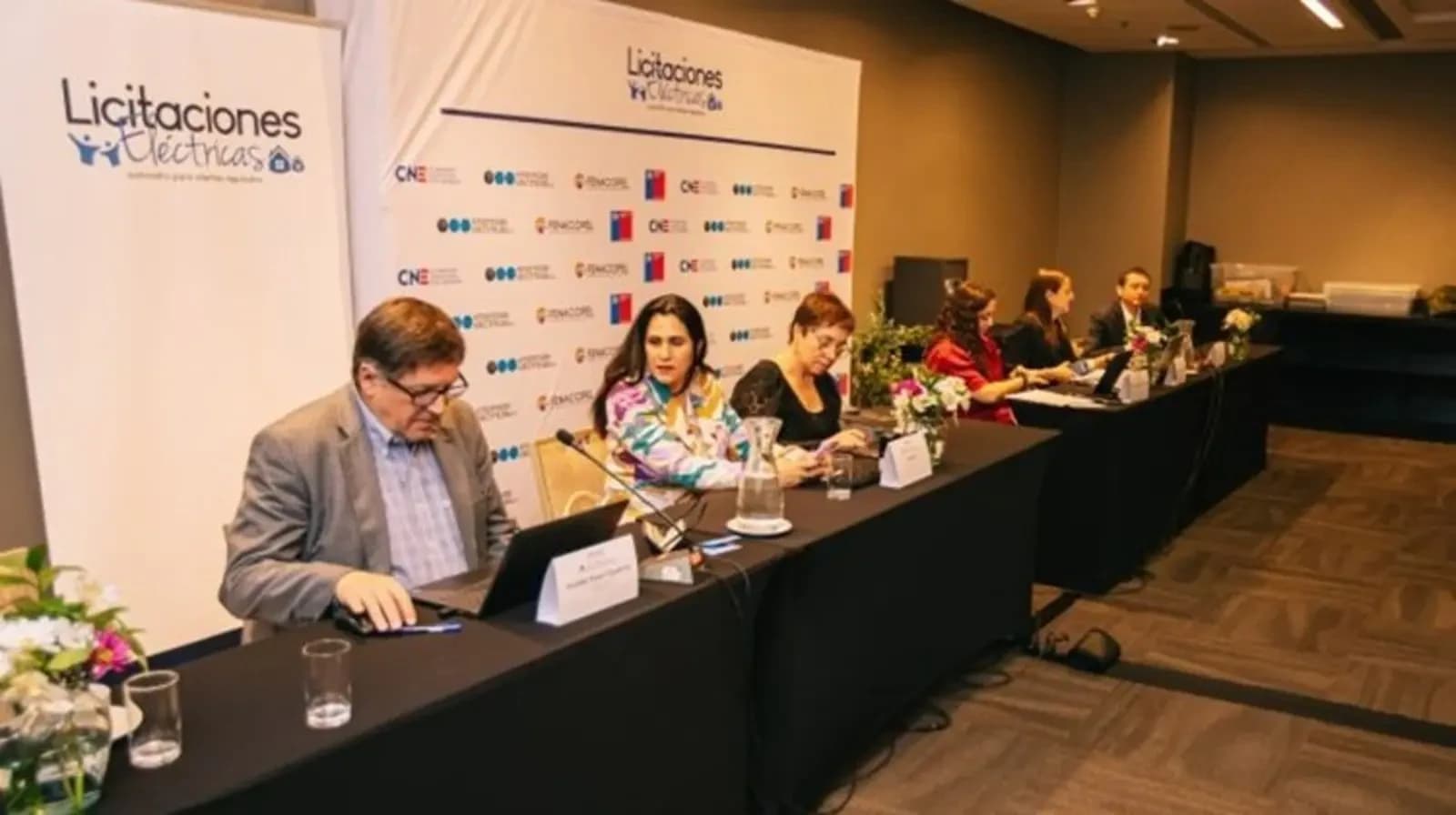
The controversy arises as the National Energy Commission (CNE) publishes the Final Terms of the Public Tender for the Supply of Energy and Electrical Power 2026/01, which plans to auction 2835 GWh/year to supply the needs of regulated customers from January 2029 and 2030.
The tender will be divided into two supply blocks and will again have a 15-year contract (the 2025/01 tender was for a 4-year PPA), according to the year of start of energy supply, with a greater need from the beginning of 2029.
The final terms include several relevant changes compared to the preliminary terms published in early June , including extending the obligation to continue delivering energy and power from 36 to 48 months , in the event of early termination of a contract due to supplier non-compliance.
They also eliminated the three-month threshold included in the draft version for reporting interconnection contingencies. Bidders must report any event that could compromise the connection of their projects before the deadline.
In financial matters, successful bidders who use mechanisms other than traditional bank loans must submit a guarantee contract at least 18 months before the Deadline .
The new scheme, in turn, reorganizes the contractual guarantees, regulating the partial transfer between the supplier, the backup generator and the bidder, while establishing specific provisions for direct agreements linked to existing facilities.
The cost to regulated customers
Consumer protection is AGR's main argument against the proposed exclusive mechanisms. The association believes that the incorporation of distributed generation should be evaluated based on its ability to reduce costs and improve supply, not on its classification within a specific regulatory category.
“Greater participation will always be positive when all players compete under the same regulatory framework. The best way to strengthen the electricity market is to promote open, transparent, and level competition, always safeguarding the interests of consumers,” Loyola emphasized.
“Only in this way will the tenders continue to fulfill their purpose: to ensure supply at the lowest possible cost for regulated customers, without regulatory privileges or differentiated mechanisms for certain participants,” he added.