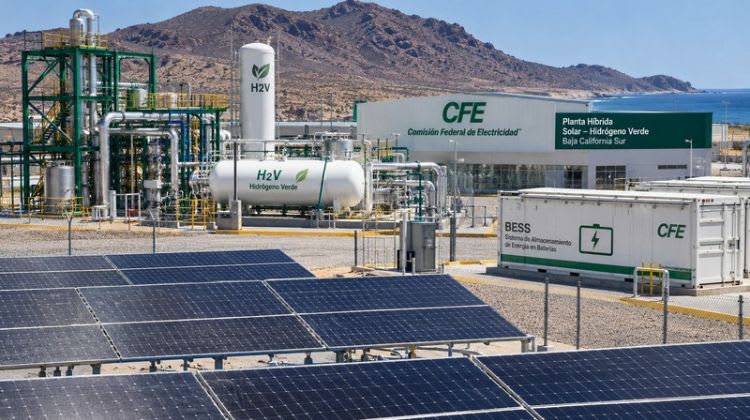
From solar self-consumption to operational resilience, battery energy storage systems for commercial and industrial applications are helping companies gain greater control over their energy consumption.
Discover how integrated solar energy and storage solutions can support industrial operations, through a real-world application at MACROMEC in Chile.
Why is industrial energy storage becoming increasingly important?
Electricity is a fundamental resource for modern industrial operations. Manufacturing plants, mining companies, processing facilities, and commercial complexes depend on a stable and reliable electricity supply to maintain their productivity.

However, companies face several energy challenges:
- Power supply instability: service interruptions and grid instability can affect machinery, production schedules and operational continuity.
- Increased energy costs: Electricity expenses can put pressure on operating budgets, especially in companies with high energy consumption.
- Limited use of solar generation: photovoltaic production does not always coincide with electricity demand, so some of the available renewable energy may not be fully utilized in the facilities.
- Limited energy flexibility: companies need to have greater control over when electricity is generated, stored, and consumed.
As the adoption of photovoltaic solar systems in industrial facilities increases, battery energy storage systems (BESS) are becoming a key component of comprehensive energy management.
By combining solar generation, battery storage, and smart energy conversion, companies can store available energy and use it according to their operational needs.
What is a battery energy storage system for industrial applications (BESS)?
A battery energy storage system for industrial applications (BESS) allows electrical energy to be stored in batteries for later use.
When integrated with a photovoltaic solar system and a compatible hybrid inverter, an industrial BESS can coordinate energy generation, storage, and consumption within a facility.
A typical solar energy system with storage consists of three main elements:
1. Solar photovoltaic generation
Solar panels convert solar radiation into electricity to power the facility's loads and supply energy to charge batteries when generation exceeds immediate demand.
2. Energy storage in batteries
Batteries store available energy for later use, allowing for better use of solar generation and management of electricity consumption schedules.
3. Hybrid inverter and energy management
The inverter manages the energy conversion between photovoltaic generation, battery storage, and electrical loads. Together with appropriate control strategies, the system coordinates energy flows according to operational requirements.
An integrated solution provides companies with greater flexibility to manage their energy resources.
Four key applications of industrial energy storage
1. Increase in solar self-consumption
One of the most practical applications of industrial energy storage is to improve the use of solar generation in the facilities themselves.
Photovoltaic production is generally concentrated during daylight hours, while industrial electricity demand can extend into the night or vary throughout the day.
Without a storage system, surplus solar generation cannot always be fully utilized at the facilities.
A battery storage system allows you to capture surplus solar energy and supply it when photovoltaic generation decreases or electricity demand increases.
Benefits for companies:
- Increase the use of renewable energy generated on site.
- Reduce dependence on conventional electricity sources when stored solar energy is available.
- Improve coordination between photovoltaic generation and electricity consumption.
2. Peak Shaving Management
Industrial electricity consumption typically fluctuates according to production schedules, machinery operation, and equipment start-up requirements.
In markets where electricity tariffs include peak demand charges or differentiated pricing based on the time of consumption, battery storage can help companies manage their peak electricity demand.
Through an appropriate energy management strategy, batteries can be discharged during certain periods of high demand, helping to reduce electricity consumption from the grid at those times.
This application is commonly known as Peak Shaving .
Benefits for companies:
- Manage periods of peak electricity demand.
- Improve flexibility in energy consumption.
- Potentially reduce electricity costs when the tariff structure and operating conditions allow for savings.
Actual savings depend on electricity rates, load profiles, battery sizing, system efficiency, and operating strategy.
3. Energy backup and operational continuity
For industrial companies, unexpected power outages can affect production, equipment operation, and delivery times.
Battery storage can provide backup power to specific loads when the system has been designed and configured with the corresponding backup functions.
Depending on the system architecture, inverter capabilities, protection devices, and load requirements, an energy storage solution can help maintain power supply to certain critical equipment during grid outages.
Benefits for companies:
- Support critical operational loads.
- Reduce the impact of certain power supply interruptions.
- Improve energy resilience and operational flexibility.
The capacity and duration of the backup depend on the installed configuration, the energy available in the batteries, the demand of the loads and the operating conditions.
4. Greater energy flexibility for industrial operations
The energy requirements of an industrial facility change throughout the day. Solar generation, electricity demand, and grid availability do not always coincide.
Energy storage allows this difference to be reduced by offering the possibility of storing electricity and supplying it at different times.
By coordinating the control of photovoltaic generation, battery charging and discharging cycles, and installation loads, companies can develop an energy strategy that better meets their operational needs.
Benefits for companies:
- Coordinate energy generation and consumption.
- Improve flexibility in the management of electrical resources.
- Adapting to changes in production and operational requirements.
How to select the right industrial energy storage system?
Selecting an energy storage system for commercial and industrial applications requires much more than comparing battery capacity and inverter power.
Before determining the appropriate configuration, companies must evaluate several factors:
1. Electricity consumption profile
Analyze how much electricity the facility consumes, when peak demand occurs, and how consumption varies throughout the day.
2. Capacity of the existing photovoltaic solar system
Evaluate the installed photovoltaic capacity, daily generation patterns, and the amount of surplus solar energy available to charge the batteries.
3. Energy backup requirements
Identify which loads need backup power, what their power requirements are, and for how long they need to remain operational.
4. Electricity tariff structure
Review energy consumption charges, peak demand charges, and time-of-use tariffs to determine if battery energy management can generate quantifiable economic benefits.
5. Battery capacity and inverter power
The battery storage capacity, measured in kWh, determines how much energy can be stored. The inverter's power, measured in kW, determines the rate at which energy can be converted and delivered.
Both parameters must be selected according to the characteristics of the installation loads, the operational strategy, and the required system performance.
6. System integration and long-term operation
Consider inverter compatibility, energy management capabilities, safety requirements, installation conditions, monitoring, and operation and maintenance services.
A properly designed system must respond to both current energy requirements and possible future changes in operations.
Real-world application: Solis EverCore in Chile
The integration of photovoltaic solar systems and battery storage is already contributing to industrial energy management in real-world applications.
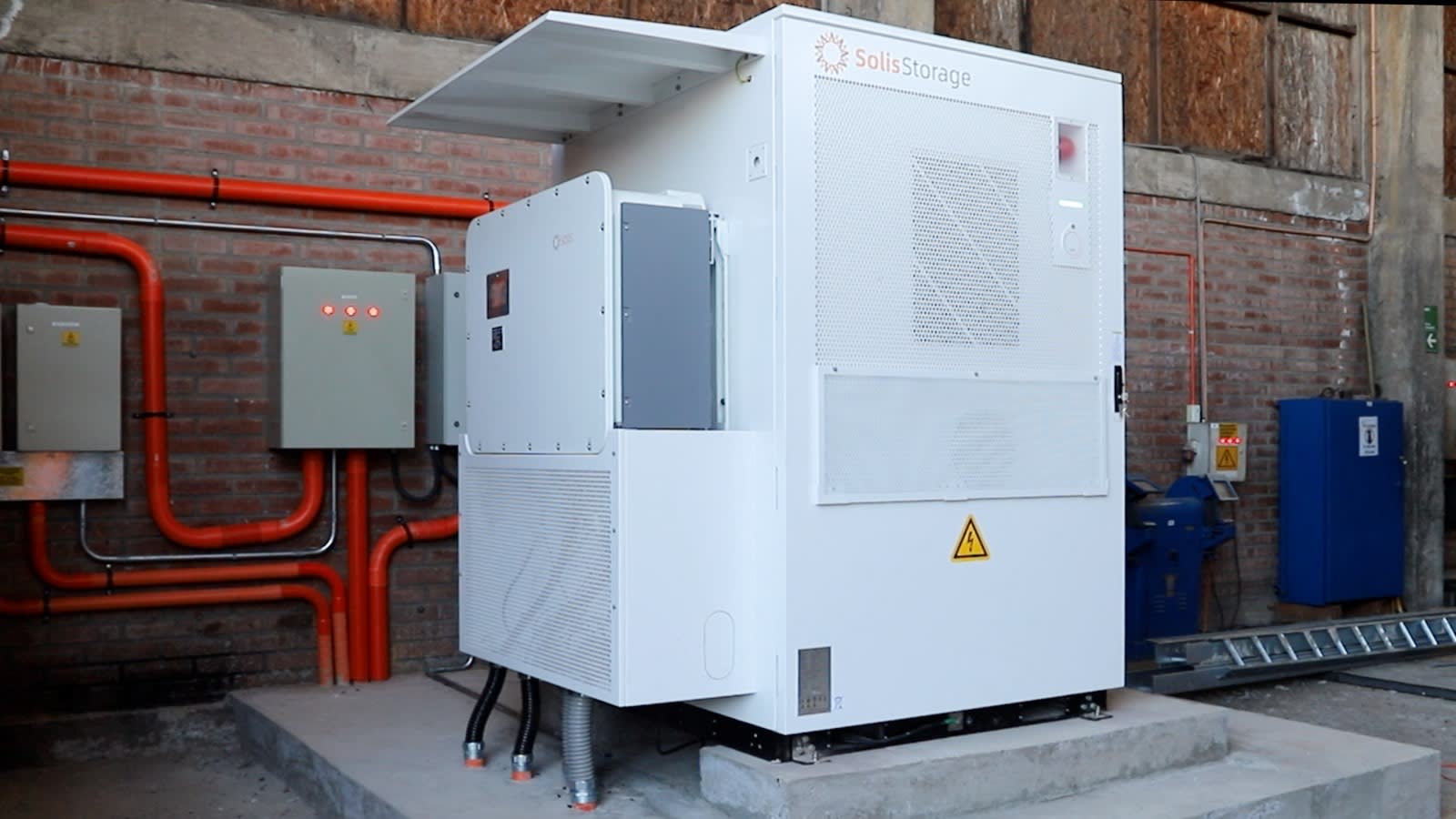
At MACROMEC, a company that operates in the mining and off-grid systems sector in Chile, Solis has implemented its SolisStorage EverCore C&I ESS commercial and industrial energy storage system, integrating a 261 kWh battery storage system, a 125 kW hybrid inverter and photovoltaic solar generation.
Located in San Bernardo, Santiago, the project responds to the need for a reliable energy supply to power machinery and operational loads, while also allowing for better use of solar generation.
The system contributes to achieving three key energy management objectives:
Greater solar self-consumption
Excess solar energy can be stored for later use, increasing the utilization of renewable energy generated at the facilities.
Flexible energy management
Battery storage allows energy use to be shifted from periods of solar generation to times when electricity is required, promoting better coordination between generation and demand.
Greater reliability of the electricity supply
The integrated solution is designed to provide a more reliable power supply to the customer's loads and machinery, helping to mitigate the operational impact of power grid instability.
Put into operation in June 2026, the system has maintained stable operation, completing approximately one loading and unloading cycle per day, according to project operational information.
The installation at MACROMEC demonstrates how the integration of solar energy and battery storage can meet the real energy needs of industrial companies in Latin America.
Why choose Solis EverCore for commercial and industrial energy storage applications?
SolisStorage EverCore C&I ESS is designed to meet the evolving energy management needs of commercial and industrial businesses.
By integrating battery storage with hybrid inverter technology, EverCore offers a comprehensive solution for applications requiring flexible energy management and coordinated operation of solar systems with storage.
For industrial facilities, this integrated approach allows:
- Greater utilization of on-site photovoltaic solar generation.
- Flexibility in the battery charging and discharging processes.
- Better coordination between energy generation and electricity demand.
- Energy management for demanding commercial and industrial applications.
- A more integrated approach to system operation and maintenance.
As Latin American companies continue to explore solar energy solutions with storage, Solis is working with its regional partners to bring integrated energy technologies to a greater number of industrial applications.
Frequently asked questions about industrial energy storage
What is the difference between the power of a battery (kW) and its storage capacity (kWh)?
The power of a battery, measured in kW, indicates how much power a system can deliver at a given time. Storage capacity, measured in kWh, indicates the amount of energy it can store. Both parameters are crucial when selecting a BESS for industrial applications.
Is it possible to integrate an industrial storage system into an existing photovoltaic solar installation?
Yes. Depending on the system architecture and equipment compatibility, battery storage can be integrated into existing photovoltaic solar installations. The appropriate configuration, whether AC or DC coupled, should be evaluated considering the existing inverter, electrical infrastructure, and project requirements.
Can an industrial BESS system reduce electricity costs?
It can help optimize electricity consumption through applications such as solar self-consumption and peak shaving. However, the actual economic benefits depend on electricity tariffs, consumption patterns, system configuration, and operating strategy.
Can a BESS provide backup power during power grid outages?
Yes, provided the system incorporates the necessary backup functions and is correctly configured for the expected loads. Backup capacity and duration depend on battery capacity, inverter capabilities, load requirements, and system design.
What battery storage capacity does an industrial facility need?
There is no single storage capacity suitable for all industrial facilities. The required capacity depends on electricity consumption, solar generation, peak demand, backup requirements, and the planned operating strategy.
Is SolisStorage EverCore C&I ESS suitable for industrial applications?
SolisStorage EverCore C&I ESS is designed for commercial and industrial energy storage applications, facilitating the implementation of integrated solar energy and storage solutions, as well as flexible energy management.
Take control of your industrial energy strategy with Solis
Industrial energy storage is not simply about adding batteries to a solar installation. It's about giving companies greater flexibility in generating, storing, and using electricity.
Whether the priority is increasing solar self-consumption, managing peak demand, or providing backup for critical loads, a properly designed C&I energy storage system can help businesses build a more flexible and resilient energy infrastructure.
 By Emilia Lardizabal

 By Florencia Guglielmetti

 By Ailén Pedrotti