


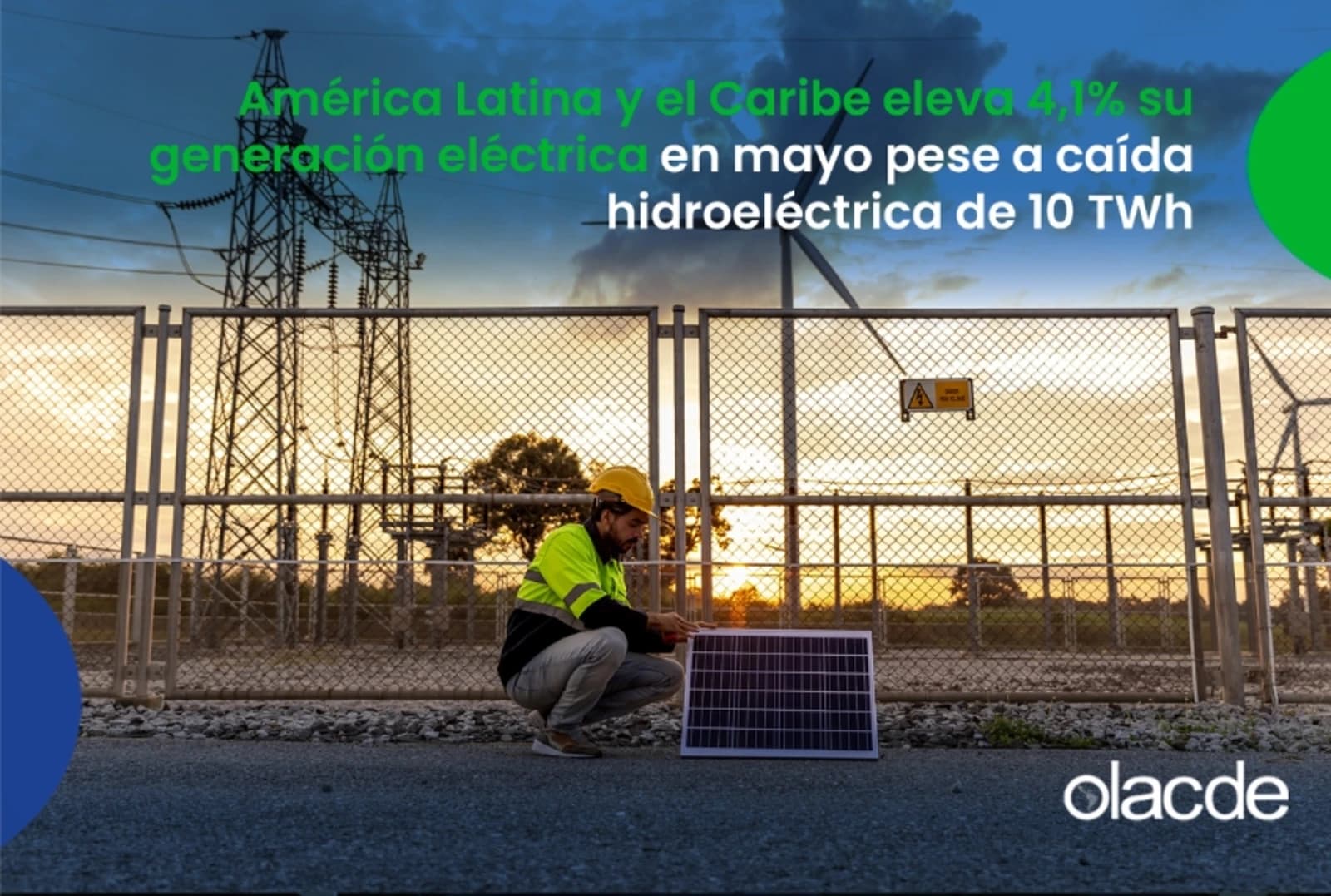
According to the latest Monthly Electricity Generation Report issued by the Latin American and Caribbean Energy Organization (OLACDE), Latin America and the Caribbean generated 176 TWh of electricity in May 2026. This figure represents a 7.32% increase compared to the previous month and a 4.1% increase compared to May 2025. The main energy source continued to be hydroelectricity, with 43.4% of total production, followed by natural gas (24.4%) and wind power (11.6%).
The growth in generation occurred amidst a restructuring of the regional electricity dispatch. Compared to May 2025, hydroelectric production decreased by 10 TWh due to lower water availability. This reduction was primarily offset by a 6 TWh increase in natural gas generation and a 4.4 TWh increase in wind power, in addition to higher contributions from coal, oil, and its derivatives.
Despite reduced water resources, 64% of the electricity generated in the region during May came from renewable sources. Between May 2025 and May 2026, this proportion fluctuated between 63% and 72%, confirming the prevalence of renewable energy in the regional electricity mix.
Nine of the 27 OLACDE Member Countries exceeded the regional average for renewability in May: Paraguay (100%), Costa Rica (96%), Uruguay (94%), Brazil (89%), Colombia (82%), Venezuela (82%), Belize (75%), Ecuador (72%) and Peru (66%).

The results reflect a matrix with a high renewable participation, while also highlighting the need for complementary sources to respond to variations in hydrological conditions and electricity demand.
Review the full report at the following link: https://www.olade.org/publicaciones/reporte16-generacion-electrica/