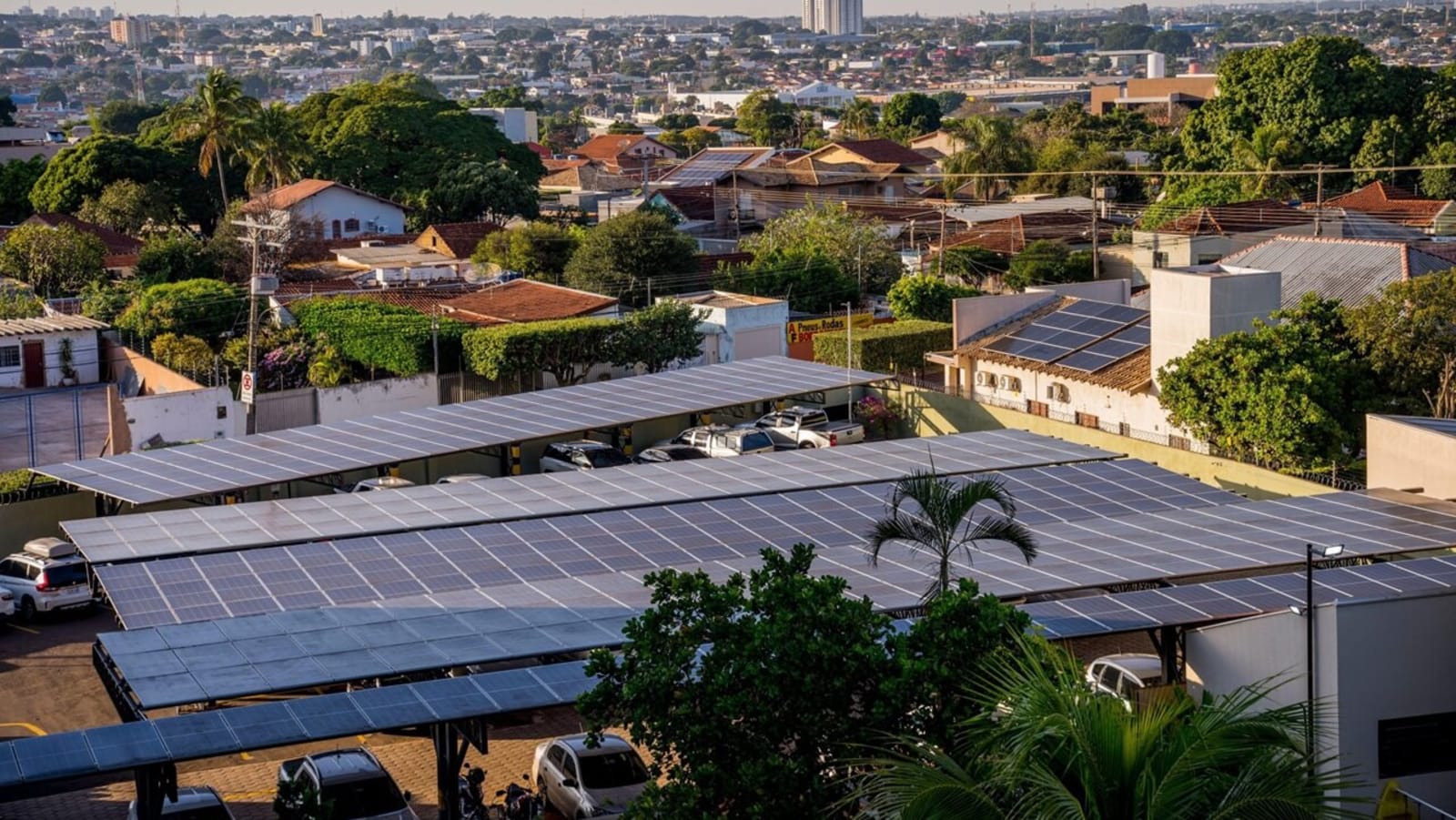
Brazil's National Electric Energy Agency (ANEEL) has opened three regulatory fronts on distributed generation that could modify both the business models and the operation and accounting treatment of energy produced by systems connected to distribution networks.
The most sensitive debate concerns shared generation marketed through subscription models , a modality that the agency decided to review given indications that certain projects could be functioning, in practice, as indirect energy sales mechanisms.
Public Consultation No. 043/2026 will remain open to receive contributions between November 19, 2026 and January 31, 2027 .
The objective is to regulate more precisely article 28 of Law No. 14,300/2022, which established the legal framework for distributed micro and mini-generation and defined these systems as installations intended for self-consumption.

According to ANEEL, there are companies that operate models in which users pay a project manager monthly based on their consumption, without a direct link to the initial investment or the plant's operation and maintenance costs.
The agency believes that this type of scheme can distort the original purpose of shared generation and generate subsidies that end up being borne by other consumers in the system.
Among the proposals under discussion are a more precise definition of shared generation modalities, new conditions for access to and permanence in the compensation system, stricter criteria for distributing energy credits, and measures to limit practices that may distort self-consumption.
Minimum permanence requirements and transitional rules for adapting existing contracts are also being analyzed.
The debate stems from a 2024 decision by the Federal Court of Accounts (TCU), which pointed out possible distortions in this modality and called for a review of the regulatory mechanisms.
According to ANEEL's technical analyses, particularly high movements were detected in consumption units associated with this type of project in some concession areas.
In the area served by Cemig, for example, consumer turnover would have reached approximately 400% , a behavior that the agency interprets as a sign of commercial structures designed to allow frequent entry and exit of participants.
The sector questions the restrictions on shared generation
The proposal drew criticism from the Brazilian Association of Distributed Energy Resources (RED), formerly ABGD, which called for a Regulatory Impact Analysis before introducing substantial modifications.
The entity questions, among other points, the possibility of establishing minimum periods of stay and new rules for the distribution of costs.
“Law No. 14,300 consolidated a flexible model that ANEEL itself helped to develop. It is up to the Agency to regulate this option, not replace it,” stated Rose Santos, executive director of RED .
The association argues that banks, investors, and developers structured projects based on a stable legal framework and warns about the effects that regulatory changes can have on investor confidence.
RED also points out that the draft of the Ten-Year Energy Expansion Plan 2036 projects 91.7 GW of distributed generation capacity by 2036 , along with millions of consumers linked to this segment.
The entity clarifies that it does not defend the irregular marketing of energy, but believes that any change should be accompanied by economic, social and legal assessments.
ANEEL is also reviewing how to handle distributed generation surpluses.
The second front opened by the agency points to the treatment of the surpluses of distributed micro and mini-generation that exceed, at certain times, the consumption of the captive market of the distributors.
Currently, when this excess generation causes negative load values in the accounting of the regulated market, these balances are not expressly recognized within the mechanisms of the Chamber of Electric Energy Marketing (CCEE).
In practice, these values are replaced by zero, which causes some of the excess energy to end up being implicitly appropriated by other agents in the system through a reduction of the losses accounted for in the Basic Network.
According to the calculations cited in the proposal, this asymmetry would have generated an approximate financial impact of R$ 225 million during 2025 .
The new consultation proposes that these surpluses form part of the energy balance of the distributors and be considered both in the calculation of losses and in other market mechanisms.
The agency is also analyzing the possibility that this energy could be valued in the Short Term Market through the Settlement Price of Differences (PLD) , with an eventual transfer of benefits to the tariffs.
While a definitive solution is being discussed, ANEEL approved a more limited provisional treatment that will begin to be applied from the accounting period of January 2027 .
This scheme will allow the surplus to be recognized within the distributor's energy balance and correct its effect on the losses of the Basic Network, although still without incorporating all the economic mechanisms foreseen in the broader alternative.
A sandbox to coordinate distributed generation with the ONS
The third front focuses on the operation of the electrical system.
ANEEL approved Public Consultation No. 044/2026 to authorize the National Electric System Operator (ONS) to develop the so-called Intermediate Activation Mechanism (MAI) within an experimental regulatory environment.
The goal is to improve the coordination of micro and mini-distributed generation dispatches between the ONS and the distributors.
The growth of distributed generation has increased its influence on variables that were previously mainly associated with centralized generation, such as supervised load, power flows, generation constraints and the operational security of the National Interconnected System.
The ONS has already had to resort to generation reduction measures in situations of low demand and high production.
Among the background information mentioned are the events of May 4 and August 10, 2025 , as well as the activation of the Emergency Generation Reduction Plan on June 7 and August 23, 2026 .
The new mechanism seeks to provide an additional tool to act on assets connected to distribution networks when it is necessary to maintain the balance between generation and demand.
The experiment will last 24 months and will involve five distributors: Cemig D, Copel DIS, CPFL Paulista, Energisa Mato Grosso and Neoenergia Elektro .
These companies were selected based on the level of distributed generation penetration and their technical capacity to participate in the trial.
The objective will be to evaluate how to more effectively coordinate control actions on power plants connected to distribution networks and improve the observability of the system.
With these three consultations, Brazil opens a stage of comprehensive review of distributed generation , which covers its business model, the treatment of its surpluses and its operational integration with the electrical system.
The outcome of these processes will be key to defining how, from 2027 onwards, an increasingly massive distributed generation, subscription-based business models, and new system control needs will coexist.
 By Ailén Pedrotti

 By Emilia Lardizabal
 By Energía Estratégica