The Argentine government faces a race against time to tender new electric transport works before the deadline for submitting projects to the Large Investment Incentive Regime (RIGI).
The speed of the following calls will depend on the outcome of AMBA I , the USD 800 million transmission expansion with which Argentina inaugurates its new concession mechanism and which comprises 270 kilometers of 500, 220 and 132 kV lines , which will allow the incorporation of around 2000 MW of supply capacity in the Buenos Aires Metropolitan Area.
The Executive wants to evaluate that first experience before launching the processes for Puerto Madryn–Choele Choel–Bahía Blanca and Vivoratá–Plomer, since the intention is that the next concessions can take advantage of the scheme of benefits and long-term stability, a central component to attract private financing.
"We want to see what happens with the AMBA I process so we can launch other tenders and have them enter RIGI before July 9th of next year," anticipated Damián Sanfilippo , Undersecretary of Electric Energy of Argentina, during the Argentina +Renewable meeting organized by the Argentine Chamber of Renewable Energies (CADER).
The condition is not only temporary. The AMBA I procedure establishes that the most competitive economic proposal will be pre-awarded, but the final contract will be subject to a prior approval stage in the RIGI.
"And at that moment the pre-awarded candidate will be eligible to apply to the RIGI. Once accepted into the RIGI, the award is made, the concession contract is signed, and construction begins," Sanfilippo explains.
The process involves the technical evaluation of proposals, the opening of financial bids, and the selection of the offer with the lowest Public Works Concession Fee (COP). Approval under this system will precede the signing of the contract.
"Aside from the technical aspects and other issues, the main challenge is financial, because it is a project with a large capital investment to be collected over the long term, in different periods of government," the official acknowledges.
The RIGI provides 30 years of fiscal, customs, and regulatory stability for investments that meet its requirements. Its inclusion in concessions aims to reduce investors' exposure to regulatory changes during extended capital recovery periods.
The first market response will arrive on December 14, 2026 , the date scheduled for the initial opening of proposals for AMBA I. The award is projected for early 2027, subject to the development of the various administrative stages.
The economic scheme establishes that the Total COP Remuneration must be offered in dollars , with updates linked to the Producer Price Index (PPI), published by the US Bureau of Labor Statistics.
The initial adjustment will consider the index variation between the signing of the contract and the start of the billing period. Annual updates will then be applied, while monthly disbursements will be made in pesos using an exchange rate that maintains its equivalence with the dollar value.
The corresponding remuneration period may extend up to seven years from the commissioning of each stage. Meanwhile, the recovery will be linked to the COP tariff applied to the transport and/or distribution users identified as beneficiaries.
Although the Maximum COP Remuneration and the Maximum COP Rate , two relevant parameters for the formulation of offers, still need to be published by circular.
In addition to the incentives and contractual conditions, there is a USD 200 million investment guarantee for 25 years approved by the Inter-American Development Bank (IDB) , intended to support AMBA I and Puerto Madryn–Choele Choel–Bahía Blanca.
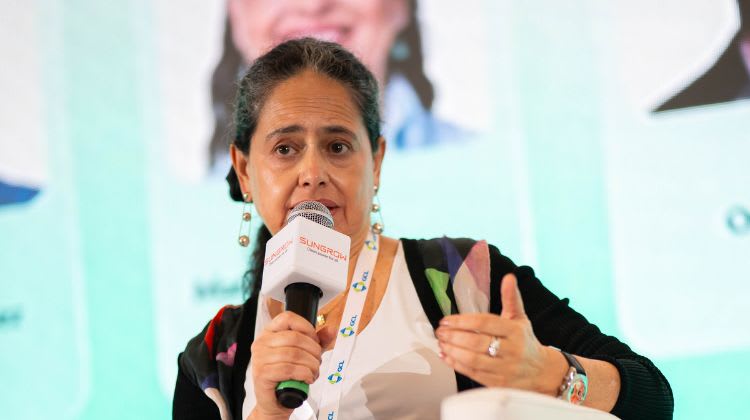
"It is designed as a liquidity guarantee that covers specific non-payment events and can cover up to six months of remuneration," explained Lisa Viscidi, Lead Energy Specialist at the IDB .
"We modeled how much and estimated that it can reduce the cost of financing by 100 basis points and the cost of capital by 50 in the base scenario," he revealed during the meeting organized by CADER.
The IDB is also working on assistance for studies and a consultancy that will review the evaluation and prioritization criteria for projects, with the possibility of updating the expansion roadmap.
"As we gain experience and things unfold, each of the bidding processes will turn out better," the undersecretary stated.
One of the major power generators is considering competing, but needs specialized partners.
Central Puerto is considering participating in the AMBA I tender , although any eventual proposal will depend on the formation of a consortium with financial capacity, experience in electric transport and construction resources.
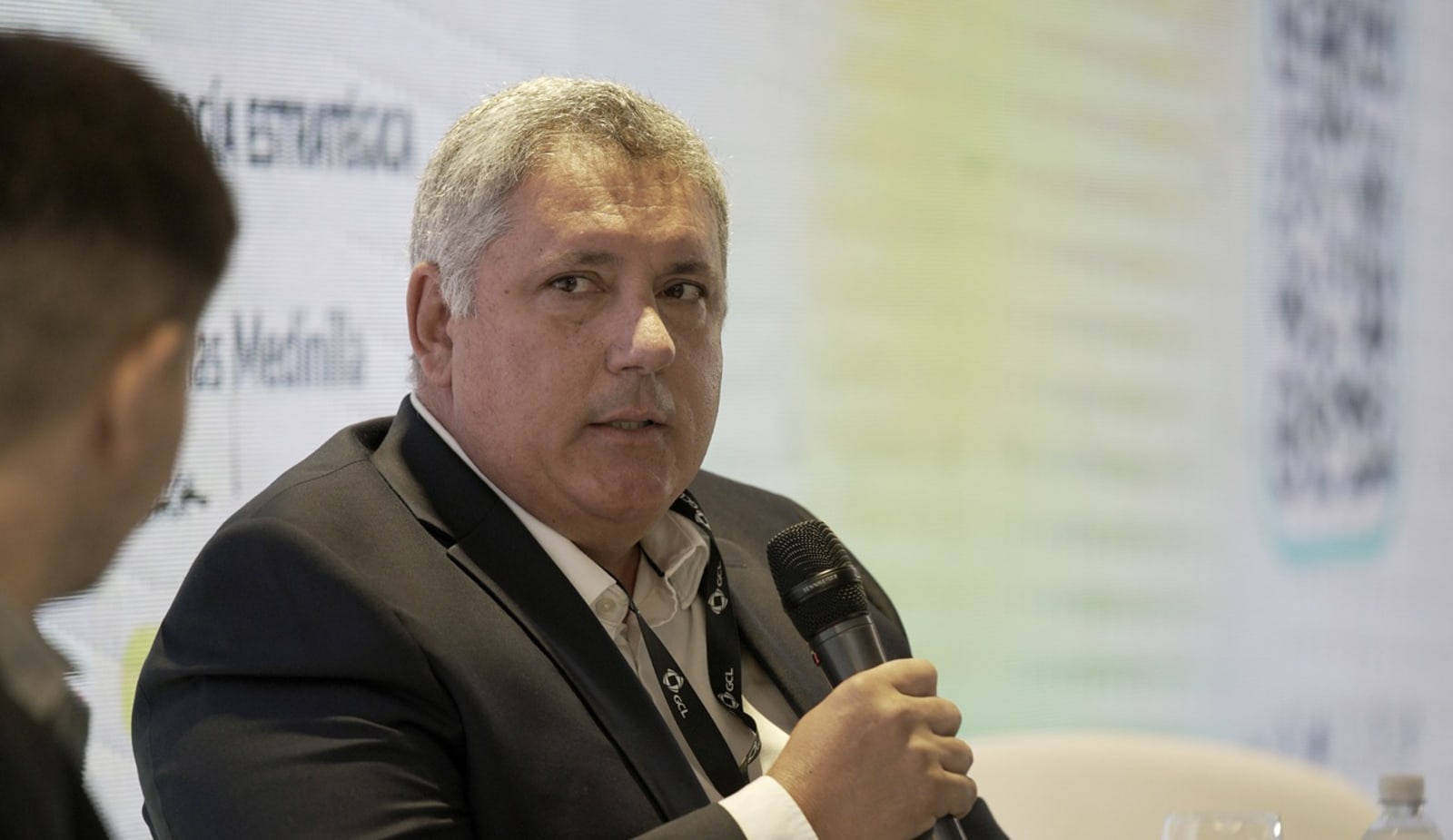
"Because it's a large and complex project, our approach has a first stage focused on who will absorb the capital costs. Within that group, there must be someone with experience in transmission, and since we don't have that experience, we are absolutely obligated to find a partner. Then there's a stage concerning the construction capabilities to carry out the challenge," explained Leonardo Katz, Director of Strategic Planning at Central Puerto .
“We also need to bring together companies and people willing to help, so that the first group can get the second to build, and then operate and maintain (or not). There are three blocks of analysis that must be carried out so that there is finally an offer,” he added.
However, the company has not yet confirmed a decision to participate and is keeping other alternatives open, considering that it is awaiting details of the Public Works Concession Contract (COP), including capital investment, financing structure and taxes.
"There are interesting elements within the proposal that we are waiting for, especially the Public Works Concession Contract (COP)," says Katz.
"We are very excited about AMBA I; we are interested in the process and the mechanism, but there are also other options for moving forward," Katz concluded.
The immediate challenge will be to align the timeline for AMBA I with the window for joining the RIGI (Integrated Public Works Registry) that the government seeks to leverage for upcoming projects. The outcome of the first bidding process will determine when new calls for tenders under the private concession model can proceed.
 By Ailén Pedrotti
 By Energía Estratégica

 By Emilia Lardizabal