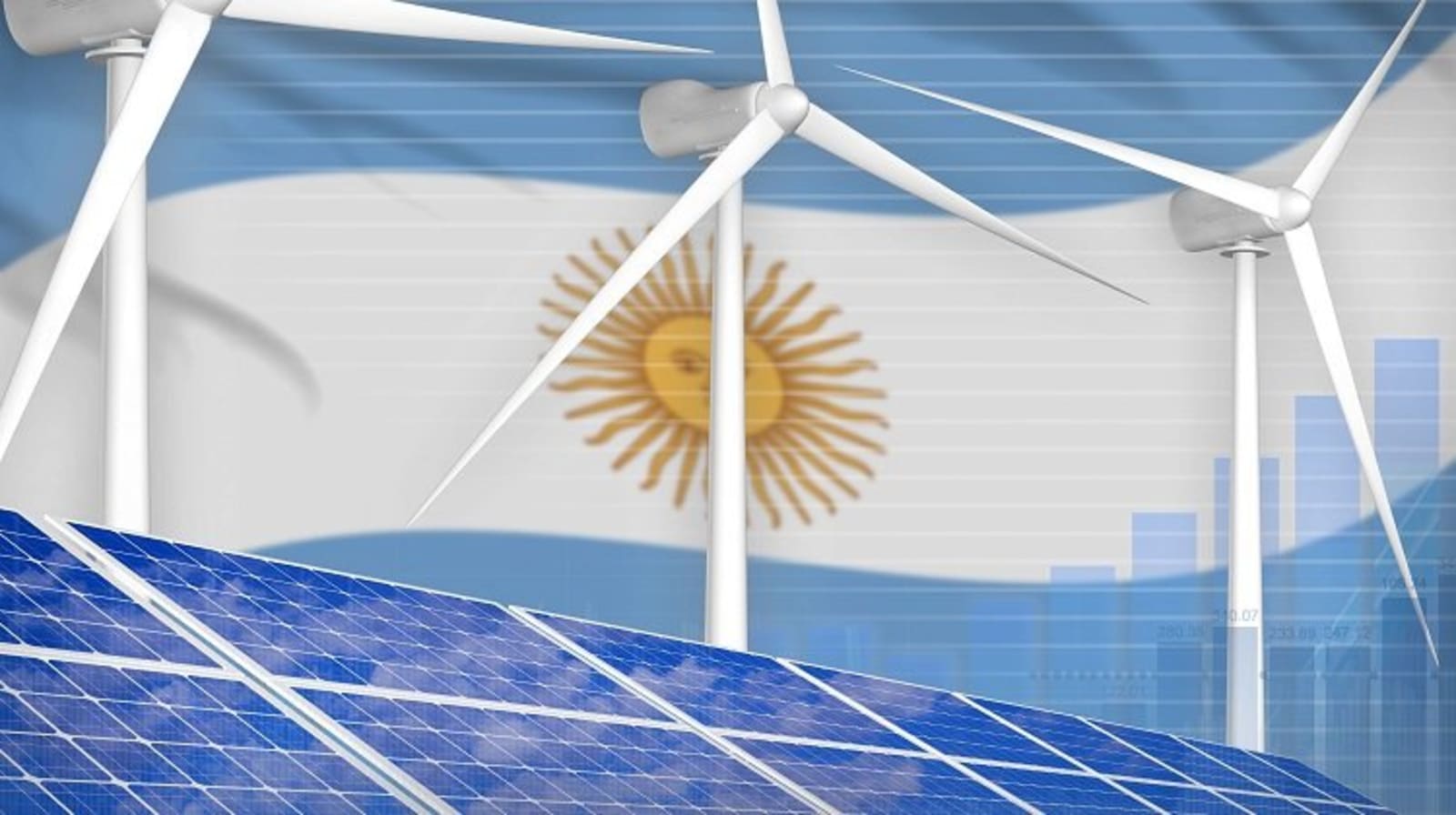
The Argentine government has approved the National Energy Transition Plan to 2030 and the Guidelines and Scenarios for the Energy Transition to 2050, which outlines various measures to decarbonize the energy system and comply with the Paris Agreement on climate change. What role will renewables play? By 2030, the plan projects not to exceed net CO2 emissions of 349 million tons for the entire economy. This will involve reducing demand, achieving a renewable energy share of over 55% in the energy mix, and reaching 1,000 MW of distributed generation capacity. By 2050, the government anticipates that green energy will represent between 70% and 90% of electricity production. Both targets include not only the renewable energy sources defined in Law No. 27191, but also hydroelectric plants with a capacity greater than 50 MW. Therefore, if only those technologies detailed in the promotion regime of Law No. 27191 are taken into account, the percentage would range from 30% towards 2030 and between 53% and 59% participation by 2050.
But in this latter case, the document indicates that it meets the country's second NDC, but that "none of the three proposed scenarios achieves net-zero greenhouse gas emissions. " New capacity to be installed: According to the documents, during the current decade, approximately 7,548 MW of renewable energy (excluding hydroelectric plants > 50 MW) and 140 MW of pumped storage and battery systems will come online. Adding to this the 342 MW of green generation for the production of approximately 30 ktHz of low-emission hydrogen, the required investments will amount to US$86,642 million. The outlook for 2050 is more complex, as it considers three scenarios for the sustainable development of the country's energy system and, in particular, for the incorporation of more projects. The necessary investments in new capacity by 2050 would range between US$101,536 million and US$113,679 million, but technologies contemplated in Law No. 27191 and battery systems would only be between MMUSD 32656 and MMUSD 34697. "Wind generation is the one that grows the most in the three scenarios, followed by hydroelectric and solar.
Although in percentage terms, the installed capacity of photovoltaics grows much more than that of hydropower in all three scenarios.
"There is also growth in biomass and biogas, but it is relatively smaller," the document explains. However, it should also be noted that other uses for non-conventional renewable energies are being considered:

- Replacement of natural gas: from 6072 MW (MMUSD 5200) to 43756 MW (MMUSD 37959).
- Green hydrogen: 7991 MW (MMUSD 6678) to 32877 MW (MMUSD 19615) in pursuit of producing 700, 1,540 and 2,880 ktH2.
- Electrolyzers for H2: 4994 MW (MMUSD 2896) to 20548 MW (MMUSD 11930).

 By Florencia Guglielmetti

 By Energía Estratégica

 By Matías Medinilla
 By Emilia Lardizabal