

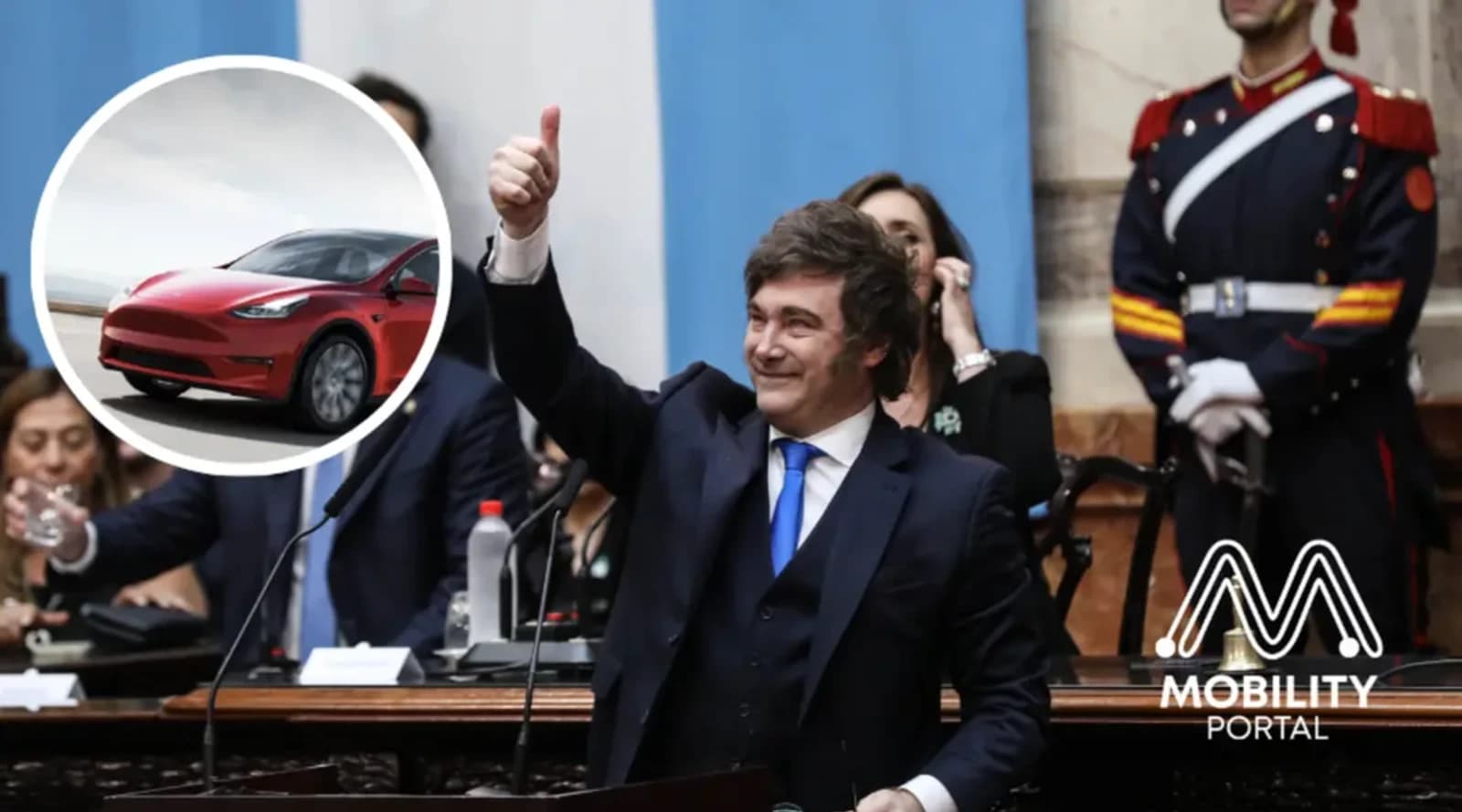
The Argentine government is preparing a new call for applications to import hybrid and electric vehicles without paying the 35% extra-zone tariff, but the 2027 edition could bring significant changes to its access conditions.
Although there is still no official announcement, the quota would be enabled between the end of August and the first days of September 2026 , with the objective that the awarded units begin to enter the country from January of next year.
The main point of contention revolves around the maximum price of USD 16,000 FOB set for vehicles eligible for the benefit. Importers and manufacturers are proposing to raise this limit or revise it to broaden the range of available makes and models.
The modification could again alter the composition of the Argentine market, which during the first half reached a 66% share of imported vehicles .
A system that already controls 12% of the market
The program includes an annual quota of 50,000 electrified vehicles from non-zone countries , which can enter without paying the usual 35% tariff.
However, the impact of the policy during 2026 will be greater than originally anticipated. Since a large portion of the units awarded in the first round only arrived between December and January, the remaining quota from the previous round ended up overlapping with the quota for the current year.
As a result, during 2026 approximately 80,000 cars could be registered under the scheme , instead of the 50,000 expected for an ordinary year.
If we consider the registrations accumulated during the last year and a half, the units incorporated through both quotas would already represent around 12% of the private car and SUV market .
The mechanism not only expanded the electrified vehicle offering, but also accelerated the arrival of new brands, reduced the tax burden on imported models, and increased competitive pressure on established manufacturers.
The limit that tipped the market towards China
The maximum FOB price of USD 16,000 was designed to direct the benefit towards entry-level vehicles and prevent the tariff exemption from ending up financing high-end cars.
However, after two rounds of applications, some in the industry believe that the threshold ended up acting as a barrier that favored Chinese or Chinese-made models , whose cost structures made it easier to fit within the limit.
European, Japanese, and other manufacturers face greater difficulties in introducing electrified vehicles below that price point.
The discussion faces two objectives. On the one hand, preserving the program's affordability and preventing the quota from being filled by expensive cars. On the other, expanding technological diversity and allowing the entry of models that are currently excluded due to a relatively small difference in their original price .
Within the sector, there is even talk of eliminating the maximum or raising it to approximately USD 30,000 FOB .
A door for Tesla?
An increase of that magnitude could enable the entry of vehicles currently excluded from the regime, including the Tesla Model 3 .
The possibility gains relevance after Tesla's recent commercial launch in Uruguay and expectations that the company will move forward with a similar strategy in Argentina.
However, including higher-value vehicles would change the program's initial purpose. The government implemented the quota not only to accelerate electrification but also to increase competition and put downward pressure on local market prices .
Industry experts warn that, despite the massive arrival of electrified models from China, the program has not yet generated a significant reduction in the prices of entry-level domestic vehicles.
The debate, therefore, is not only about adding electric models, but about defining which market segment should receive the tax incentive.
Selling prices are also under scrutiny
Another point that could be reviewed is the control over the final marketing values.
To participate in the bidding process, companies must report both the FOB price of the vehicles and the maximum value in dollars at which they commit to selling them in Argentina.
However, some models included in the quota program saw price increases after their launch. The lack of publicly available information on the prices declared to the government makes it difficult to determine whether these variations reflected the original conditions.
One possible explanation is that certain companies have reported a maximum price and started selling their units below that value, preserving room to make subsequent adjustments.
It is also possible that some brands have exhausted the units imported without tariff and replenished their inventory through conventional operations, which are already subject to the extra-zone tax.
The third call for applications will define the course of the program.
The 2027 tender will arrive in a very different market than the one that received the first quota.
Argentina now has a much wider range of hybrid and electric vehicles, new Asian brands, greater competition among importers, and consumers more familiar with these technologies.
Applications in the first round exceeded available capacity, while the regime altered the balance between local production and imports. The USD 16,000 FOB limit was one of the factors that allowed Chinese automakers to rapidly expand their presence.