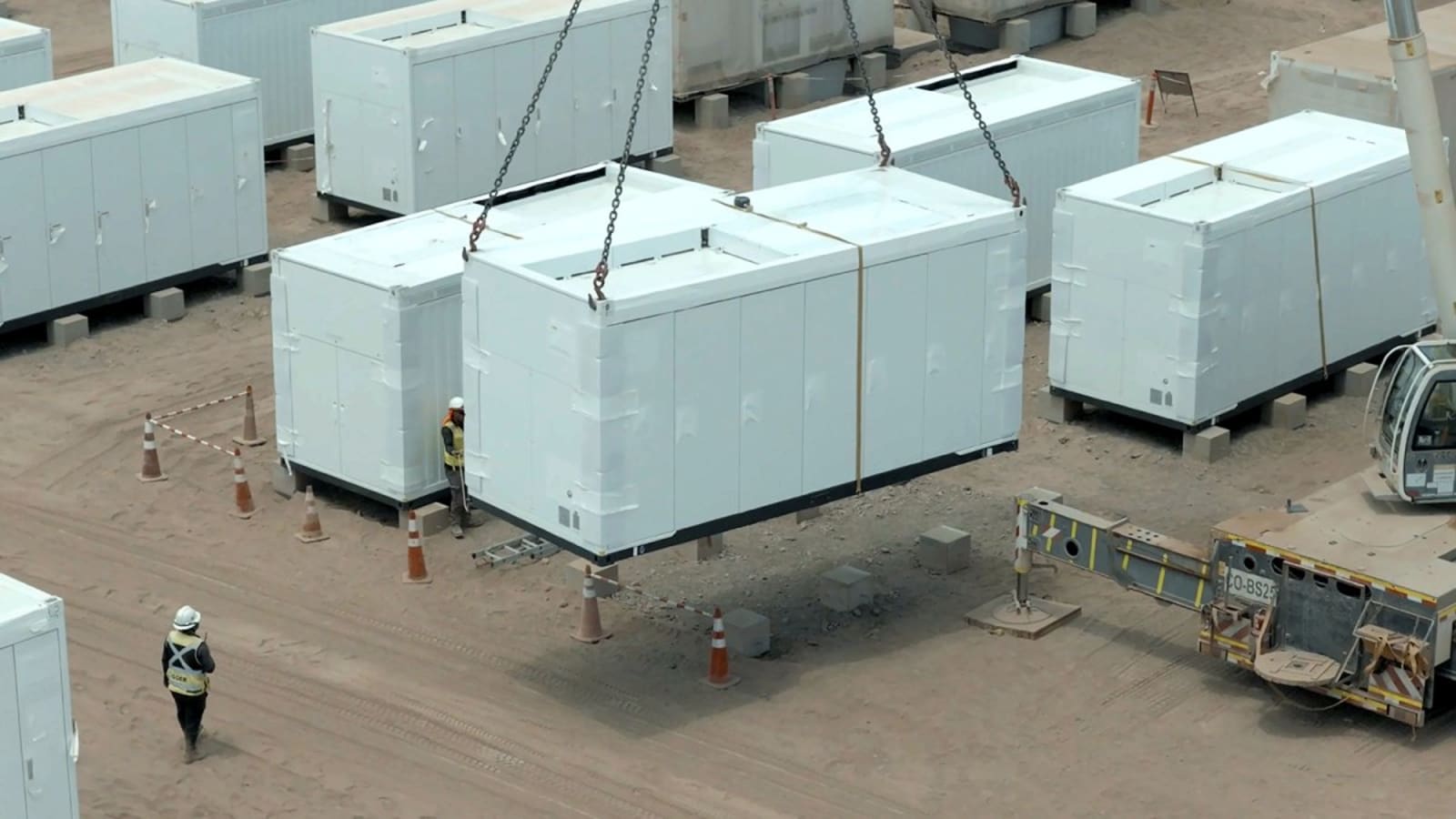
Aurora Energy Research argues that a gradual and carefully designed transition to a bid-based electricity market could strengthen investment and operating signals for battery energy storage systems (BESS) in Chile.
The change must combine clear rules, predictable timelines, and safeguards for segments at risk of market concentration.
Energy storage has been rapidly deployed in Chile, driven by the power recognition established in Supreme Decree 70 of 2024. Installed capacity reached 3.7 GW in September 2026 , and Aurora's projections point to nearly 10 GW by 2030. Batteries contribute to integrating renewable generation, displacing nighttime thermal generation, reducing curtailment, and providing reserves to the system.
At the same time, the rapid integration of BESS is transforming price formation. Near-zero nighttime prices are already a reality under certain conditions of abundant renewables, high water availability, and stagnant demand.

While these patterns have been accelerated by high rainfall at present, as battery shipments increase these patterns could become more frequent and reduce the price differentials captured by the assets.
It is in this context that opportunity cost methodologies for BESS are currently under discussion, seeking to move away from a US$0/MWh signal when batteries set the price. However, Aurora observes that a cost-based solution has limitations in capturing the value that BESS delivers to the system, as it still establishes relatively low costs when batteries determine the system's marginal cost.
Chile is a unique case internationally: it is the only cost-based electricity market with a battery capacity exceeding 10% of installed capacity.
In markets with high penetration of BESS, bid-based mechanisms are the norm, although their application requires monitoring and effective tools to mitigate market power, such as concentrated hydroelectric generation in specific basins.
A transition to offerings could give asset owners greater operational flexibility, fostering higher opportunity costs than cost-based methodologies. However, its implementation must be phased in.
Raúl Urtubia , Product Manager at Aurora Energy Research, commented: "Chile has installed batteries at an extraordinary rate and is already facing the challenges of a mature storage market. Nighttime hours with prices close to zero are a symptom of the divergence between regulation and market development, showing that the market design must evolve to better reflect the operational value of batteries."
"A gradual transition to bidding can strengthen investment signals, provided it is accompanied by clear rules and safeguards for competition and system security," he added.

 By Florencia Guglielmetti
 By Energía Estratégica

 By Matías Medinilla

 By Emilia Lardizabal