Industrial solar energy is no longer an investment solely associated with reducing electricity bills. For many companies, generating their own electricity also means reducing exposure to energy costs, improving operational predictability, and resolving issues that can directly impact production.
In this scenario, grid-connected photovoltaic solutions continue to play a central role, especially in plants whose activity coincides with peak solar generation hours. However, the needs of each installation can be very different: while some companies seek to maximize self-consumption, others need to reduce their peak demand, have backup power in case of outages, or compensate for the limitations of an insufficient electrical connection.
"Companies are still primarily looking to reduce costs and generate their own energy. But now energy storage is starting to gain traction, due to power restrictions from distributors, isolated locations, or grid quality problems that affect production processes," explains Marcos Feroce, director of Sunrise Solar Energy .
Experience from industrial projects shows that there is no single configuration capable of meeting all these needs. The challenge lies in identifying the specific energy problem of each plant and designing a solution that addresses both its current conditions and its operational requirements.

From energy savings to continuity of production
In an industrial facility, the cost of electricity is only one part of the equation. A power outage can halt machinery, affect materials in process, compromise product quality, or generate losses that far exceed the value of the energy not consumed.
Therefore, the analysis prior to a solar investment must consider variables such as the hourly consumption profile, the power required by the equipment, the operating hours and the characteristics of the available electrical connection.
When production activity coincides with photovoltaic generation hours, a grid-connected installation can directly supply part of the plant's demand. This reduces the amount of electricity the company needs to purchase during those periods.
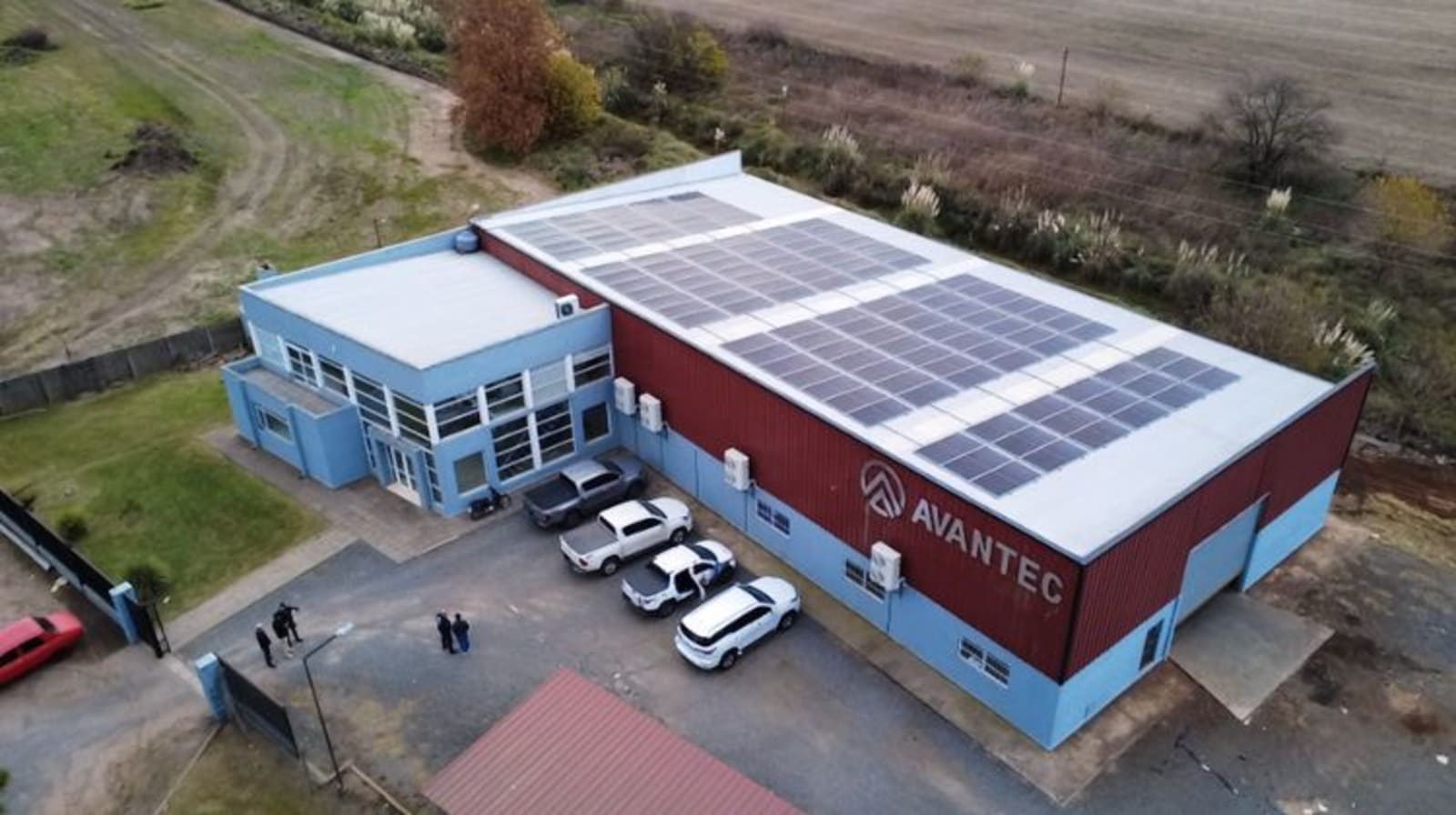
This is the principle behind various industrial projects developed by Sunrise Solar Energy. At AVANTEC, a company dedicated to computerized turning and precision machining, a 73 kWp system was installed with 127 solar panels and a 50 kW inverter.
Energy integration was also linked to working conditions and equipment protection. The company installed climate control in the industrial building to improve the work environment and maintain more controlled temperatures for the sensitive electronics of its CNC machines.
The case illustrates a relevant issue for the industry: solar generation can be part of a broader operational efficiency strategy, in which energy utilization is combined with other decisions aimed at improving plant performance.
Storage: a solution for constraints that were previously difficult to solve
One of the main differences between a grid-connected photovoltaic system and a hybrid solution is the possibility of incorporating batteries and managing the stored energy according to the needs of the installation.
Energy storage can serve various purposes. It provides backup power during power outages, covers peak demand through peak shaving strategies, and improves response to grid quality issues. In isolated installations or those with power limitations, it can also help address needs that cannot be met simply by adding solar panels.
"In the last two years, storage technology has developed significantly in Latin America and has arrived to provide solutions on a large scale. There are things that couldn't be resolved before or were economically unfeasible, but today they are central to conversations with companies," Feroce points out.
However, the addition of batteries does not imply that all projects require storage. Its suitability depends on demand characteristics, the cost of outages, supply constraints, power requirements, and the investment needed for the entire system.
The assessment must also consider how the panels, inverters, batteries, and, where applicable, existing generator sets interact. Equipment selection and the control strategy are crucial for ensuring the system meets the plant's actual needs.
Continue reading
Sanyo Color: Solar power generation, storage and industrial backup
An example of this integration is the project developed by Sunrise Solar Energy for Sanyo Color, a company in the pigment industry located in Florida Oeste, Buenos Aires province.
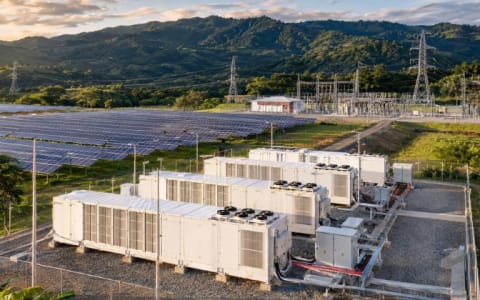
The company began its journey with solar energy in 2017, expanded its installation in 2023, and incorporated a hybrid solution in 2024. The current project integrates 263 solar panels, a photovoltaic power of 122.43 kWp, three 50 kW hybrid inverters, and a 153 kWh storage system composed of 30 high-voltage lithium batteries.
The architecture allows for the combination of photovoltaic generation, storage, backup power, and peak power management. It also includes integration with the existing generator set, which can activate automatically when the battery charge reaches the threshold configured for the system.
In its first ten months of operation, the facility covered 47% of the plant's total consumption through its own generation, according to data obtained directly from the plant.
This case study illustrates how a solar investment can evolve as a company's needs change. An initial self-consumption phase can later become a broader energy solution, incorporating storage and backup power, when operational conditions justify such an addition.
It also highlights the importance of integration engineering. In this project, the storage equipment was housed in a temperature- and humidity-controlled technical cabinet with dust protection, developed in conjunction with Sanyo Color staff.
Sizing, a strategic decision
For companies considering investing in solar energy, the first step should not be defining a number of panels, but studying how energy is consumed and what needs to be addressed.
Installed capacity, available surface area, hourly demand curve, and the ability to utilize generation capacity largely determine the design. In projects with energy storage, it is also necessary to analyze the power that must be supplied, the required autonomy, and the conditions under which the batteries will operate.
A properly sized solution can prioritize savings through self-consumption, reducing peak demand, or ensuring the continuity of certain processes. In other cases, it will be necessary to combine several objectives.
"Each industry has a different need. It's not the same for a company that seeks to take advantage of solar generation during the day as it is for a plant that needs backup power because a power outage can affect its production," Feroce summarizes.
The technical and economic evaluation makes it possible to establish which combination of technologies makes sense in each case, without incorporating components that do not provide a concrete benefit to the project.
A comprehensive view of industrial energy
The evolution of solar solutions expands possibilities for businesses, but also increases the importance of system design and integration. The choice of components must be based on a defined energy strategy that considers both cost savings and actual operating conditions.
The growth of these alternatives opens up new possibilities for Argentine industry. The challenge is no longer just generating electricity from the sun, but determining how to harness it efficiently, when to store it, and how to integrate it to meet the needs of each production process.
More than a standard solution, industrial solar energy requires a specific assessment of each installation. This ability to transform specific energy needs into technically viable solutions is what allows renewable energy generation to be effectively integrated into a company's operational strategy.
 By Emilia Lardizabal