


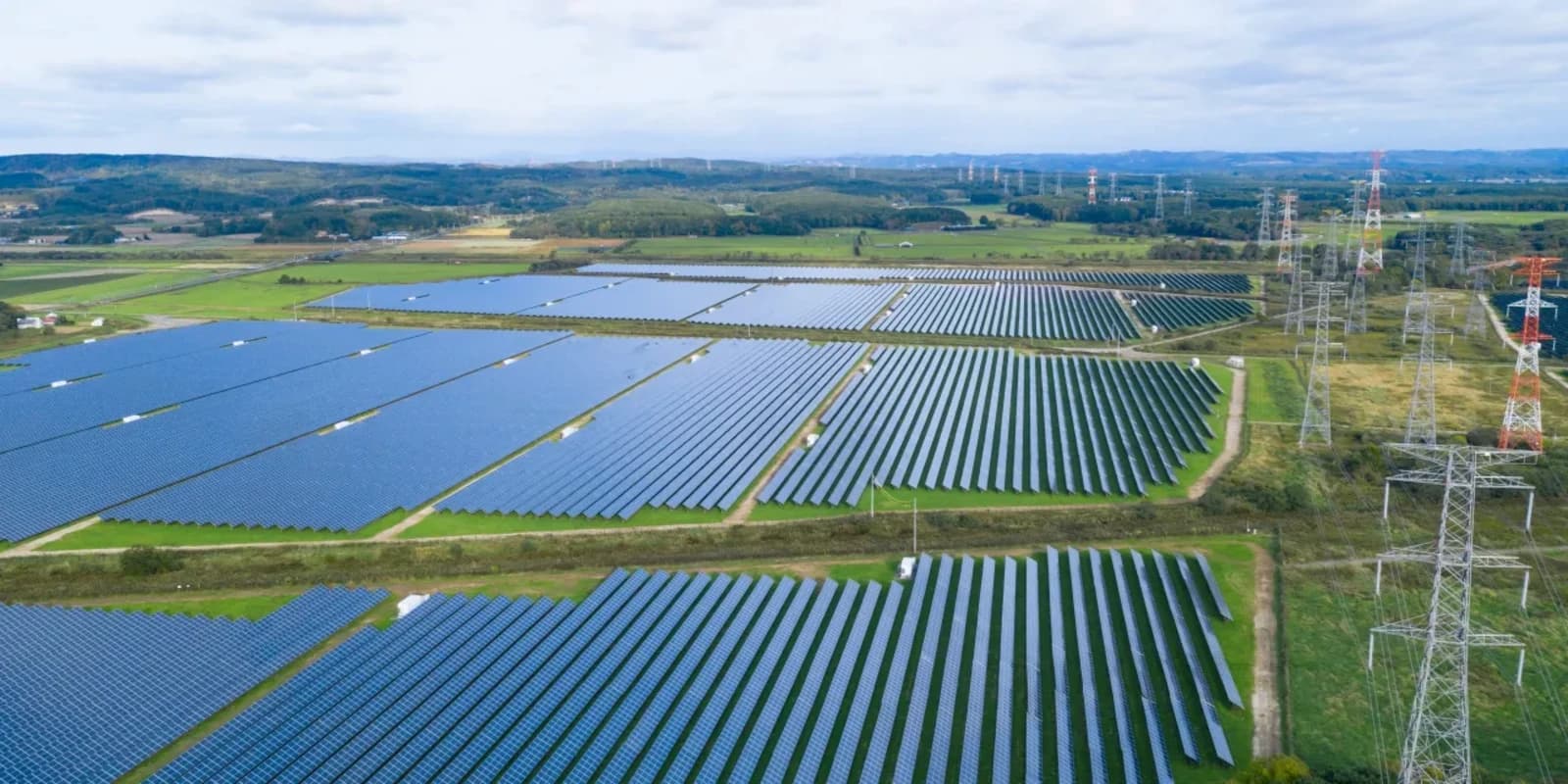
Bangladesh has launched an international tender to contract the engineering, procurement and construction of a 220 MWac photovoltaic solar power plant in Sonagazi, Feni district, one of the largest-scale projects planned to accelerate the country's renewable energy expansion.
The tender was launched by the state-owned Electricity Generation Company of Bangladesh PLC (EGCB) and covers the design, supply, installation, testing, and full commissioning of the power plant. The selected contractor will have 18 months to complete the project.
The initiative will be jointly financed by EGCB and the Islamic Development Bank (IsDB) through a combination of loans, grants, and other financial instruments. Bangladesh had requested approximately USD 143.28 million from the organization to cover part of the development costs.
Proposals must be submitted in hard copy by 12:00 noon on September 15, 2026 , local time. Electronic bids will not be accepted, and the opening will be conducted publicly immediately after the deadline.

The procedure will be carried out through a single-stage international competitive bidding process without prior prequalification. However, EGCB has established demanding financial and technical conditions to limit participation to companies with a proven capacity to execute large-scale projects.
Those interested must demonstrate a minimum average annual turnover of USD 130 million in the construction sector during the last three fiscal years.
They will also have to demonstrate access to liquidity, credit lines or other financial resources of at least USD 25 million , in addition to providing a bid guarantee of USD 2.5 million or its equivalent in local currency.
In terms of technical requirements, bidders must have a minimum of five years of experience in the energy sector. During the last decade, they must have completed at least one similar contract worth USD 70 million or two comparable projects worth a minimum of USD 50 million each.
The state-owned company will hold a preliminary meeting on August 19, 2026 in Dhaka to answer questions about the tender requirements, the contractual structure and the characteristics of the plant.
The full documents can be purchased by paying a non-refundable fee of USD 300 or BDT 36,000 , while an informational version will be available through the company's official channels.
The Sonagazi project is part of Bangladesh's strategy to reduce its dependence on natural gas and imported fuels, whose volatility poses a growing risk to energy security and public finances.
The country is seeking to expand private participation and accelerate the construction of new photovoltaic capacity, although large-scale development continues to be conditioned by political uncertainty, grid limitations, land availability and access to competitive financing.
According to IRENA, Bangladesh ended 2025 with approximately 1146 MW of installed solar capacity , still far from the government's goal of reaching 10 GW by 2030 .
The new 220 MW project would be equivalent to about 19% of the photovoltaic power that the country had operational at the end of last year, so its incorporation would represent a relevant leap within a market still in an initial stage of expansion.
A key tender to reduce the solar gap
The gap between current capacity and the 2030 target forces Bangladesh to add several gigawatts in less than five years, a trajectory that will require more frequent tenders, private investment, new networks and greater coordination between generation and demand.
The Sonagazi power plant will contribute to this process through a comprehensive EPC scheme, with which EGCB seeks to transfer responsibility for design, equipment supply, construction and commissioning to a single contractor.
The support of the Islamic Development Bank provides financial backing and establishes international standards for the contracting process, a relevant aspect for attracting companies with experience in utility-scale projects.
The competition will also serve to gauge the interest of global contractors in a market with growing generation needs, but still exposed to currency, regulatory and execution risks.
With a capacity of 220 MWac and a construction period of 18 months, Sonagazi is emerging as one of the main references of the new solar stage in Bangladesh.
The challenge will be to convert the awarded project into an operational facility within the planned timeframe and to complement it with the necessary transmission infrastructure to evacuate its output. Only in this way will the country be able to reduce the gap between its current 1.1 GW of solar power and the 10 GW target set for the end of the decade.