

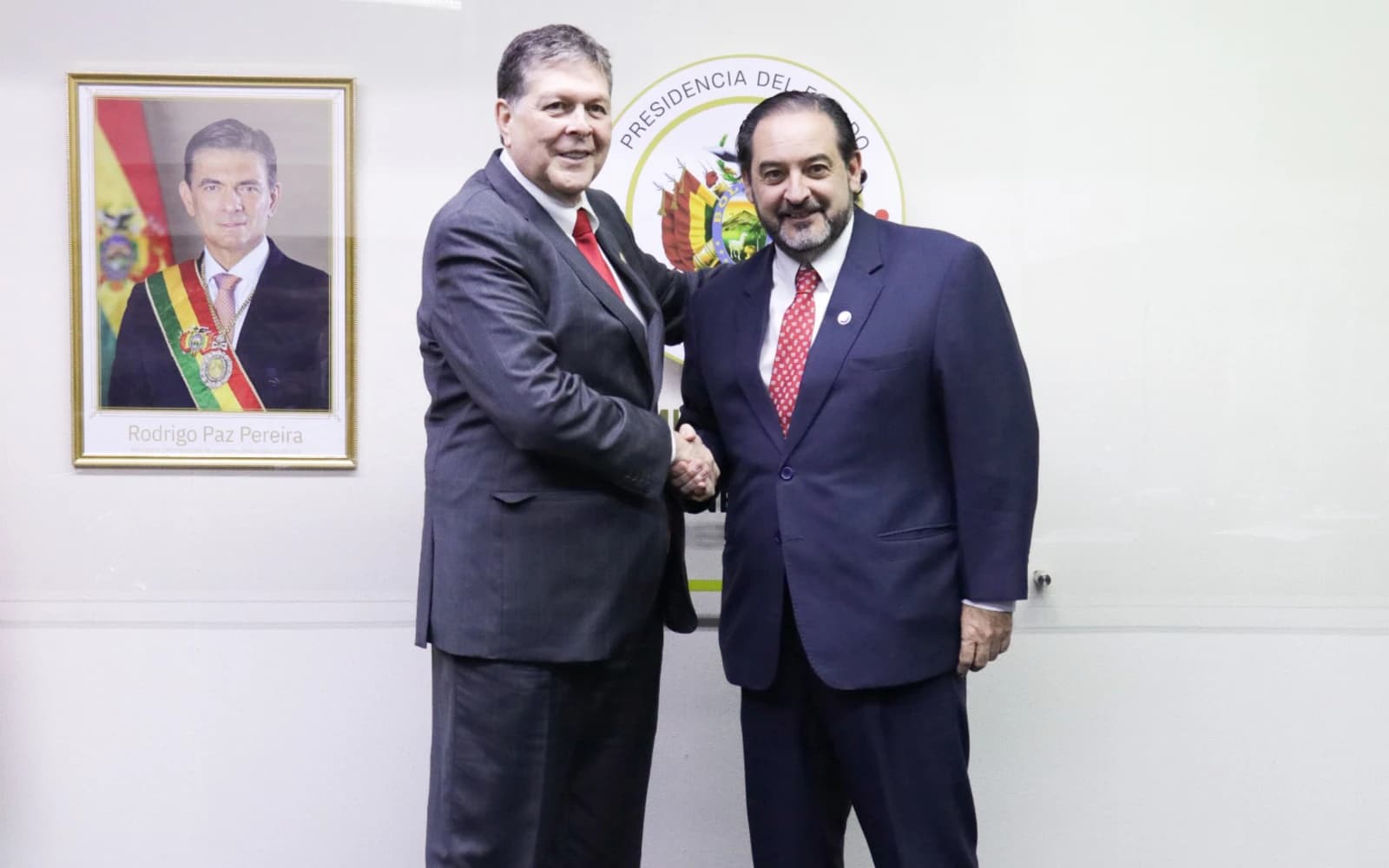
The Latin American and Caribbean Energy Organization (OLACDE) and the Ministry of Hydrocarbons and Energy of the Plurinational State of Bolivia defined the 2027 work agenda, establishing the strategic and operational framework for the next Presidency of Bolivia, which they will assume in October at the LVI Meeting of Ministers, the highest governing body of the organization.
During the meeting, both authorities agreed on a roadmap to articulate and coordinate Bolivia's management as president of OLACDE next year.
The four strategic pillars are:
- First — Fair and sustainable energy diversification: boosting renewable energy, energy efficiency, electric mobility and new uses of energy.
- Second — Energy security, hydrocarbons and transition fuels: natural gas was incorporated as a key fuel for the transition, in addition to strengthening security and resilience in energy supply.
- Third — Energy integration and regional infrastructure: Focuses on interconnections, the development of strategic infrastructure and regulatory harmonization.
- Fourth — Investment, financing and innovation for energy diversification: attracting public and private investment, promoting public-private partnerships, strengthening financing mechanisms and technological innovation.
The meeting included representatives from the European Union (Permanent Observer of OLACDE), the German Embassy in Bolivia, and the German Agency for International Cooperation (GIZ), through the ProTransition program, supported by the German Federal Ministry for Economic Cooperation and Development (BMZ). This presence strengthened coordination with strategic partners and the technical and financial cooperation required for implementing the agenda.