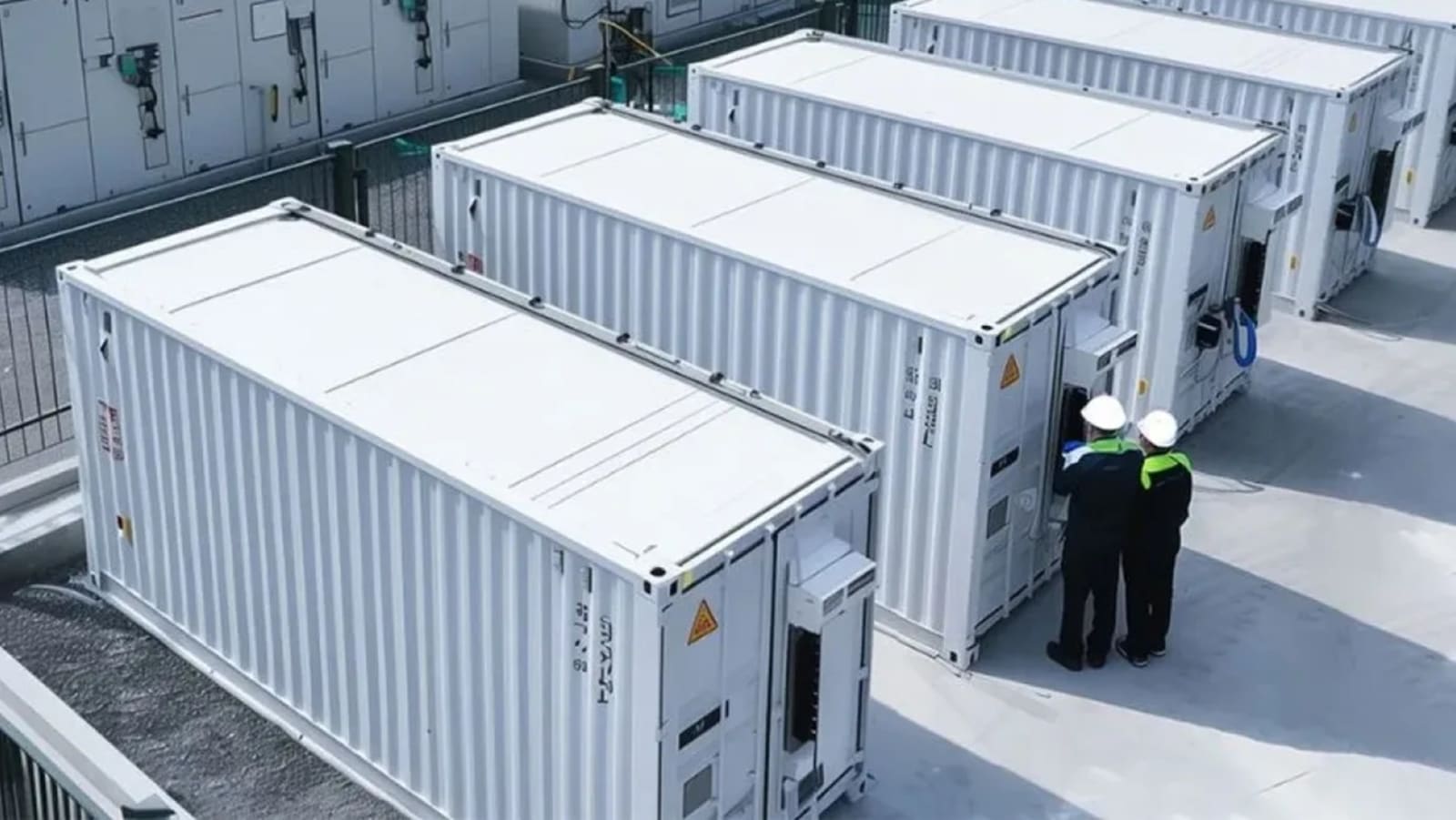
Brazil's National Bank for Economic and Social Development (BNDES) will finance up to 80% of the investment in BESS projects competing in the upcoming storage reserve auctions , although the economic conditions will depend directly on the degree of nationalization of the equipment.
The so-called routes 2, 3 and 4 , which require different stages of local battery manufacturing, will be able to structure 100% of the financing granted by BNDES with resources from the Climate Fund .
The difference became more significant after the National Monetary Council reduced the financing cost of the Climate Fund for systems using batteries produced in Brazil from 6.5% to 3% annually . This is added to the BNDES remuneration, which starts at 1.3% annually, bringing the reported minimum nominal cost to around 4.34% annually .
For route 1 , which allows importing batteries and meeting local content requirements through other system components, the structure will be different: 80% of the credit can be accessed from the Climate Fund, with a minimum nominal rate close to 7.88% per year, and the remaining 20% will be financed by TLP .

This last reference was located in November at IPCA plus 7.72% annually , to which is added a minimum margin of 1.1% for storage.
The distinction makes local content a variable that will directly impact the debt cost of projects that are awarded in the LRCAP scheduled for December 2nd and 4th .
BNDES also clarified that access to the Climate Fund will not depend on the day in which each initiative competes, but on compliance with the accreditation and nationalization requirements.
The bank's participation will be limited by the lesser of two parameters: up to 80% of the total investment or 100% of the elements considered financeable .
Thus, for a R$1 billion project whose components are fully eligible, the loan could reach R$800 million. If only R$700 million meet the conditions, that latter amount would become the limit.
The eligible base is not limited to the BESS container. National equipment, materials, and services may be incorporated, including substation components and certain structures necessary for the electrical connection.
Imported equipment, however, cannot be financed through the Climate Fund, even when there is no equivalent Brazilian product.
Direct credit under this mechanism will start at R$ 20 million , while each economic group will be able to access up to a maximum of R$ 1 billion within a 12-month period.
Five providers already have fully accredited systems
The financial definition comes when manufacturers accelerate the certification of their solutions to be eligible for auctions.
Less than a week after the first call for tenders, five suppliers already have complete accredited storage systems , which meet seven CFI-Finame codes.
YOU.ON, a pioneer under route 1, has two codes, while Moura was the first company to complete the procedure via route 2 and also has two .
Canadian Solar, through e-Storage and under route 1, Gotion and TBEA each have an accreditation.
BNDES also anticipated that at least two other codes would be published before the auctions .
Windey and WEG have already certified their batteries, a preliminary step to enable complete systems under route 2.
In total, 14 suppliers passed the first phase of accreditation . The manufacturers include BYD, Moura, Nari, Trina, SecPower, WEG, and Windey, while the engineering companies include Canadian Solar, Envision, Gotion, TBEA, SMA, UCB, and YOU.ON.
However, overcoming that first stage represents approximately 15% of the procedure required to finally obtain a CFI-Finame code for the complete system.
Up to 16 years of debt and amortization linked to the BESS flow
The BNDES will also allow structuring loans with terms of up to 16 years , including the implementation period.
The reference presented contemplates a grace period of up to six months after the start of commercial operation and, subsequently, an amortization scheme that can be adapted to the cash flow of each project.
The objective is to consider not only the repayment of the debt, but also the investments necessary to maintain the availability of the batteries during the 15-year term of the capacity reservation contract .
The final expiration date must occur at least six months before the termination of that contract.
The structure must also consider the so-called augmentation , that is, the future additions or replacements of modules intended to preserve the capacity of the BESS as the batteries degrade.
The initial Climate Fund credit will focus on pre-commercial-operational investments and does not guarantee additional resources for future replacements , so developers will need to demonstrate how they will finance that component over the life of the asset.
In project finance mode, the bank provides guarantees on the shares of the special purpose entity, the equipment and the income derived from the contract, in addition to requiring certain coverages during the initial phase.
Among the requirements is a minimum debt service coverage ratio of 1.30 for at least 12 consecutive months , certified by an independent auditor, before releasing certain personal guarantees.
The conditions presented do not imply automatic approval of financing. Once the auctions are awarded, each project will undergo an individual credit analysis , which will consider technology, suppliers, construction risks, financial structure, and the ability to meet contractual obligations.
Thus, in addition to the price offered in the LRCAP, the decision on how much content to industrialize in Brazil will become part of the financial equation of each BESS , with an explicit advantage for routes that incorporate local battery manufacturing.
 By Matías Medinilla
 By Energía Estratégica

 By Ailén Pedrotti


 By Emilia Lardizabal