


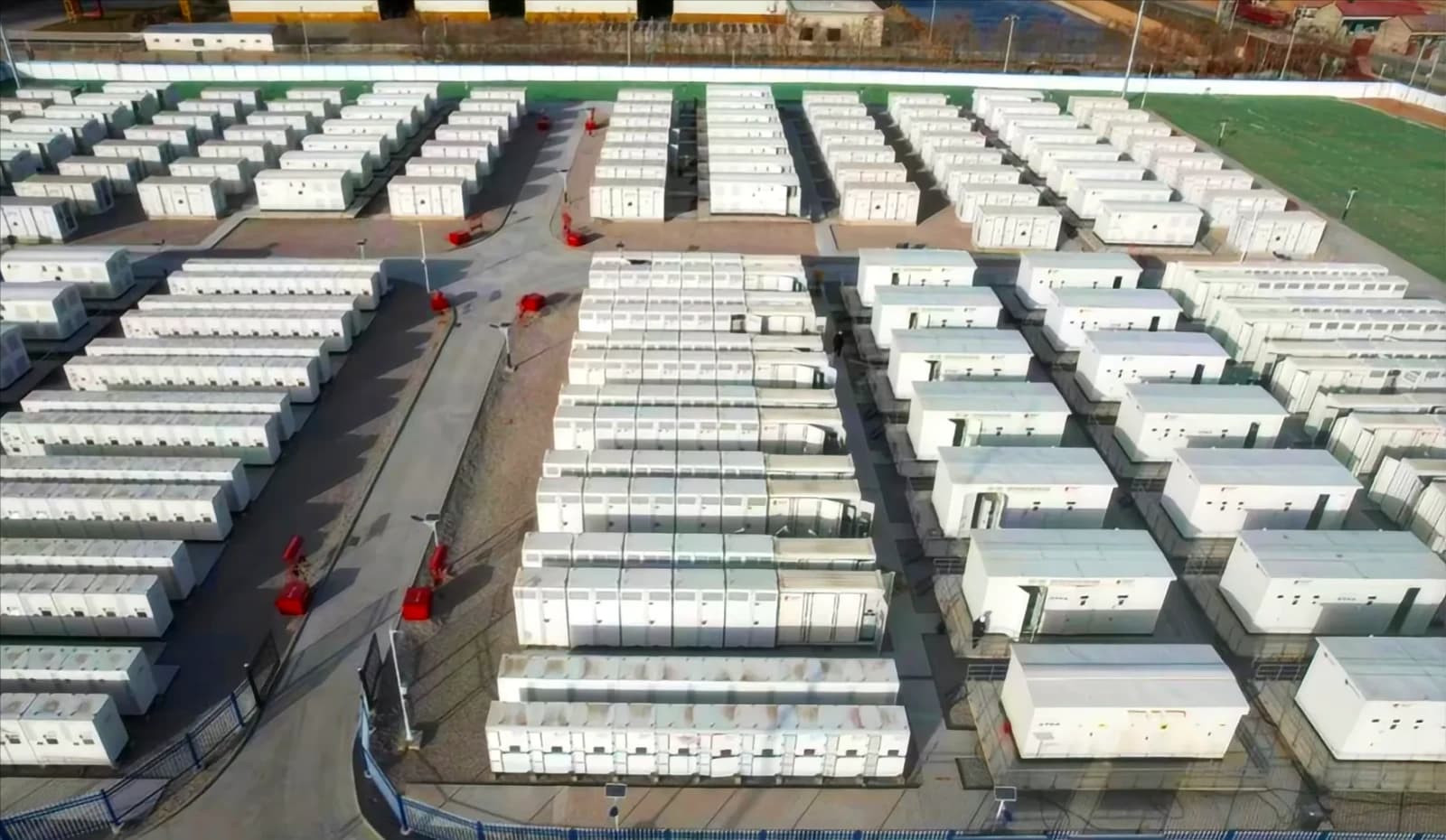
Brazil has tightened the conditions for participating in its first auction for reserved capacity exclusively for battery storage systems . The proposal increases financial guarantees, restricts the transfer of awarded projects, and strengthens technical and corporate requirements to reduce speculative bids.
The National Electric Energy Agency (ANEEL) opened a public consultation that will take place between July 30 and September 14 to analyze the preliminary versions of the tender documents and contracts.
The scheme includes two tenders: the first will be held on December 2 for projects that comply with the local content set by the National Bank for Economic and Social Development (BNDES), while the second will take place on December 4 and will be open to all storage systems.
The projects must have a minimum capacity of 30 MW , offer a four-hour operating duration, and be available for centralized dispatch by the National Electric System Operator (ONS). The contracts will have a 15-year term and supply will begin on August 1, 2028.

One of the main changes will be the increase in the guarantees required from developers. The bid bond would be set at BRL 100,000 per MW , while the performance bond would amount to BRL 1 million per MW , based on an investment cost of BRL 10 million per MW installed.
In this way, the support required to submit a proposal would be equivalent to 1% of the estimated investment, and the guarantee to execute the project would represent 10%. ANEEL seeks to exclude participants without sufficient technical or financial capacity and reduce the risk that the awarded assets will not be built.
The rules would also prevent the winners from selling or trading the projects before they become commercially operational. This restriction aims to prevent companies from securing contracts only to later transfer them, instead of directly developing the systems they are committed to.
The proposed regulation, however, incorporates greater flexibility for technology procurement. Developers will be able to replace the battery supplier declared during registration with another manufacturer accredited by BNDES, provided they maintain compliance with local content requirements.
The Brazilian Association of Energy Storage Solutions (ABSAE) believes that this possibility will broaden competition among suppliers and reduce the risk associated with depending on a single manufacturer throughout the development period.
This measure could become relevant given price fluctuations, equipment availability, and the rapid technological advancement of batteries. Between the registration of the projects and their commissioning, scheduled for August 2028, the winning bidders could find more competitive solutions than those initially considered.
The draft also introduces stricter transparency requirements for investment funds. Those participating in tenders will be required to disclose the identity of all investors with at least a 5% stake and present a corporate structure that allows for the identification of beneficial owners.
Furthermore, not all systems installed alongside other electrical assets will be eligible to compete. The proposal excludes certain BESS systems associated with generators that already have contracts in the regulated market, distributed generation projects, or facilities linked to the Incentive Program for Alternative Sources of Electrical Energy (Proinfa).
Systems connected outside the national transmission grid or those located next to another independent storage project would also be ineligible. The two tenders will therefore focus on stand-alone systems that can respond directly to ONS operating instructions.
The cost of batteries remains undefined
Despite the progress made on the basics, the main point of contention has not yet been resolved: how the cost of the contract will be distributed.
Unlike other mechanisms in the Brazilian electricity sector, the legislation stipulates that payments for storage systems will fall on generating companies and not directly on consumers.
Power generators are demanding that the methodology be defined before the December tenders so they can calculate the economic and regulatory impact of the contracts. At the same time, the sector is pushing for a modification of this system through a proposal currently under discussion in the National Congress.
ANEEL plans to continue the debate over the next few months, although it acknowledged that it will be difficult to reach a decision before publishing the final tender documents.
The lack of clarity surrounding this charge thus becomes one of the main uncertainties of the process. While developers will have to provide higher guarantees and demonstrate their ability to execute the projects, the companies that would bear the cost still don't know what the basis for distributing payments will be.
With two auctions planned for December, Brazil aims to incorporate high-power batteries capable of meeting the electrical grid's needs for four hours. The new scheme will mark the debut of stand-alone storage as a capacity resource, but its progress will depend on both the robustness of the projects and a still-pending economic definition.