


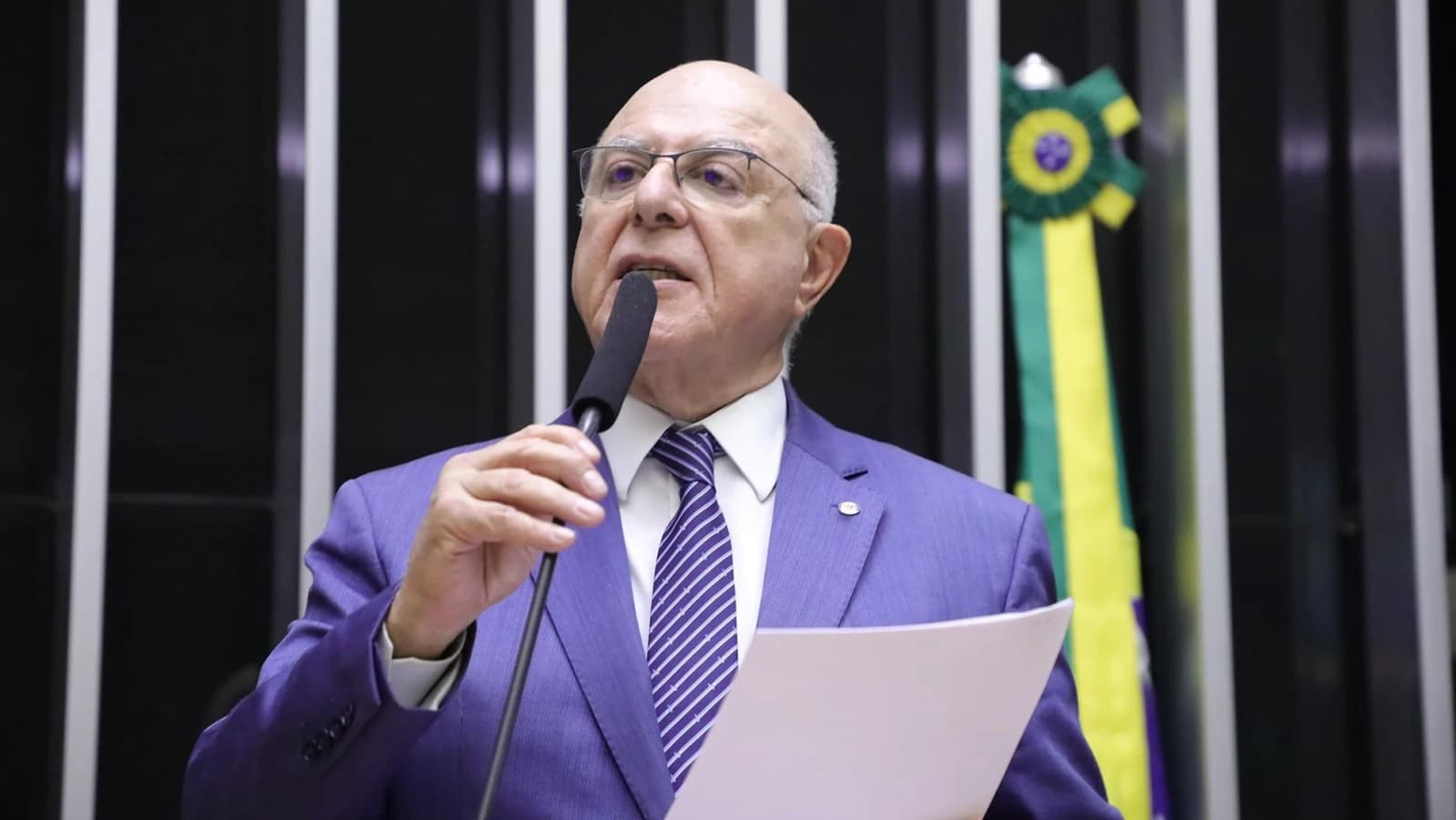
Brazilian Congressman Arnaldo Jardim introduced Bill 3.716/2026, which proposes to modify the allocation of costs associated with contracting reserve capacity through large-scale batteries.
The current provision establishes that these charges must be assumed exclusively by the generators, but if the initiative succeeds, the contracts will be governed by the general rule and the expense will be distributed between generators and end users of the National Interconnected System (SIN) .
In other words, no percentages or new proration formulas are created: the proposal eliminates the specific rule for batteries and restores the general mechanism provided for in the electricity legislation.
The change is particularly relevant ahead of the country's first auctions for stand-alone BESS systems , scheduled for December 2nd and 4th, 2026. Therefore, the decision regarding who will assume the responsibilities could impact the competitiveness of the bids, regulatory risk, and the price required by developers.

The document summarizes its criteria under the premise that " systemic mandates require systemic allocation " and that if the benefits reach consumers, generators, transmitters and distributors, the financing should not be concentrated in a single segment.
In this way, the project seeks to apply the principle of " technological neutrality ", so that the different solutions compete under a comparable legal regime.
But the discussion isn't limited to the formal distribution of the charge. The initiative warns that generators will incorporate the cost of the batteries into the price of electricity sold through contracts, which could produce a cascading tax effect. And as a result, according to the bill, the final tariff would be higher and less transparent .
Furthermore, uncertainty can increase the cost of capital, reduce the number of participants, and negatively impact competition in auctions. For projects with long-term contracts, any uncertainty regarding future charges is incorporated into the financial models and economic bids.
Energy sector associations such as ABEEólica, ABSAE, ABIAPE, ABSOLAR and APINE formally supported the initiative, considering that the change strengthens legal certainty and prevents technologies with equivalent performance from being subjected to different regulatory conditions.
In their joint statement, the entities argue that the current rule introduces " legal uncertainty for the first battery auction" and warn that the lack of regulation compromises the predictability of investments and may reduce the competitiveness of the process.
The associations also argue that all alternatives capable of providing equivalent services should be subject to the same legal framework . Regarding tariffs, the five organizations point out that maintaining the current rule tends to raise prices for consumers because the charges imposed on generation end up being incorporated into the contractual value of the electricity.
The repeal would not create a regulatory vacuum. Article 3-A already governs capacity payments and maintains the Executive Branch's authority to establish the operational details of the mechanism.
The debate is taking place in a market with strong growth expectations. A study cited in the justification estimates the installation of 71.8 GWh of storage between 2025 and 2034 , with investments of approximately R$ 77.2 billion .
The document attributes approximately 42% of that amount to the Capacity Reserve segment integrated into the SIN and approximates it to R$ 36 billion. However, a direct calculation of 42% of R$ 77.2 billion yields approximately R$ 32.4 billion .
Beyond that difference, the projection shows the sector's potential scale. Storage would account for 25% of the growth in installed capacity in Brazil's electricity grid during the decade analyzed.
Last-minute measures for the two auctions
The guidelines for the first stand-alone battery tenders were published in June of this year, where the Ministry of Mines and Energy defined that it will be carried out on two different days.
The first call, called LRCAP of 2026 – National Stockpile , will be held on December 2nd and will be exclusively for systems that meet the minimum national content criteria established by the National Bank for Economic and Social Development (BNDES).
While two days later the 2026 LRCAP – Armazenamento will take place, open to projects without nationalization requirements.
The successful bidders will have access to 15-year contracts , with supply starting on August 1, 2028. Remuneration will be structured through a fixed annual prescription, paid in 12 monthly installments and updated according to the expanded consumer price index (IPCA).
The registration of initiatives with the Energy Research Company is open until July 31, 2026 , and each installation must have at least 30 MW , use new batteries, and deliver four continuous hours at full power.
The equipment must maintain a minimum overall efficiency of 85% and complete its recharge in a maximum of six hours, as well as incorporate grid-forming functionalities, remain synchronized when not charging or unloading, and operate with a Unit Variable Cost equal to zero.
The regulation sets a limit of two complete cycles per day and up to 366 cycles per year . These technical conditions, combined with dispatch risk and the fixed revenue structure, make the definition of systemic charges especially relevant.
But the progress of Bill 3.716/2026 will define whether the cost of the reserve contracted through batteries continues to be concentrated in generation or is distributed among the agents who receive its benefits.
The decision will have a direct impact on December's bids, the cost of capital, the bankability of projects, and the formation of electricity tariffs in one of the storage markets with the greatest potential in Latin America.