


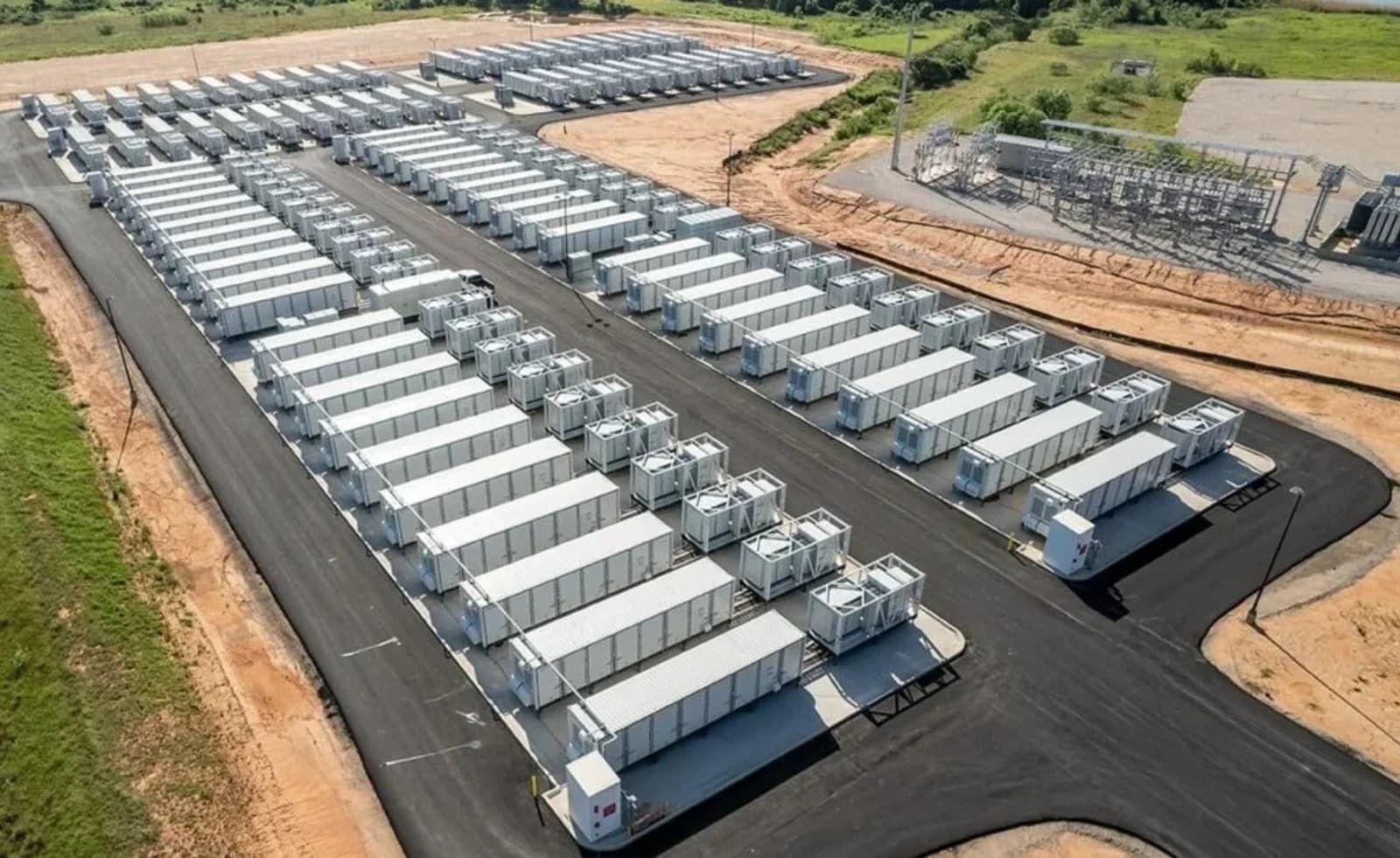
Brazil received 6091 projects for 296807 MW of power for the BESS stand-alone auctions (called LRCAP Storage), scheduled for December 2026, This represents the largest participation volume achieved in competitive processes within the national electricity sector.
The call for proposals exclusively for projects with minimum national content criteria (to be held on 2/12) registered 5296 battery systems for 261408 MW of capacity.
While the second tender, open to projects without nationalization requirements (to be held on 4/12), counted 5,734 initiatives equivalent to 281,003 MW , according to data made official by the Energy Research Company (EPE) of Brazil.
It should be clarified that the figures cannot be directly added together, since only 4,939 projects, corresponding to 245,603 MW, were registered simultaneously in both processes. Therefore, after discounting this overlap, EPE obtains the consolidated result of almost 6,100 initiatives and 296.8 GW.

Geographically, the Northeast region concentrates the vast majority of projects, with over 70% of the total registered capacity, followed by the Southeast with 18.8%; the South with 5.1%; the Central-West with 3.4%; and the North with 1.6%. The Northeast's share coincides with the expansion of wind and solar power generation in that region.

Furthermore, the recorded figure reinforces the interest in contracting large-scale storage systems and far exceeds initial market expectations. However, the registered capacity does not yet represent the capacity available to compete.
Why? The EPE will have to analyze the documentation and verify compliance with the technical requirements before publishing the final list of participants.
Technical commissioning is scheduled for November 17, 2026 , following the publication of the Evacuation Capacity Technical Note, expected on September 28. This document will be crucial in identifying connection restrictions and system requirements.
Despite the volume noted, the Government has not yet reported how much power it will purchase, but it is known that, in both cases, the projects must reach a minimum power of 30 MW, have four hours of discharge and register a minimum efficiency of 85%.
Continue reading
Furthermore, the supply will begin on August 1, 2028, with contracts for 15 years and where the remuneration will be made through an annual Fixed Contribution, paid in 12 monthly installments and updated each year according to the IPCA index.
“We still don’t have the specific data on the volume that will be contracted because it is strategic information that the government does not make available because it influences the auction prices,” said Rodrigo Sauaia , CEO of the Brazilian Photovoltaic Solar Energy Association (ABSOLAR), in dialogue with Energía Estratégica .
“But the market perception is that something like 2 to 5 gigawatts have been contracted with a storage capacity of 4 hours, which is the auction requirement. That is, something like 8 to 20 GWh. It's a very significant volume for the country's first auction ,” he added. ABSOLAR calls for annual continuity to consolidate the market
The magnitude of the call opens the debate on the frequency of future contracts, to such an extent that ABSOLAR proposes that the process not be limited to an isolated tender and that the Ministry of Mines and Energy (MME) establish a permanent schedule.
The executive argues that continuity is necessary to have "consistency of the contracted volume ," and that this predictability would facilitate the planning of inventories, technical equipment, financing, and industrial capacity.
“The goal is to give companies the opportunity to strategically position their structures, reduce costs, and turn Brazil into a market with the potential to attract the manufacture of storage equipment,” he emphasized in a conversation with this news outlet.
The request gains significance given the difference between the volume submitted and the expected contracted capacity. The 296,807 MW reflect market availability and interest, but do not constitute technically enabled capacity nor do they guarantee that the projects will move forward with construction.
The next signal will come with the EPE evaluation. That process will determine how many systems meet the connection, efficiency, duration, availability, and documentation requirements to compete in December.
Strategic Energy will be present at Intersolar
LATAM is going through a key moment for the expansion of renewable energies, driven by new regulatory challenges, the growth of electricity demand and the development of storage.
In this context, Energía Estratégica will be present at two of the leading solar industry events in Latin America: The Smarter E South America, from August 25 to 27 in São Paulo, Brazil, and Intersolar Mexico, from September 1 to 3 in Mexico City. From both events, the publication will provide special coverage with exclusive interviews, regulatory analysis, and the key developments that will shape the future of regional markets.