


Future energy storage tenders in Peru could incorporate predefined credit mechanisms and incentives to accelerate project commissioning, following the experiences of Brazil and Argentina. The proposal arose while the country was still awaiting regulations for Law 32249 , which enabled new methods for contracting power and energy, but whose implementation still lacked a definitive schedule for tenders.
This contrasted sharply with Brazil, which scheduled its first specific auctions for independent storage on December 2nd and 4th, 2026 , with 15-year contracts, a minimum capacity of 30 MW per project, and systems with a four-hour operating time. The awarded facilities were to begin supplying power on August 1st, 2028 , under a fixed monthly availability payment scheme.
In Peru, César Butrón, president of the Economic Operation Committee of the National Interconnected System (COES) , had warned during FES Peru 2026 that new supply tenders could not be called until around 2028 , due to the validity of distributors' contracts until 2030 and 2031.
Unlike the Brazilian scheme, these Peruvian calls for tenders did not yet constitute specific battery auctions, although the differentiated contracting of power and energy could open up opportunities for renewable projects with storage.

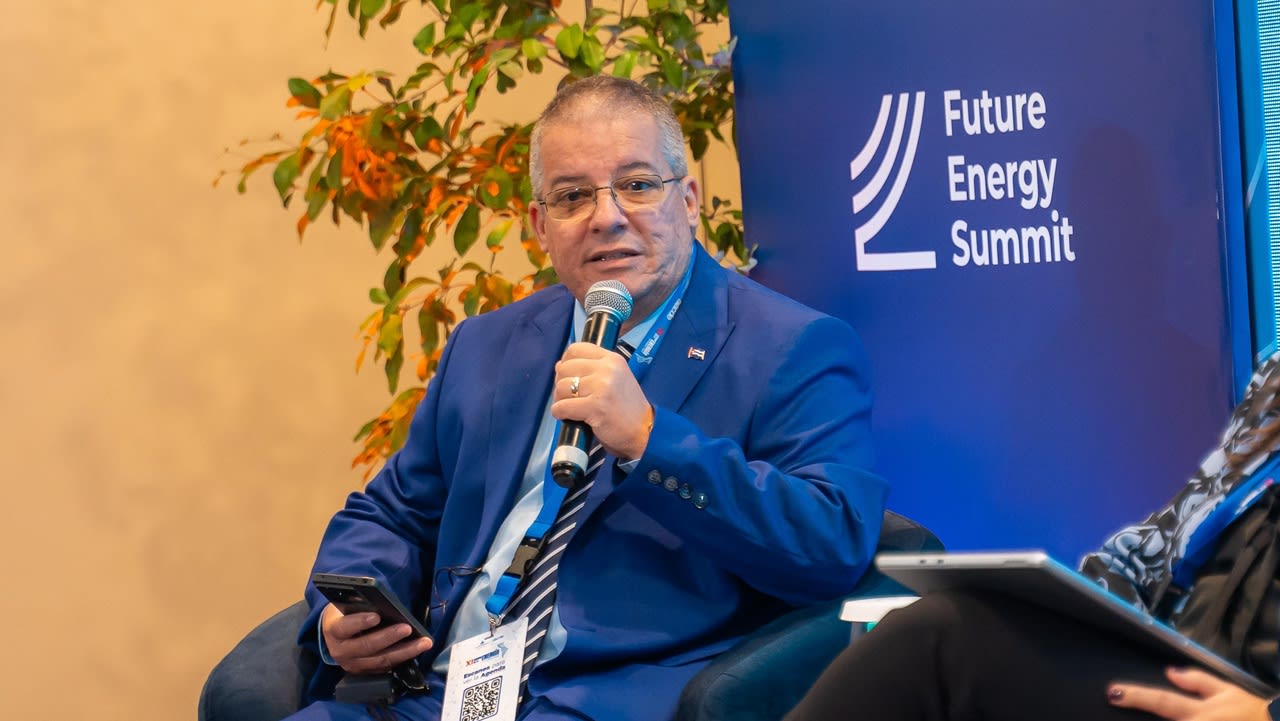
This was stated by Lucas Ponce, commercial director for Latin America atCATL , during the panel “Renewables and Storage as a business lever: models and opportunities to accelerate the Peruvian energy transition”, within the framework of Future Energy Summit (FES) Peru 2026.
“One of the main factors delaying projects is financing. To develop facilities of this magnitude, investment funds and financial institutions that can support their execution are needed,” the executive explained.
Brazil: 15-year contracts and financing of up to 80% for large companies
The Brazilian market had made progress with specific instruments to incorporate independent storage systems, known as standalone systems, intended to provide power and flexibility to the electricity grid.
In July 2026, the National Electric Energy Agency (ANEEL) opened a public consultation for two capacity reservation tenders , designed to secure power availability from BESS installations. The first, called "National Storage," was reserved for systems that meet national manufacturing requirements; the second, "General Storage," allowed the participation of other technological solutions.
Both processes involve 15-year contracts , with supply starting in August 2028, projects of at least 30 MW, and a duration of four hours. Remuneration was structured through fixed income distributed in twelve monthly payments, in exchange for maintaining the power available for dispatch by the electricity operator.
In financial matters, the National Bank for Economic and Social Development (BNDES) had the Finem line for electrical storage , intended to finance the construction, expansion and modernization of facilities.
The instrument allowed for coverage of up to 80% of the total project value for large companies, with a minimum amount of R$ 40 million and repayment terms of up to 24 years. For micro, small, and medium-sized enterprises, support could reach 100% of eligible expenses, subject to credit evaluation and eligibility requirements.
“When a tender is public, the support of the State is fundamental. This type of financial structure should be considered from the beginning to facilitate the execution of the projects,” the specialist stated.
Brazil's experience thus introduced an alternative for Peru: combining contracts that provided predictable income with financing instruments capable of supporting the initial investment, without the award necessarily implying automatic credit approval.
Argentina: 1413.5 MW awarded and incentives to accelerate operations
The second regional precedent was in Argentina, where the Government had promoted two storage calls with different geographical and operational objectives.
AlmaGBA, named for its focus on Greater Buenos Aires, was a tender aimed at installing batteries at strategic points in the Edenor and Edesur power grids . Its objective was to reinforce the metropolitan area's power supply, reduce the risk of outages during peak demand periods, and provide responsiveness to the electrical system.
The tender resulted in 713 MW of awarded capacity, with 15-year contracts and systems capable of delivering power for four consecutive hours. The Wholesale Electricity Market Management Company (CAMMESA) acted as the guarantor of last resort in the contractual arrangement.
Subsequently, AlmaSADI, focused on the Argentine Interconnection System (SADI), extended storage contracting to critical nodes in different regions of the country.
In July 2026, the Energy Secretariat awarded 700.5 MW of capacity across 20 projects to five companies, with estimated investments of USD 700 million. The bidding process received 235 technical offers totaling over 8,300 MW, more than eleven times the initially sought capacity.
For CATL, one of the lessons learned from these processes was related to incentives for reducing construction and connection times. During the panel, their representative referred to an economic incentive mechanism to accelerate the start of commercial operations, mentioning a 30% discount per month of advance payment, the exact application of which was not clearly identified in the transcript.
Continue reading
“This type of mechanism is very interesting for storage because it allows us to take advantage of a technology with very dynamic installation times. The goal should be to minimize the period between awarding the contract and commissioning,” he noted.
Peru: Strong power and arbitrage to expand BESS revenues
The regional discussion came at a time of change for the Peruvian electricity market. Law 32249, published in January 2025, modified the electricity contracting framework and included the participation of new providers of complementary services, while the Ministry of Energy and Mines (MINEM) submitted a regulation for consultation during 2026 aimed at developing these services.
Ancillary services include functions necessary to maintain the security, quality, and stability of the supply, such as frequency regulation. However, CATL believed that batteries should also be able to generate revenue by storing electricity during off-peak hours and delivering it when the system needs it.
“If storage is limited to ancillary services and its firm power contribution is not recognized, we would be wasting many of the capabilities that batteries have ,” Ponce warned.
The executive also defended energy arbitrage, whereby an operator can load its systems during periods of low prices and unload them when electricity prices rise. This possibility would depend on the rules of participation and the economic signals available in the Peruvian market.
The debate coincided with a portfolio of new photovoltaic investments. According to figures from the Ministry of Energy and Mines (MINEM) for April 2026, Peru had 13 solar projects with definitive concessions, totaling 2,402 MW and an estimated investment of USD 1,805.9 million. Arequipa accounted for nine of these projects, totaling 1,816 MW, while Moquegua had another 322 MW.
The incorporation of these power plants could generate opportunities for hybrid projects, where solar generation would be combined with batteries, but the manufacturer also noted standalone applications capable of providing services to the system without being associated with a specific renewable installation.
In another panel at the same event, Ricardo Garro , also CATL's Commercial Director for Latin America, identified opportunities for energy storage to help postpone investments in transmission and distribution. He further explained that technological advancements in lithium iron phosphate (LFP) batteries were improving their performance against degradation and their available capacity throughout their lifespan.
Marginal costs of USD 250/MWh and the risk of droughts: when will batteries compete?
Another factor pointed out by the specialist was the cost of supplying demand during periods when the system needed to resort to less efficient generation units.
During FES Peru , marginal costs of around USD 250/MWh were mentioned, although the electrical node and the period to which they corresponded were not specified. This indicator represents the cost of supplying an additional unit of electricity and can increase when more expensive power plants must be dispatched to meet demand.
For CATL, storage could offer a competitive alternative in certain scenarios, especially when the systems allowed energy to be shifted to times of greater need or when the operation of conventional equipment could be reduced.
“The market will develop when the cost of installing a storage system becomes more competitive than continuing to dispatch less efficient generation units. It’s not about favoring one technology, but about allowing them to compete on a level playing field, ” the company representative stated.
The analysis also incorporated the Peruvian system's exposure to hydrological conditions. A reduction in hydroelectric generation during drought periods could modify dispatch and increase the share of thermal technologies, thus increasing the potential value of flexibility.
The executive linked this situation to the possibility that the government will launch new tenders around 2027 , aimed at addressing specific supply needs. He did not present this date as an official timeline, but rather as a scenario that would depend on the evolution of the system and regulatory decisions.
China accelerated shipments and CATL approached 100% of its production capacity
In addition to local conditions, there was a change in the international battery industry. China had reduced the value-added tax (VAT) refund applied to certain battery exports from 9% to 6% starting in April 2026, and set its elimination for January 1, 2027.
According to Ponce, the modification had accelerated the purchasing decisions of international clients who were looking to bring forward shipments before the next fiscal stage came into effect.
“Customers are trying to bring forward equipment deliveries to avoid the impact of the elimination of tax incentives starting in January 2027. This has created significant competition to secure shipments before the end of the year,” he noted.
The move had consequences for the manufacturer's industrial planning. The executive stated that CATL was approaching 100% utilization of its planned production capacity for the remainder of 2026, reflecting international demand that was concentrating orders in a short period.
The situation also introduced an additional variable for Peruvian developers with projects planned for 2027 and 2028: coordinating commercial commitments, delivery dates, and construction schedules in the face of changes in international supply conditions.
For CATL, Peru's storage potential did not depend solely on equipment availability or renewable energy growth. The combination of financing, implementation incentives, recognition of new services, and price signals would determine which projects could reach sufficient commercial conditions to be realized.

 By Energía Estratégica


 By Emilia Lardizabal
 By Matías Medinilla


