


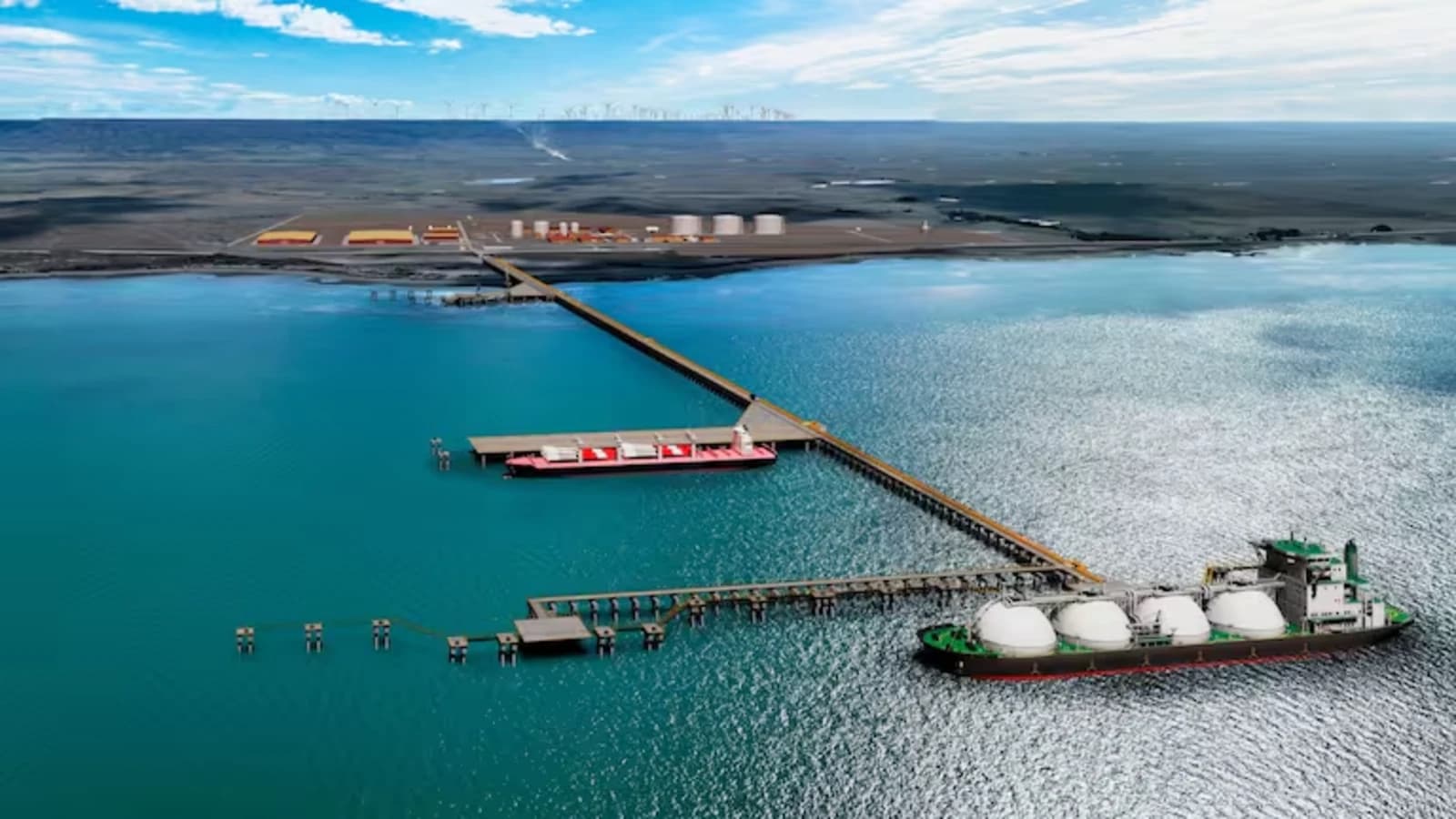
Chile gave environmental approval to HNH Energy 's project, an $11 billion initiative that became the largest approved investment in the history of the country's environmental assessment system and which includes up to 2.1 GW of wind power capacity to produce green hydrogen and ammonia in the Magallanes and Chilean Antarctic Region.
The Environmental Assessment Commission (COEVA) unanimously approved the project and enabled the issuance of its Environmental Qualification Resolution (RCA), after a processing process that lasted for just over two years.
The development is being carried out by the consortium made up of Austria Energy, Ökowing and Copenhagen Infrastructure Partners (CIP) and plans to begin construction in 2027 , with the aim of starting commercial production of green ammonia during the second half of 2030 .
Energy production will be one of the central features of the complex. HNH Energy plans to deploy a wind farm of 194 turbines that will reach 2.1 GW once its two phases are completed and will supply the green hydrogen production process, which will later be used to produce ammonia primarily for export.

The company decided to submit a single Environmental Impact Assessment (EIA) covering the entire project value chain. This meant the assessment simultaneously included the wind farm, the processing plant, the seawater desalination plant, and the port infrastructure necessary for shipping the product.
The environmental permitting process lasted for more than two years , while HNH Energy has accumulated nearly four years of presence and work in the territory.
With the RCA obtained, the project surpasses one of its main enabling milestones, although it will still have to complete the sectoral permits and advance in the necessary technical and commercial definitions before fully entering its execution stage.
The first phase will concentrate virtually all of the industrial infrastructure necessary for the production, conditioning, storage, conversion and transport of the product , in addition to a wind farm of approximately 1.4 GW .
Subsequently, a second stage will expand that renewable capacity to 2.1 GW , power with which the plant will be able to reach its maximum planned production level.
In addition to wind turbines and facilities for producing hydrogen and green ammonia, the complex will incorporate a seawater desalination plant and a multipurpose port , forming an integrated chain from electricity generation to the export of the product to international markets.
The initiative is projected to have an operational life of 50 years .
From environmental approval to construction in 2027
HNH Energy's timeline anticipated obtaining authorization during 2026 in order to move forward with the start of construction next year. With that milestone achieved, the company maintains its target of beginning construction in 2027 and reaching commercial production during the second half of 2030 .
The construction phase will also have a significant impact on the demand for labor in Magallanes. Available estimates suggest that between 2,500 and 4,000 jobs could be created during construction.
Once the complex is operational, it is projected to create around 1,500 permanent jobs associated with its operation.
The environmental approval thus positions HNH Energy among the largest-scale projects seeking to convert Magallanes' wind potential into green fuels for export.
Now, the challenge lies in transforming the authorization obtained into concrete investment and construction decisions. To achieve this, the consortium must complete the remaining permits and finalize the technical and commercial aspects of a project that, with an investment of USD 11 billion and 2.1 GW of wind power , aims to begin placing green ammonia on the international market by 2030.