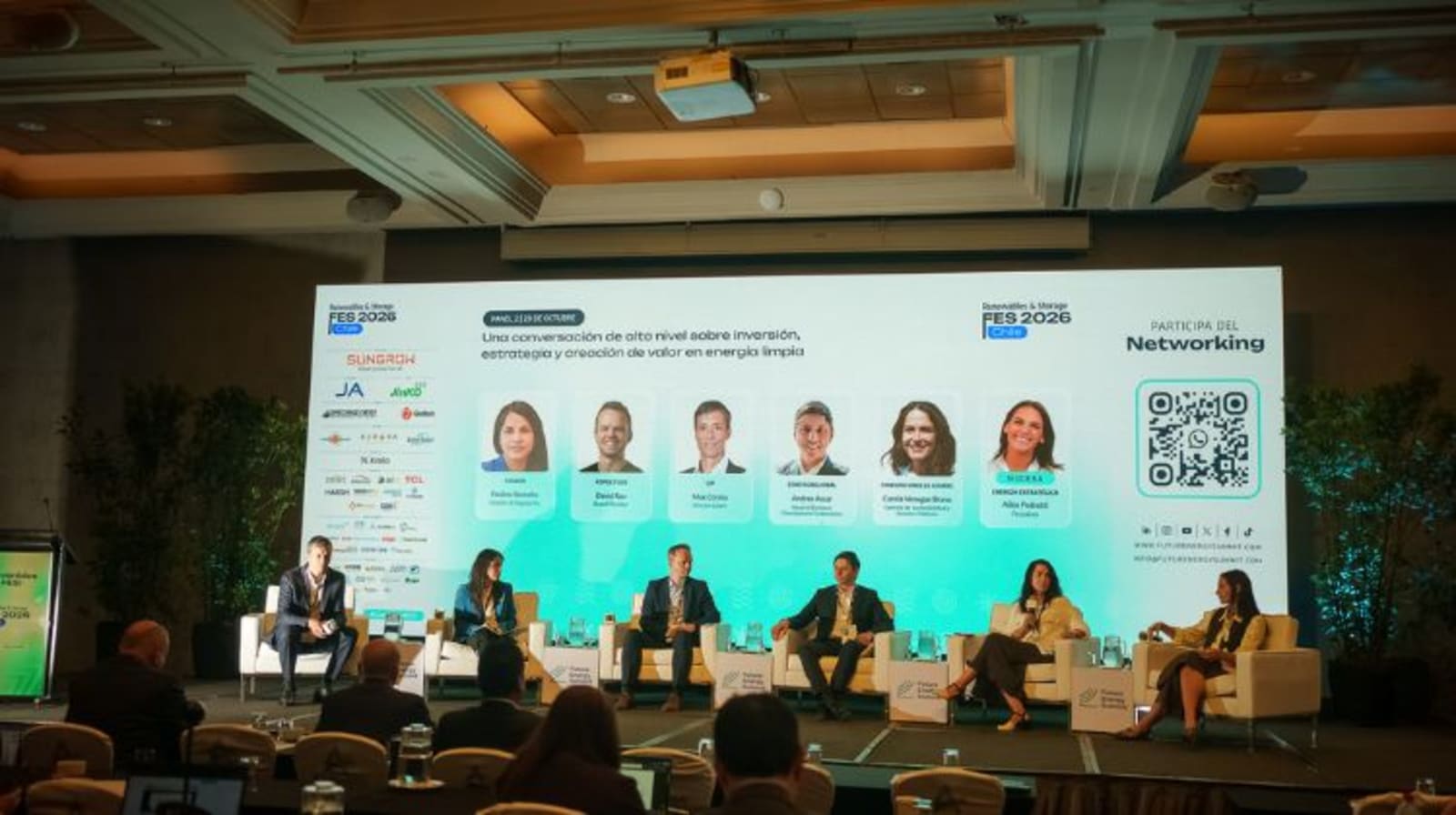
Five major players in the energy sector presented their investment strategies in Chile , with solar projects, battery energy storage systems (BESS), and transmission infrastructure exceeding US$2 billion . The companies also outlined upcoming developments and indicated the conditions the country needs to maintain its attractiveness as an investment destination.
The initiatives presented by Copenhagen Infrastructure Partners (CIP), ContourGlobal, Copec Flux, Colbún, and Conexión Kimal–Lo Aguirre encompass operational capacities, projects under construction, and new developments. Among the most notable figures are CIP's 520 MW of stand-alone storage , ContourGlobal's approximately 850 MW of solar and BESS capacity , and investments in national electricity infrastructure.
However, the announcements were accompanied by a shared warning: the availability of capital and the growth of installed capacity must be complemented by greater electricity demand, clear rules, and more agile project execution .
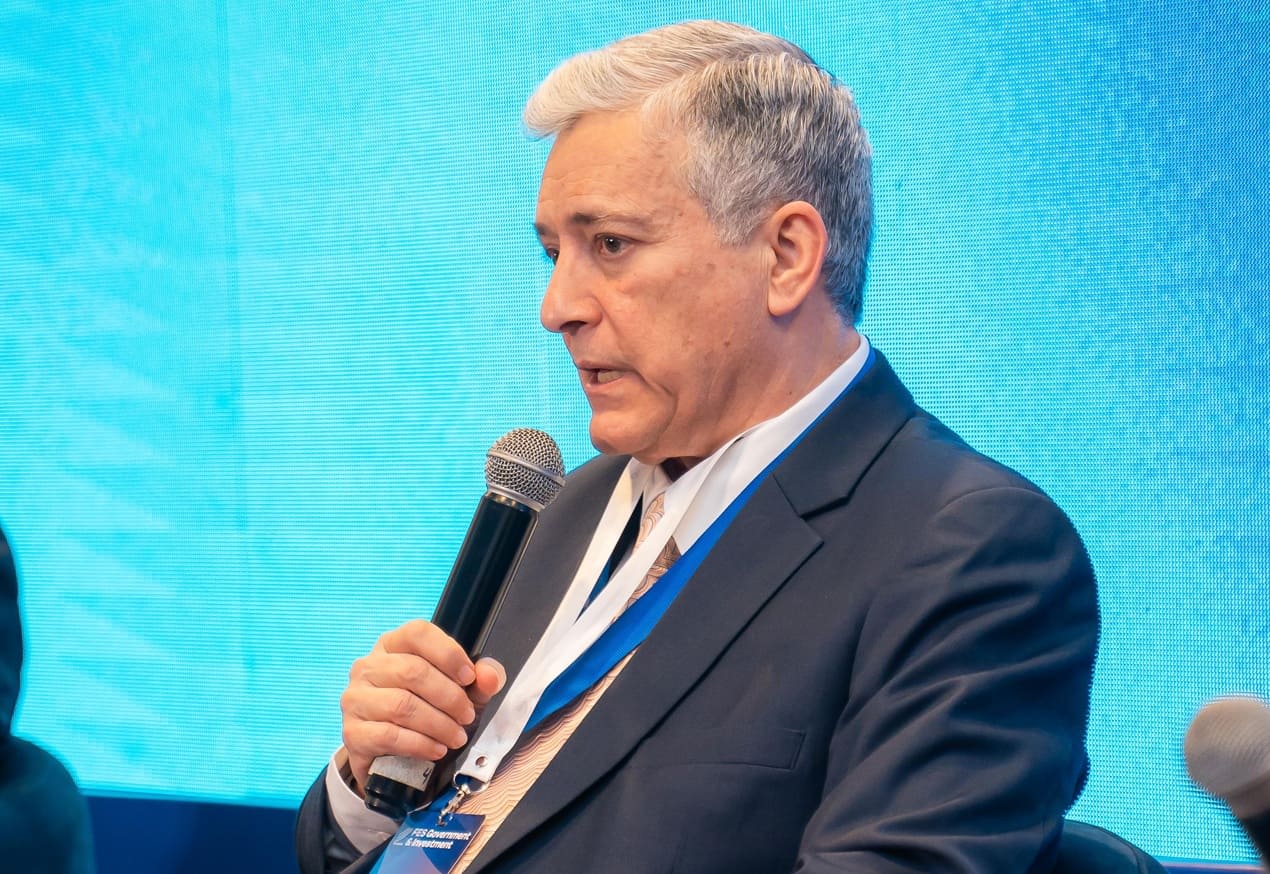
“ What is needed is for demand to grow again and for more sectors to become electrified ,” said Max Correa, director for Latin America at Copenhagen Infrastructure Partners (CIP) , who considers it essential to incorporate new consumers and productive activities to revitalize the market.

The statements were made on the first day of the Future Energy Summit (FES) Chile 2026 in Santiago, which continues today with live broadcast.
Live broadcast:
Regarding business announcements, Andrés Assar, Head of Business Development South America at ContourGlobal , detailed the company's expansion strategy, which entered the Chilean market in 2025 through the acquisition of the Víctor Jara and Quillagua projects, which add up to approximately 850 MW of solar and storage capacity .
The executive also confirmed the start of construction on a new hybrid project of more than 220 MW in the central region of the country, in line with the company's growth plans in Chile and other Latin American markets.
However, to sustain this pace of expansion, Assar considers it essential to expedite permits, preserve regulatory stability, and generate new electricity demand , preventing business opportunities from depending exclusively on the renewal of existing contracts.
“ We must continue working on accelerating permits, maintaining the regulatory framework we have today, and continuing to enable electricity demand to attract new investments,” he said.
Along these lines, ContourGlobal identifies a reactivation of projects available for acquisition, supply companies and equipment providers, driven by new energy procurement opportunities.
For his part, Max Correa, director for Latin America at Copenhagen Infrastructure Partners (CIP) , presented the progress of the Danish asset manager, which manages approximately 43 billion euros in assets and has a growth fund of 10 billion euros , of which it plans to allocate about a third to Latin America.
In Chile, the company has an operational stand-alone BESS of 220 MW and five hours duration in Taltal , equivalent to 1,100 MWh, and is building a second independent battery of 300 MW and 1,500 MWh south of Iquique.
Together, both facilities represent 520 MW of power and 2,600 MWh of energy capacity , while the firm develops an additional portfolio of hybrid solar projects with storage, mainly in the north of the country.
Correa anticipated that the company aims to energize its second facility during the fourth quarter of 2027, although he cautioned that the growth of the Chilean electricity market will also depend on the addition of new demand .
“ What is needed is for demand to grow again and for more sectors to be electrified ,” said the executive, who identified opportunities in mining, transportation, and data centers to support the expansion of energy investments.
The regional strategy also includes Mexico, where the company is involved in a 450 MW solar battery project that has reached financial close, in addition to another initiative whose construction has already begun.
“ As long as there is any large block, demand, energy, contract renewal, it is very good news because it energizes the entire sector ,” Correa said, referring to the opportunities generated by the new contracting processes.
Meanwhile, David Rau, a member of the board of directors of Copec Flux , highlighted the company's diversification strategy, which includes residential solutions, industrial projects and large-scale generation.
Among his initiatives he mentioned Tamarico, with 160 MW of solar power and associated storage , as well as hybrid solutions developed to replace diesel generation in productive activities such as salmon farming.
When asked about priority segments for the coming years, the executive replied: “ The answer is everyone ,” and explained that the company seeks to offer energy solutions to different types of consumers.
However, it identified mining as one of the largest markets by volume, along with data centers, whose electricity demand could become increasingly important.
“ I think the wish list should be that we all start working on a long-term vision first, and that we return to long-term politics and long-term projects ,” the executive pointed out.
From Colbún, Paulina Basoalto, Regulation Manager , presented the generator's progress in storage, with projects associated with Celda Solar and Diego de Almagro Sur, in addition to a contract with Atlas linked to this technology.
The executive believes that Chile has an opportunity to consolidate its leadership in batteries, although she warns that the accelerated growth of these systems requires adapting the coordination and operation mechanisms of the electricity market.
“ We have a tremendous opportunity to create good regulation ,” said Basoalto, who identified regulatory clarity and a robust system as essential conditions for sustaining investments.
In terms of transmission, Carola Venegas Bravo, Sustainability and Public Affairs Manager of Conexión Kimal–Lo Aguirre , presented the progress of one of Chile's main electrical infrastructure projects, whose real investment exceeds 2 billion dollars and whose entry into operation is planned for May 2029.
The executive specified that the project has a reference investment value of 1.481 billion dollars , used to calculate its remuneration over 20 years, while the actual disbursement is financed through a structure involving international banking entities.
Regarding its implementation, the initiative is more than 55% complete according to the monitoring of the National Electric Coordinator , although the physical progress of construction slightly exceeds 22% , because the overall measurement also includes engineering, studies and purchase orders.
Continue reading
“ We are slightly ahead of schedule to date ,” said Venegas Bravo, who noted that the work is being carried out in the different regions crossed by the route, mainly in Antofagasta and Atacama.
However, meeting the schedule requires accelerating the opening of new construction sites. Currently, the project employs approximately 1,500 workers , but needs to reach a maximum of nearly 7,000 , in addition to obtaining approval for 880 pending permits .
The executive also indicated that the route involves about 1,000 owners , of which more than 500 already have registered voluntary electrical easements, while the corresponding procedures continue for the rest of the land.
Meanwhile, Venegas Bravo confirmed that the financing agreements are now closed , after a process that included technical, environmental, social and governance assessments under international standards.
BESS, tenders and new rules: what does Chile need to sustain investments?
The business announcements come amid a period of accelerated expansion in energy storage. During 2026, Chile doubled its operational BESS capacity , while its portfolio of projects under development is already approaching 40 GW , according to information released in the FES Chile 2026 agenda.
This growth increases the demands on transmission infrastructure, operational coordination, and remuneration mechanisms, especially with the entry of large volumes of batteries into the electrical system.
In that context, the Chilean Renewable Energy and Storage Association (ACERA) proposed to the National Energy Commission new rules for these assets and the creation of a market for the transfer of wastewater , with the aim of improving the use of renewable generation.
In this regard, Basoalto identified the need to strengthen the institutional framework, review the determination of the opportunity cost of batteries, and move towards market mechanisms that allow for the optimization of storage operations.
The Colbún representative explained that, unlike traditional hydroelectric storage, batteries have a primarily daily timeframe, which introduces additional challenges for energy scheduling and dispatch.
“ One regulatory principle is that regulation should be simple ,” the executive stated, proposing a move towards a bidding market where agents themselves can report their opportunity costs, rather than relying exclusively on centralized calculations.
Another key factor in the sector's expansion will be the development of new electricity supply tenders, which participants identified as an opportunity to revive projects and support long-term investments.
Chile redefined its procurement roadmap, with 19,300 GWh per year planned until 2030 , while one of the processes addressed during the panel contemplates 2.8 TWh of supply , of which 1.4 TWh correspond to the central zone , as detailed by Assar.
From CIP, Correa highlighted the recovery of 15-year contracts, considering that these terms are compatible with the development and construction cycles of the manager's projects.
“ This is very good news ,” said the executive, who explained that the company is evaluating its participation in recruitment opportunities both in Chile and in other Latin American markets.
However, Basoalto, from Colbún, warned that clarity of rules is fundamental to guaranteeing competition , especially in the face of regulatory changes that may affect the conditions of regulated contracts.
Along the same lines, Rau considered that the upcoming calls for proposals could open new possibilities for incorporating technologies and business models that have so far had less participation in these mechanisms.
“ We welcome this new tender that is coming ,” said the representative of Copec Flux, who identified opportunities in the incorporation of distributed energy resources, taking advantage of their location and capacity to complement conventional generation.
Increased electricity demand, permits and interconnections: the challenges ahead
Beyond renewable energy development and storage, executives agreed that Chile needs to generate new electricity consumption to transform its energy capacity into sustainable investment opportunities .
At this point, mining, data centers, industry, and transportation appear as strategic sectors to expand demand, while streamlining permits is another necessary condition for realizing new projects.
For ContourGlobal, the expansion of consumption is particularly relevant because new business opportunities should not depend solely on replacing supply contracts that are reaching their expiration date.
“ I think that where Chile should position itself now would be very nice if it were to become an electrostate ,” said the director of CIP, who identified opportunities in private vehicles, freight transport, mining and other productive activities.
For his part, Basoalto warned that the arrival of new electricity-intensive industries such as data centers will also require adapting the connection and operation mechanisms to preserve the robustness of the system.
Strengthening infrastructure is also a priority. Within this framework, Chile is promoting urgent projects, including a 200 MW BESS (Basic Energy Storage System) and approximately US$77 million in transmission projects .
Added to these challenges is the possibility of advancing towards greater regional energy integration , which would allow for taking advantage of available renewable generation and improving the resilience of Latin American electrical systems.
“ I hope that these movements will also promote some level of discussion related to the need for Latin American energy integration ,” Venegas Bravo noted.
The executive highlighted the opportunities that would arise from greater interconnection, considering that Chile is experiencing renewable generation outflows while other countries, such as Ecuador, have faced situations of electricity shortages.
Basoalto agreed on the importance of deepening this agenda and raised the possibility of expanding connections with neighboring countries, including Peru and even Argentina.
Thus, the investment announcements presented at FES Chile 2026 show business interest in expanding renewable capacity, storage and transmission , although participants warned that its development will depend on stable regulatory signals, greater administrative agility and new business opportunities.
The challenge posed by the five representatives is not limited to installing more megawatts: it also involves generating the demand capable of absorbing them, strengthening the networks and establishing the necessary conditions to convert project portfolios into operational infrastructure .
Follow the second day of FES Chile live

 By Emilia Lardizabal


 By Energía Estratégica
 By Florencia Guglielmetti