Colombia faces a scenario of pressure on its electrical system , with reservoirs registering a storage level of 77.87% , a deficit of 3745 MW with respect to the new generation capacity planned for the year and only 30 days to increase water reserves before the end of the rainy season.
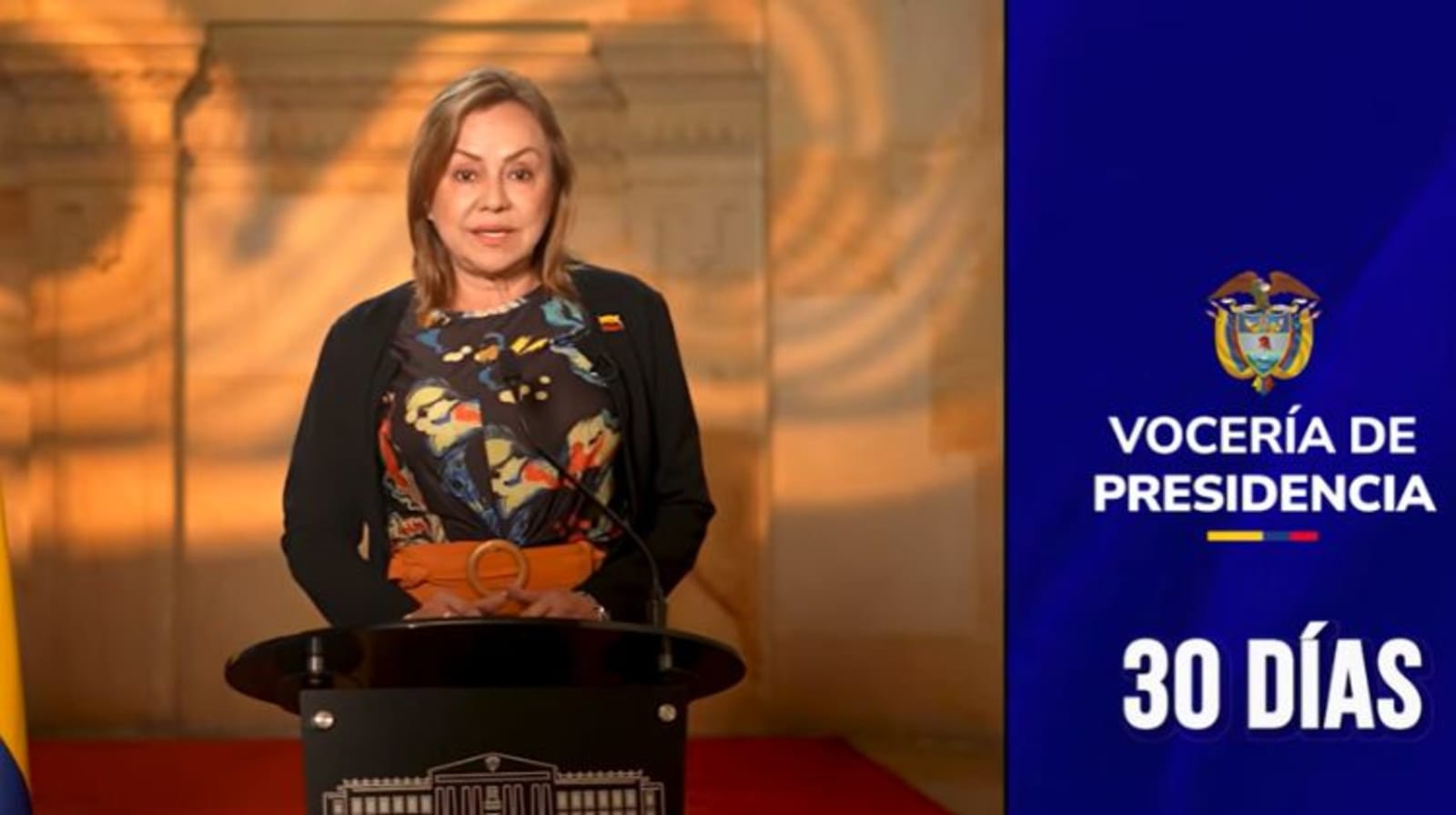
This was announced by María Nohemí Arboleda, Colombia's Minister of Mines and Energy , who warned of the risks posed by the strengthening of the El Niño phenomenon and the possibility that the dry season will extend beyond April. Faced with this scenario, the government is seeking to increase reservoir storage to over 80% capacity and strengthen thermal power backup and gas supplies.
"30 days to store the water that has to last us for a summer that, with El Niño already established, could extend beyond April," Arboleda warned.
The concern lies in the fact that the system is simultaneously facing increased electricity demand and reduced water inflows. According to figures released by the minister, the rivers that feed the reservoirs are delivering only 60% of the expected flow for this time of year .

"Of every 10 liters that should arrive at this time of year, only 6 are arriving," says the head of the energy ministry.
This situation is particularly relevant given the role of hydroelectric generation in the national energy supply. Water availability in the coming months will be crucial for managing reserves and reducing pressure on other generation technologies.
In that context, the official acknowledges that national electricity consumption exceeds that recorded a year ago , so reserves will have to respond to greater needs during a potentially longer period of water scarcity.
"We will have less cargo than we expected and we will have to make it last longer," Arboleda says.
Deficit of 3745 MW and 275 delayed energy projects
Beyond the climate situation, the Government identifies structural problems in the incorporation of new energy infrastructure that condition the system's response capacity.
According to the figures presented by Arboleda, of the 4475 MW of new generation that were supposed to be incorporated during the year, only 730 MW were added .
This represents approximately 16.3% of the planned capacity , while the remaining 3,745 MW is equivalent to 83.7% of the original target .
Added to this scenario is the identification of 275 energy projects that are more than a year behind schedule , a situation that reflects difficulties in the execution of investments and the incorporation of additional capacity.
"Of the 4,475 new megawatts that were supposed to come online this year, only 730 came online," the Minister of Mines and Energy points out.
Faced with these limitations, the administration is promoting the Energy Now Plan , a strategy based on three pillars: increasing available energy resources, ensuring fuel supply, and demanding compliance with the obligations of the sector's agents.
Continue reading
Among the first actions, the minister highlights the full use of the Hidroituango reservoir, whose stored energy is equivalent, according to official statements, to almost four days of Bogotá's electricity consumption.
This decision seeks to take advantage of water availability to increase the system's support during the months of lower rainfall.
At the same time, the Government announces the approval of 219 MW of surplus energy delivered to the electricity system , with the aim of adding generation resources in a context of supply restrictions.
It also announces the rescheduling of maintenance at Guavio , to avoid it coinciding with that of another hydroelectric facility during the summer and to reduce the risk of simultaneous unavailability.
"To add up every drop of water, every molecule of gas, every new megawatt," Arboleda summarizes when describing the scope of the strategy.
Another priority is the situation in the Colombian Caribbean. The government has announced its support for a loan of up to 1.2 trillion pesos for Air-e , along with measures to combat electricity losses, illegal connections, and outstanding payments.
These measures seek to address both the continuity of service and the financial and operational imbalances that affect regional distribution.
However, the government's response is not limited to increasing supply. It also includes a voluntary reduction in demand during peak consumption hours .
The Government identifies the period between 6:00 p.m. and 9:00 p.m. as a particularly sensitive time for the system, due to the simultaneous use of lighting, household appliances and other electrical equipment.
"Between six and nine at night, consume less," Arboleda requests.
The campaign proposes shifting the use of washing machines, irons, and electric showers outside of those hours, as well as turning off unnecessary lighting and moderating the use of air conditioning.
As a complementary tool, the minister announces the launch of a digital energy monitoring dashboard , where citizens can check the storage level of reservoirs and the evolution of electricity consumption and savings by region.
The intention is to provide public information on the behavior of the reserves and the results of the energy efficiency measures.
"And region by region, how much energy we consume and how much we save," Arboleda anticipates, explaining how the platform works.
Finally, the administration sets a 30-day timeframe to bolster reserves and approximately five summer months during which it will need to manage available resources.

 By Emilia Lardizabal

 By Energía Estratégica
 By Ailén Pedrotti