


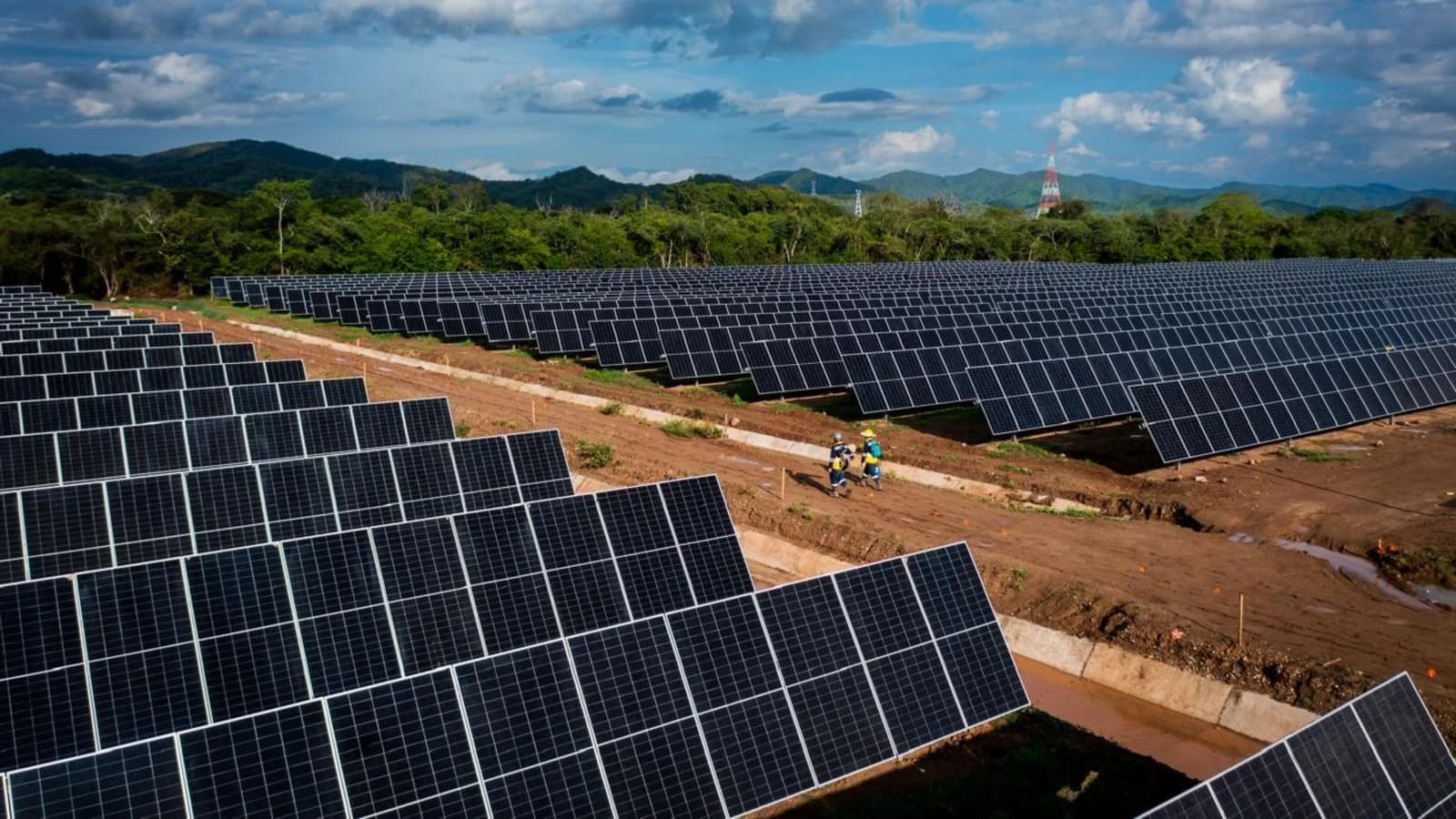
Colombia reached a new milestone in its energy transition with the start of commercial operation of Puerta de Oro , the country's largest photovoltaic park. Developed by Patria Investments, the complex began injecting 360 MWp into the National Interconnected System (SIN), strengthening the generation capacity and reliability of the electrical grid.
Located between the municipalities of Guaduas and Chaguaní , in the department of Cundinamarca, the project has more than 511,000 photovoltaic modules , making it not only the largest solar park in Colombia, but also one of the largest in Latin America.
The company highlighted that the launch will allow the supply of renewable electricity to more than 450,000 homes , in addition to contributing to the fulfillment of the country's energy matrix diversification objectives.
"This early entry of firm energy strengthens the reliability of the national electricity system," said Luis Alberto Páez, CEO of the Energy division of Patria Investments in Colombia.

Contribution to energy security
The company explained that the addition of Puerta de Oro is especially relevant in a context of increased pressure on the electrical system due to climate variability associated with the El Niño phenomenon.
According to Páez, the early start of operations allows the commitments made in the 2024 expansion auctions and the 2025 firm energy obligation reconfiguration process to be met ahead of schedule.
The addition of this capacity strengthens the availability of renewable generation and improves the resilience of the National Interconnected System to scenarios of higher demand or lower water supply.
A key project for renewable energy goals
Patria Investments estimates that Puerta de Oro will contribute approximately 5% of the national goal for incorporating renewable energy , in addition to preventing the emission of hundreds of thousands of tons of carbon dioxide (CO₂) each year.
The park's connection to the electrical system is made through 23 kilometers of 230 kV transmission lines , an infrastructure that included crossing the Magdalena River using towers over 110 meters high .
With this project, Colombia continues to expand its large-scale photovoltaic capacity and adds a new strategic infrastructure to advance the diversification of its electricity matrix and strengthen the country's energy security.