


Building a solar plant at over 4,500 meters above sea level presents a unique challenge for energy engineering. In Peru, the 180 MW Lupi photovoltaic project ranks among the highest-altitude installations in the world and represents one of the main challenges for Grupo Elecnor, the company designated as the EPC contractor in charge of the engineering, equipment procurement, and construction of the plant.
The initiative, developed by the Norwegian company Statkraft in the district of Carumas, province of Mariscal Nieto, Moquegua region, foresees an approximate production of 581 GWh of electricity per year and its entry into operation towards the end of 2027. Its location in the heart of the Andean geography incorporates the altitude as a central variable in the planning of the works.
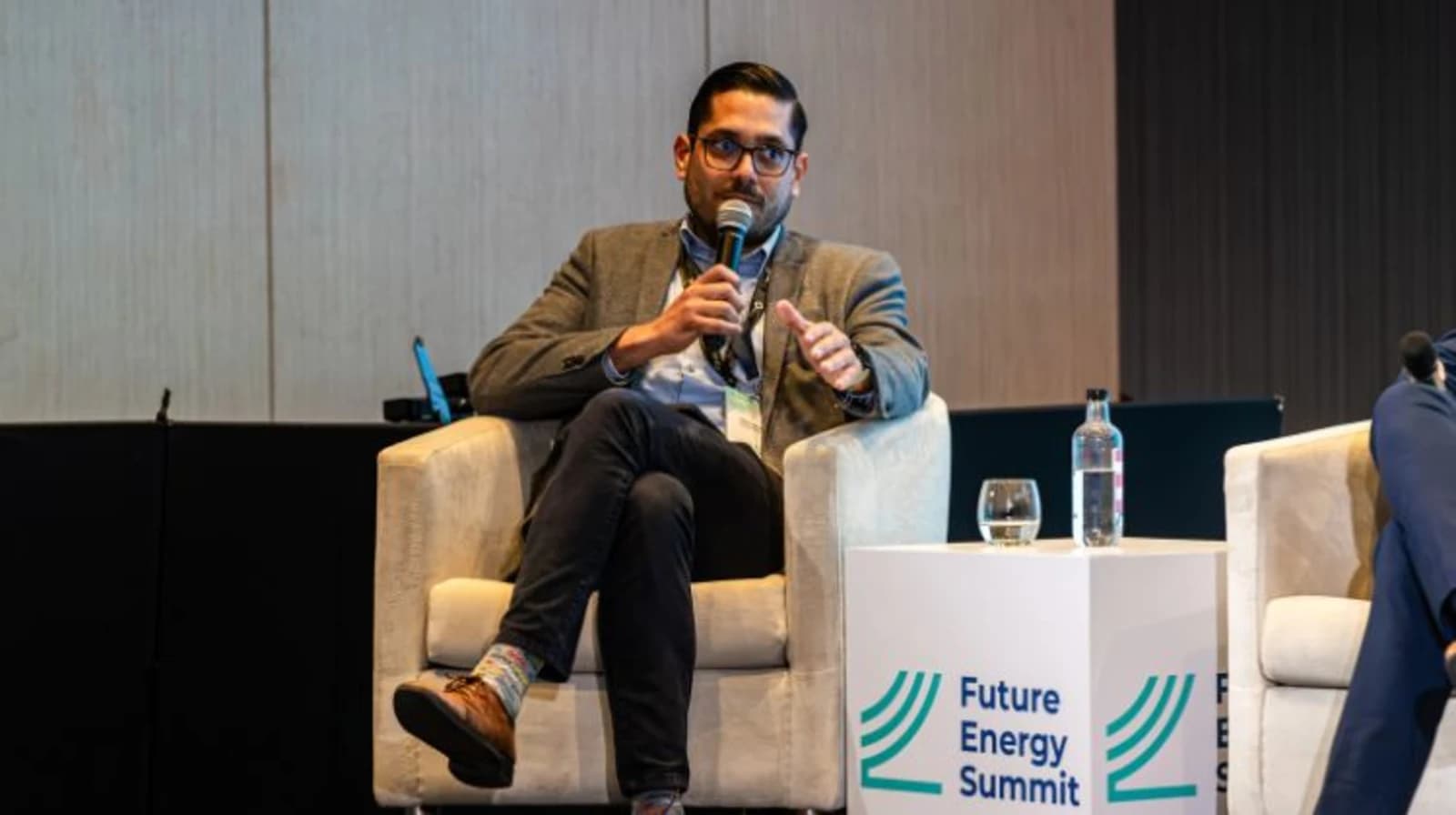
"Lupi is a very important challenge for us, a plant located 4,500 meters above sea level. It is said to be the highest utility-level project in the world," said Juan Enrique Fernández Delgado, Country Manager of Grupo Elecnor in Peru , during his participation in Future Energy Summit (FES) Peru 2026.
Although the project is not yet complete, Fernández Delgado focuses on the fulfillment of a crucial stage: its commissioning.

"I think that represents a huge challenge, and just getting it up and running could be considered a success story," the executive said.
Paradoxically, the extreme low-lying climatic conditions that characterize the Lupi site also represent an advantage for photovoltaic generation . The combination of low temperatures and high solar radiation favors the efficiency of the panels, although building at more than 4,500 meters above sea level poses significant technical and logistical challenges.
In that regard, Enzo Contreras, Country Manager of Statkraft Peru , shared a particular anecdote during the Future Energy Summit (FES) Peru 2026 about the weather conditions of the project, after a snowfall covered the solar modules and the images were sent to the Norwegian parent company.
"When we send them the photo of our flagship solar project here in Peru covered in snow, everyone stares: 'Does this work? Yes, it's paradoxical, but it's better, it's better to operate in a cold area with good radiation because there is greater productivity in the panels,'" Contreras recounted.
According to information released by Statkraft, the solar radiation at the site is among the most favorable in its regional portfolio , with levels slightly lower than those recorded in the Atacama Desert in Chile.
However, the lower atmospheric pressure, the high mountain weather conditions, and the adaptation of personnel to the altitude introduce additional difficulties for the execution of the works.
This is in addition to the need to coordinate the transfer of equipment and materials to the site, as well as guaranteeing safe conditions for the workers.
In that context, Fernández Delgado argues that a contractor's success depends not only on overcoming technical difficulties, but also on fulfilling established commitments.
"As a contractor, a success story is any project that is completed on time and within budget. It's in our company's DNA," the Country Manager stated, explaining the criteria the company uses to evaluate its projects.
The executive links this premise to Elecnor's track record in energy infrastructure and to the experience accumulated in projects that require construction solutions adapted to complex conditions.
From the challenge of the height to project execution: key points for success stories
Elecnor's experience in Peruvian territory includes electrical transmission works developed in geographically complex environments.
Among the background information mentioned by Fernández Delgado is the Puerto Maldonado–Iberia transmission line.
"It was a 160 km route through the Peruvian jungle, which is quite complex. We didn't use even a single gram of concrete in the entire project," the executive recalled.
Although these are projects with different geographical and technological characteristics, both cases reflect the importance of construction planning when implementing energy infrastructure in hard-to-reach territories.
Continue reading
For Lupi, the challenge is linked to the installation and commissioning of a large-scale photovoltaic power plant in the high mountains, with an execution schedule that requires coordinating technical, human and material resources.
In that sense, Fernández Delgado identifies the availability of specialized labor as one of the main factors that can condition the simultaneous advancement of electrical projects in Peru.
"The resources in the country are what they are," the executive warns, referring to the limitations that contractors face in meeting the needs of the various technical specialties.
It also explains that the ability to incorporate workers and resources from other markets can become a tool to meet execution requirements.
The supply of equipment is another important aspect. The installation of photovoltaic power plants requires coordinating various electrical and electromechanical components, with delivery schedules compatible with the construction and commissioning phases.
"It is extremely necessary to have manufacturers within the same value chain who can guarantee those times, those deadlines, and those qualities in manufacturing," Fernández Delgado stated.
The executive emphasized that the conditions demanded by developers have also evolved and that cost is no longer the only determining factor in hiring.
"Now customers don't just ask for price, they ask for price, quality and delivery time," he emphasized.
These elements are in addition to the requirements of administrative processing, environmental licensing and easement management, which can influence the viability and timelines of energy developments.
"Certainty is what I believe is most needed to be able to carry out any type of project," said the Country Manager, when analyzing the necessary conditions to execute new investments in Peru.
In particular, he considered it essential to have greater agility in obtaining environmental permits and in the procedures related to easements , to ensure that the initiatives reach their operational phase within the planned deadlines.
Looking ahead to 2028, the executive also identified the economic return on investments and the recovery of committed capital as relevant aspects from a financial perspective, while licensing is one of the main concerns in the development stage.
From EPC to greenfield development: Elecnor expands its energy business in Peru
Fernández Delgado explained that the company arrived in the country as an engineering, procurement and construction (EPC) contractor, but that it currently participates in different stages of the sector's value chain.
"Today we already cover the entire value chain within the energy market. We are developing greenfield projects, arranging financing for in-house developed projects, carrying out concessions for transmission lines, and therefore constructing the assets. We are also actively working in photovoltaic generation with projects already completed and others in different stages of execution," the executive highlighted.
This diversification represents an evolution from its initial positioning as a contractor and expands its participation in the development of new energy assets.
"For us, Peru has become a strategic hub in South America. It offers the best prospects in the entire region in terms of power generation and transmission," Fernández Delgado stated, emphasizing the opportunities for new electricity investments, despite the challenges that persist during the development and construction phases.
From that perspective, the executive anticipates an increase in the project portfolio in the coming years, although he warns that its realization will depend on the ability to overcome administrative, financial and operational obstacles.
For Elecnor, streamlining permits, ensuring specialized human resources, and guaranteeing supply capacity will be key aspects in responding to a potential market acceleration.
In this way, Lupi brings together two central dimensions for the industry: the ability to develop photovoltaic generation at an exceptional altitude and the need to guarantee execution conditions compatible with technical and economic commitments.
With a planned capacity of 180 MW and an estimated annual production of 581 GWh , the project represents a step forward in the expansion of Statkraft's renewable energy portfolio in Peru. For Elecnor, it also presents an execution challenge, the final evaluation of which will be linked to meeting commissioning targets.
