


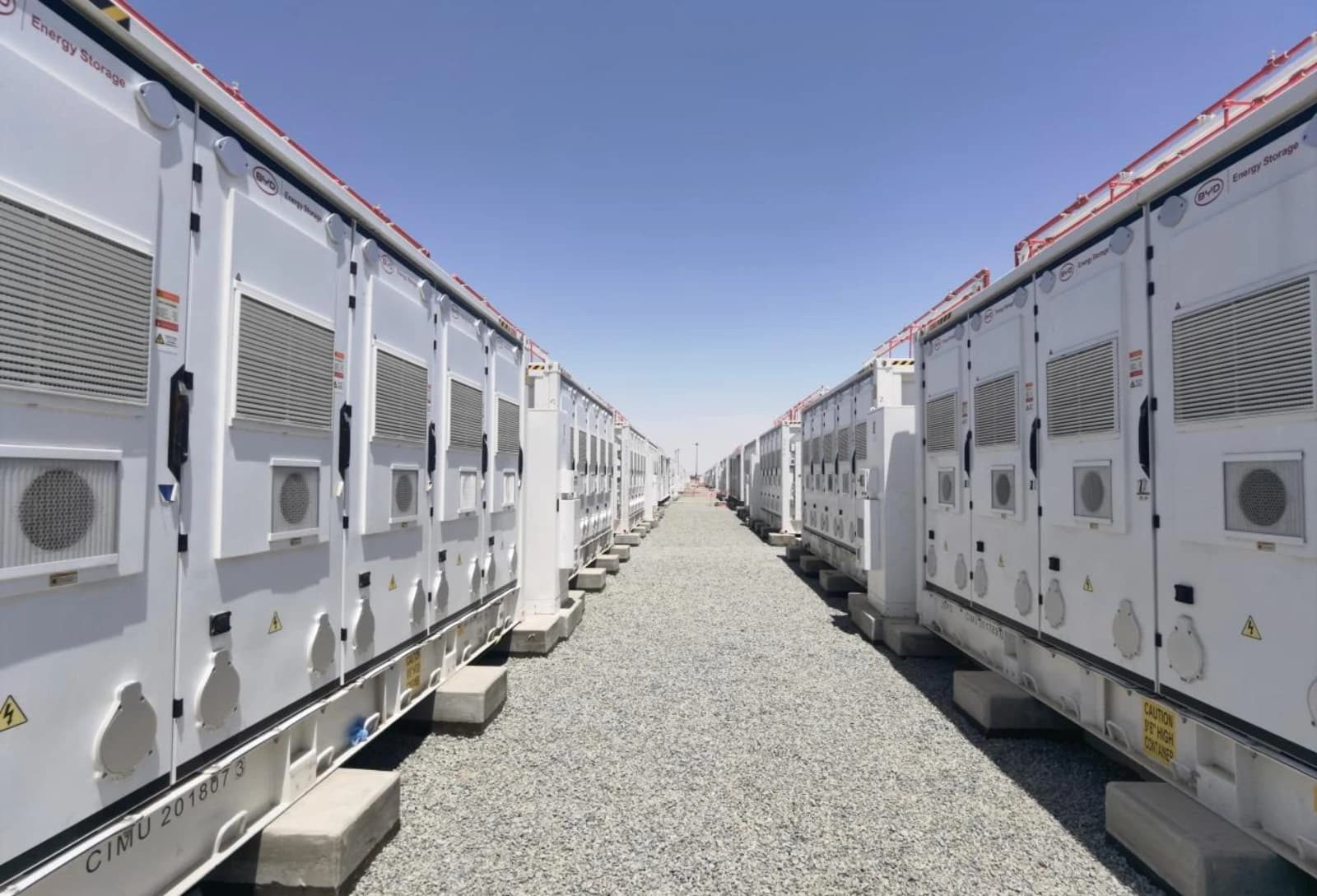
Spain has between 30 and 40 GW of projects with generation permits associated with batteries, but Only around 700 MW currently have construction commitments.
The difference highlights the main contrast in the Spanish storage market: while administrative procedures are growing and batteries are gaining ground in the Official State Gazette (BOE), the capacity that is actually being directed towards construction remains limited.
“There is still a large gap. Projects take time,” said Javier Pamos Serrano , Iberia Product Manager at Aurora Energy Research , in an interview with Energía Estratégica.
This data takes on particular significance compared to the movements recorded during June. The Official State Gazette (BOE) published progress in the processing of applications related to 4,226.14 MW of renewable energy and storage capacity, not including projects that were withdrawn or rejected.

Within that volume, 969.67 MW corresponded to BESS systems , compared to 2605.59 MW photovoltaic, 596.55 MW wind and another 54.33 MW of a hybrid installation without technological breakdown.
Storage stopped appearing only as a complement to small installations and began to be integrated into some of the largest files of the month.
These include ST Palmosilla, with 200 MW of independent storage in Tarifa; Tagus 2 HBESS, which combines 176.44 MW BESS and 224.40 MW photovoltaics in Toledo; and Pacheco Módulos, powered by X-Elio Energy with 105 MW of batteries and 98.4 MW solar in Cartagena.
Also advancing were BESS Lagerung, with 101.8 MW in Girona; ST Cerrillo, with 77.6 MW in Malaga; Orcoyen Almacena, with 73.6 MW in Navarra; and the Belinchón 1 and 2 hybridizations, which bring together 53.48 MW of storage and 96.23 MW of photovoltaics in Cuenca.
The same pattern is repeated throughout July, the last month surveyed by Energía Estratégica.
A total of 55 files were counted, with photovoltaic presence in 45, storage in 23 and wind technology in 10. It should be clarified that the categories overlap because a considerable part of the initiatives combine different sources of generation.
The balance also shows that the sector is going through very different stages .
Ten projects involving batteries and renewable energy generation were put out to public consultation to obtain prior administrative and construction authorizations, while eight received both permits.
In parallel, seven withdrawals were acknowledged and the procedures associated with declarations of public utility, environmental assessments and land occupation continued.
Among the larger-scale developments are Navabuena Solar , with 424.71 MW, which obtained the declaration of public utility in Castilla y León; the Moralets II hydroelectric expansion , with 420 MW of turbine capacity in Aragón; and the Paucali, Arlo and Céfiro wind farms, which together comprise 239.15 MW between Aragón and Catalonia.
The lack of finalized contracts is hindering the leap into construction.
For Aurora Energy Research, the main challenge lies in deploying capital and sharing the risks of a technology whose contractual model is still under construction.
Continue reading
Batteries need bank financing, but their revenue can depend on very different markets: energy arbitrage, balancing services, technical constraints, intraday market or future capacity payments.
In this scenario, tolling agreements, hedging agreements, and long-term hybrid contracts appear as one of the main ways to reduce exposure and facilitate bankability .
“The main challenge lies in the contracts and, above all, in the deployment of capital. We need to ensure that all parties feel secure and that the risks are well defined,” said Pamos Serrano.
The executive recommends starting these negotiations during the early stages of development. The still nascent nature of the market necessitates reviewing guarantees, degradation, availability, operation, and revenue sharing on a virtually project-by-project basis.
“These contracts take longer to finalize than expected because they are new to most of the counterparties, which makes the negotiation lengthy,” he explained.
The need for energy storage is supported by the fundamentals of the Spanish electricity system. The high penetration of photovoltaics widens price differentials during the day and forces many investors to rebalance their renewable portfolios already operating in the country.
This scenario has made Spain an attractive market for international capital , even without considering the high capacity payments applied in other territories. However, the economic opportunity alone does not yet bridge the gap between the administrative pipeline and bankable projects.
Demand permits and location are gaining importance
The second condition for transforming permits into construction will be the connection of the batteries as demand .
While developers have focused much of their efforts on obtaining permits to inject energy into the grid, a BESS also needs to draw electricity from the grid to recharge. Available capacity and restrictions at each node can affect its operating hours and, therefore, its revenue.
“The demand permit is fundamental, and many projects still lack this permit. But we must also examine each case individually. For example, there are cases where the project specifically requires a flexible demand permit,” Pamos Serrano cautioned.
The introduction of flexible permits, along with discussions on voltage control, activation ramps, and technical restrictions, will increase the importance of the local component.
Aurora believes that developers will need to analyze in greater depth where each asset is located and what limitations the network presents in that area . And it points out that all signals linked to specific technical needs that the future capacity market incorporates will have to be assessed.
France, Germany, and the United Kingdom already have more refined territorial signals or ancillary services . Spain began to move in that direction, especially after the blackout, but it still needs to translate those operational needs into predictable rules for investors.
Pamos Serrano also rules out the need to use the capacity market to guarantee the profitability of all BESS projects.
“The capacity market isn’t about making battery numbers work. If it solves those problems, great, but that’s not its objective ,” he remarked.