Energía Estratégica traveled to Hefei, China, invited by Sungrow , to learn from the inside the industrial heart of one of the world's leading manufacturers of power electronics and BESS systems.
The visit allowed for a tour of their facilities, access to new technological developments, and to learn about the company's projections on the future of the global battery market for the residential, commercial, and industrial segments.
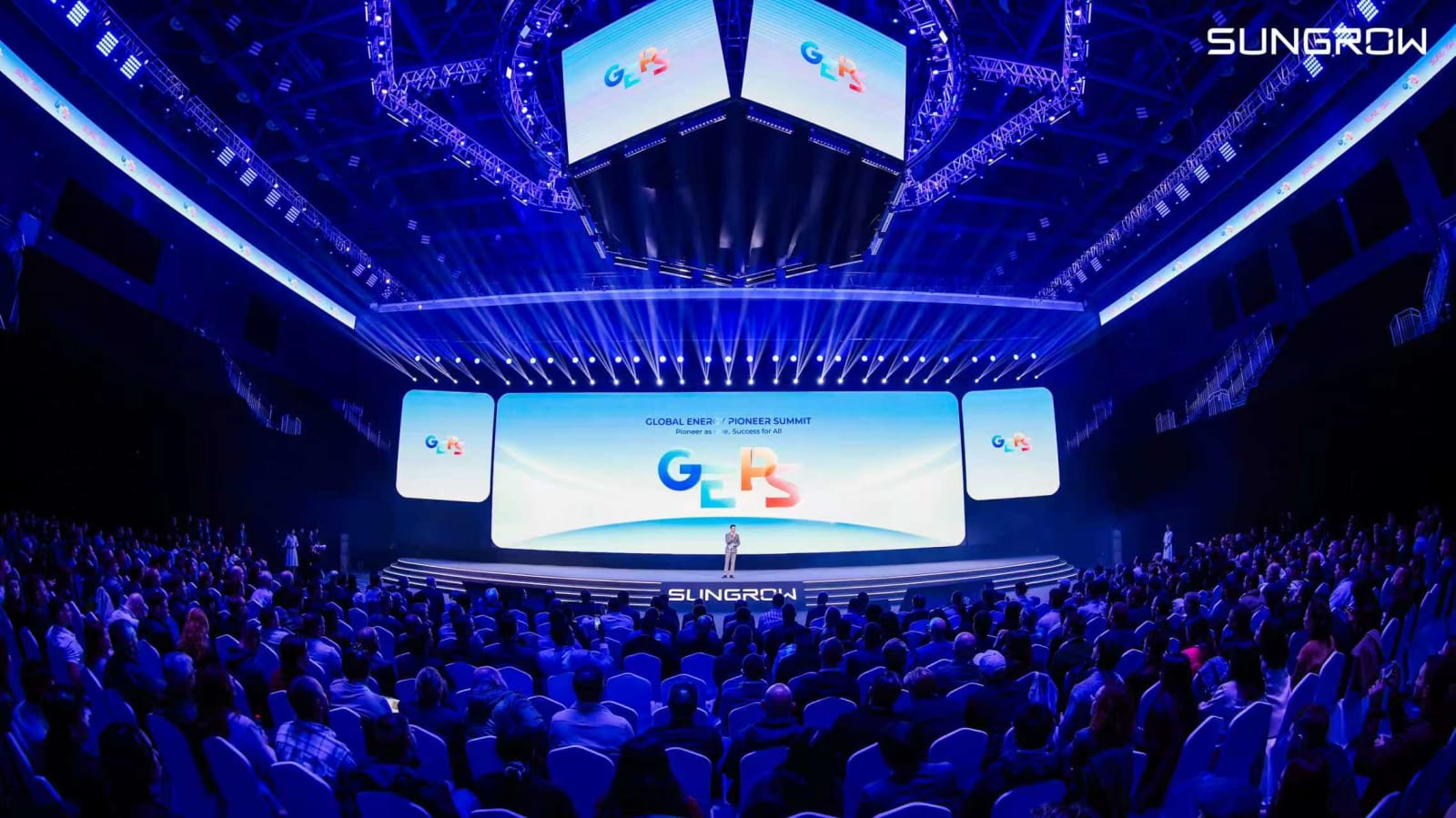
The meeting took place during the Global Energy Pioneer Summit (GEPS) 2026, held from November 10 to 13 , which brought together more than 1200 guests from more than 80 countries , including installers, distributors, engineering, procurement and construction (EPC) partners and representatives of the international energy industry.
Under the slogan "Pioneers united, success for all" , the company presented a roadmap for residential, commercial and industrial (C&I) storage, along with forecasts anticipating 660 GWh of new global installations between 2026 and 2030 , with a compound annual growth rate (CAGR) close to 25%.

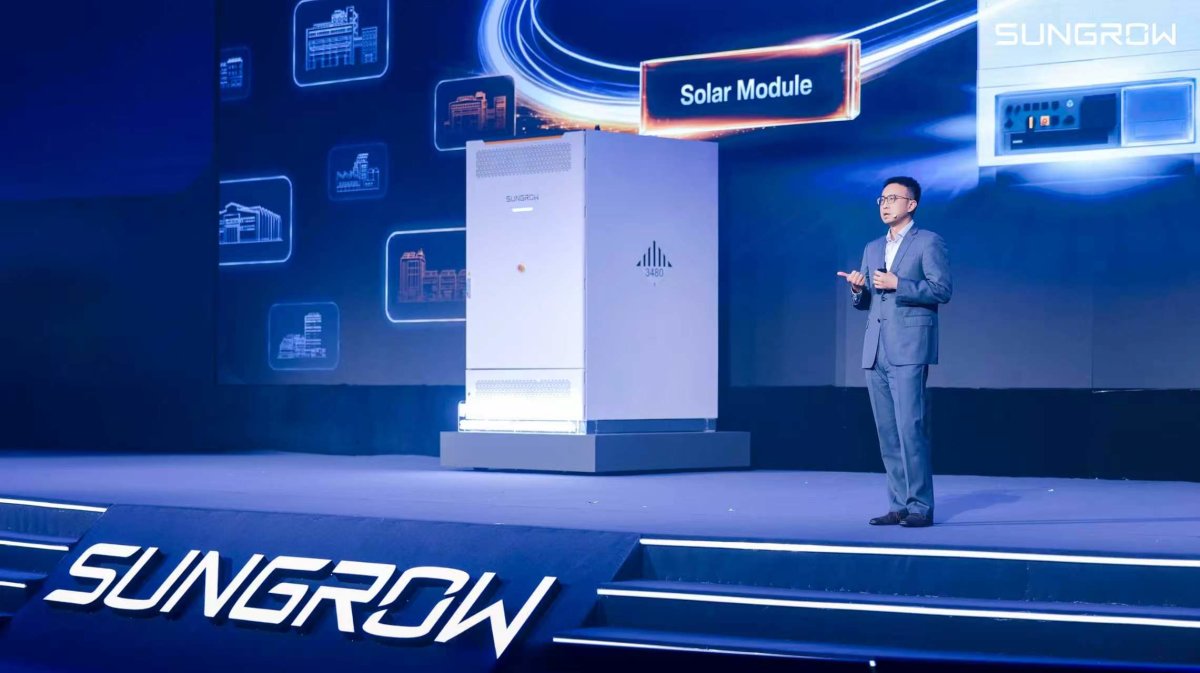
“The commercial and industrial storage market continues to grow and we expect it to reach 100 GWh in the coming years,” said Jim Hu, director of the C&I ESS product line at Sungrow , at the Global Energy Pioneer Summit , where the company also officially launched its new PowerStack 3.0 and PowerKeeper solutions.
The company's forecasts include 102 GWh of new C&I installations in 2030 alone , divided between 78 GWh of medium and large systems and 24 GWh of small business applications.
Thus, the estimate represents an increase compared to the 36 GWh per year considered for 2025. Likewise, according to the figures displayed in Hefei, global additions would increase from 58 GWh in 2025 to 88 GWh in 2026 , representing a year-on-year increase of nearly 52%.
Growth would continue with 112 GWh in 2027, 130 GWh in 2028, and 152 GWh in 2029 , reaching the projected 178 GWh annually by 2030. These forecasts explain Sungrow's renewed commitment to PowerStack 3.0 and PowerKeeper.
The second day's activities moved to the manufacturer's industrial facilities. Energía Estratégica toured various sections of the Sungrow factory and visited the assembly and testing areas for its photovoltaic inverters and storage solutions, two of the company's main technological lines.
The visit provided insight into the industrial processes associated with the equipment that Sungrow markets internationally, in a context of expanding demand for storage and increasing integration of batteries with renewable generation.
Furthermore, the exchange allowed for a deeper understanding of the differences between the new generations of products, the needs of the various markets, and the manufacturer's commercial strategies, not only in terms of storage, but also across its entire range of power electronics and the new smart modules that the company launched at SNEC in the middle of this year.
“It’s an astonishing number, and as the market grows, the applications have diversified. At the same time, this means new challenges,” Hu acknowledged.
This transformation also explains part of the technological strategy that Sungrow presented to the participants of the meeting.
PowerStack 3.0 incorporates artificial intelligence, a modular architecture, and a full-cycle efficiency of over 92% , with a platform designed for commercial and industrial projects that require greater capabilities and integration of different equipment.
One of its main differentiators is the leap in power compared to the previous generation: 500 kW versus the 250 kW of PowerStack 2.0 , accompanied by a smaller footprint and a reduction in operating noise.
“Version 3.0 is not a replacement for 2.0; it is a different capability,” explained Math Yu, product manager of Sungrow’s commercial and industrial storage department .
“With version 3.0, we have developed a scalable solution based on a platform that allows combining functional modules according to the specific scenario,” he explained, alluding to the fact that the new version allows for addressing higher power projects and circumstances where solar generation, storage, charging infrastructure and microgrids must be coordinated.
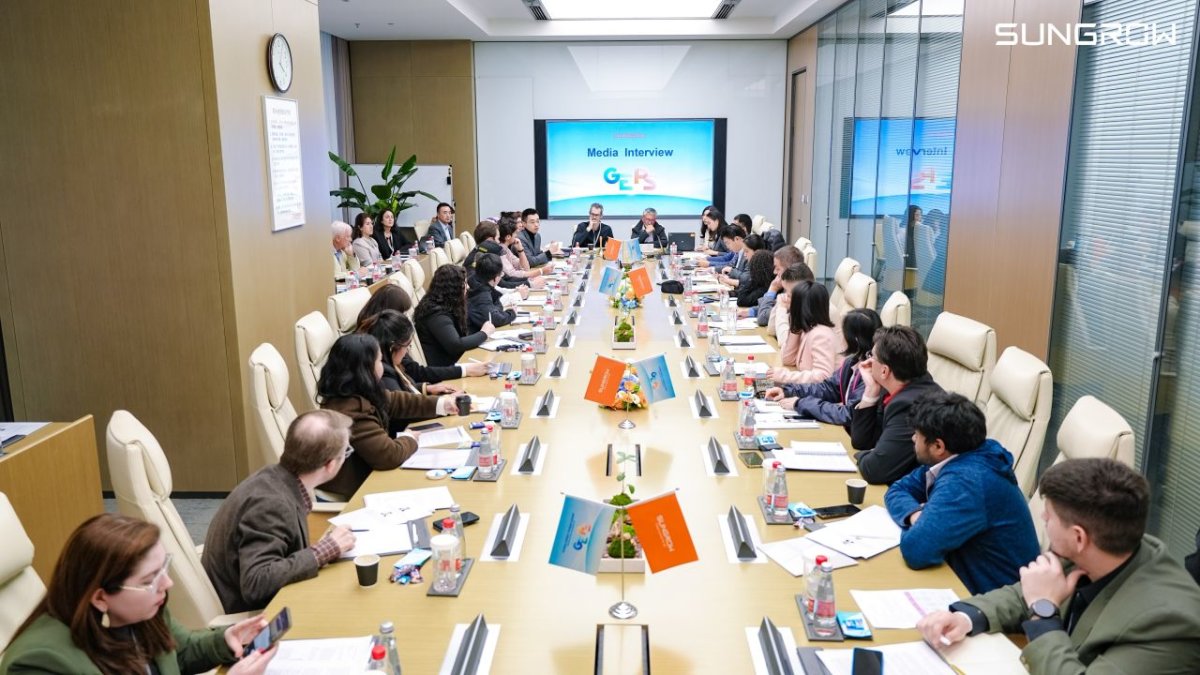
Strategic Energy was one of the media outlets invited to GEPS 2026 in the city of Hefei, China.
The strategy also includes smaller-scale installations. PowerKeeper , another of the new products announced during the meeting, comprises storage systems ranging from 50 to 1000 kWh, with power outputs from 50 to 125 kW .
The manufacturer complemented this family with PowerKeeper Lite , a solution aimed at small commercial and industrial applications, with a design focused on simplifying installation and maintenance.
In this way, the portfolio presented in Hefei seeks to cover different consumption profiles and operational needs, from small establishments to industrial complexes that require higher power and more sophisticated energy management.
“If a customer is looking for a reliable, high-quality inverter, but prefers a more economical battery — as long as it is balanced and suitable for the system — we can offer that compatibility,” the company explained.
The global map of storage: Asia and Europe lead, while Latin America accelerates
The forecasts known by Energía Estratégica during its coverage of the Global Energy Pioneer Summit in China also allow us to identify how the global growth of BESS systems would be distributed between 2026 and 2030.
Asia-Pacific would account for 274 GWh cumulatively , equivalent to approximately 42% of the projected global volume, with a compound annual growth rate of 20%. This breakdown includes 128 GWh for residential use, 125 GWh for medium and large C&I systems, and 21 GWh for small business applications .
Europe would rank second, with 209 GWh and an annual expansion of 15% . Larger commercial and industrial projects would account for 103 GWh, compared to 80 GWh for residential projects and 26 GWh for small C&I installations.
Both regions would account for around 73% of new global additions , although other markets would show higher growth rates.
In the Middle East and Africa, they would reach 96 GWh cumulative, with an annual rate of 40% , divided between 48 GWh for medium and large C&I, 26 GWh for small business applications and 22 GWh for residential applications.
North America, for its part, would add 55 GWh by 2030 , with a compound expansion of 25% and a predominance of the larger capacity commercial and industrial segment, which would contribute 33 GWh.
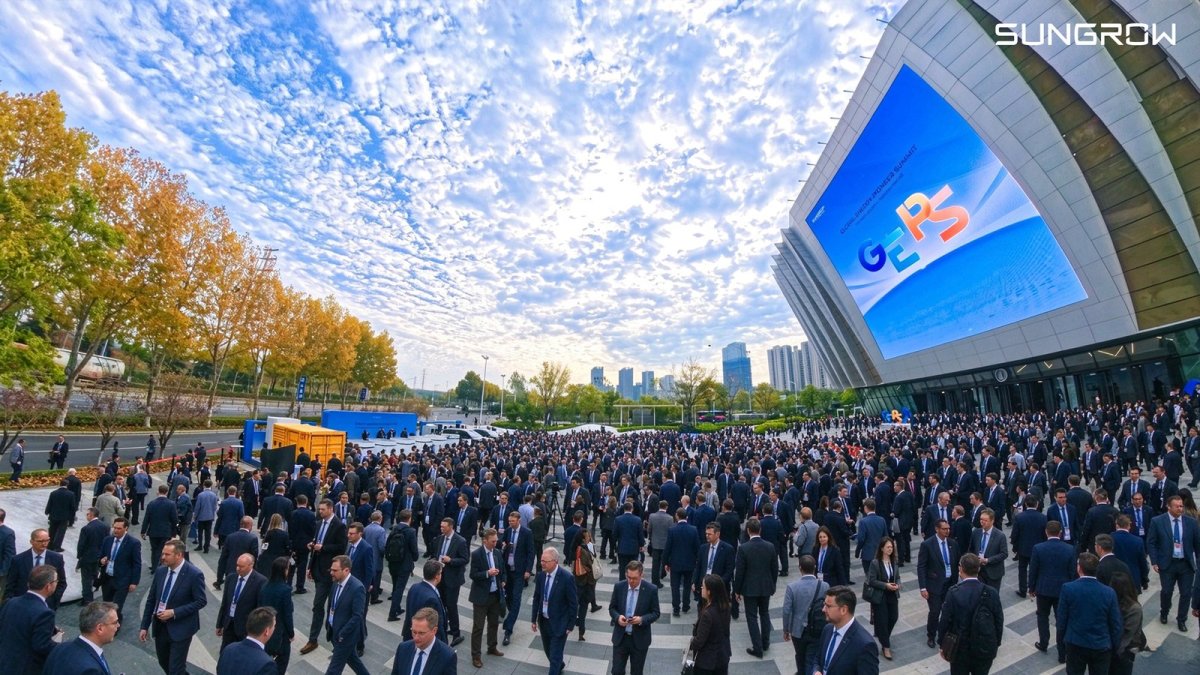
Sungrow brought together more than 1200 guests from 80 countries at GEPS 2026
However, Latin America would register the highest relative growth among the regions analyzed, with a compound annual growth rate of 80% , although on a lower base of installations than the more developed markets.
Why? The region is expected to add 25 GWh between 2026 and 2030 , distributed among 12 GWh residential, 10 GWh from medium and large C&I projects and 3 GWh from small commercial and industrial applications.
“We have recently undertaken some large-scale projects. We already have projects in Latin America, specifically in Chile and Brazil. Ultimately, we have the necessary supply capacity to meet market demand and, in doing so, increase our market share,” stated Jim Hu, Director of the C&I ESS product line at Sungrow.
International figures, technological launches, and a tour of Sungrow's facilities were all part of the same agenda: to show how the manufacturer is preparing its industrial capacity and product portfolio to meet the diverse needs of BESS systems.
For Energía Estratégica , the visit to China allowed them to learn about this strategy from its origin, tour the areas where the equipment is assembled and tested, and compare market perspectives with those responsible for developing the solutions.
GEPS 2026 thus brought together, in the same scenario, the current industrial activity and the projections of a global demand that could exceed 170 GWh per year of new installations by 2030 , with opportunities for different segments, technologies and regions.
 By Ailén Pedrotti
 By Energía Estratégica