


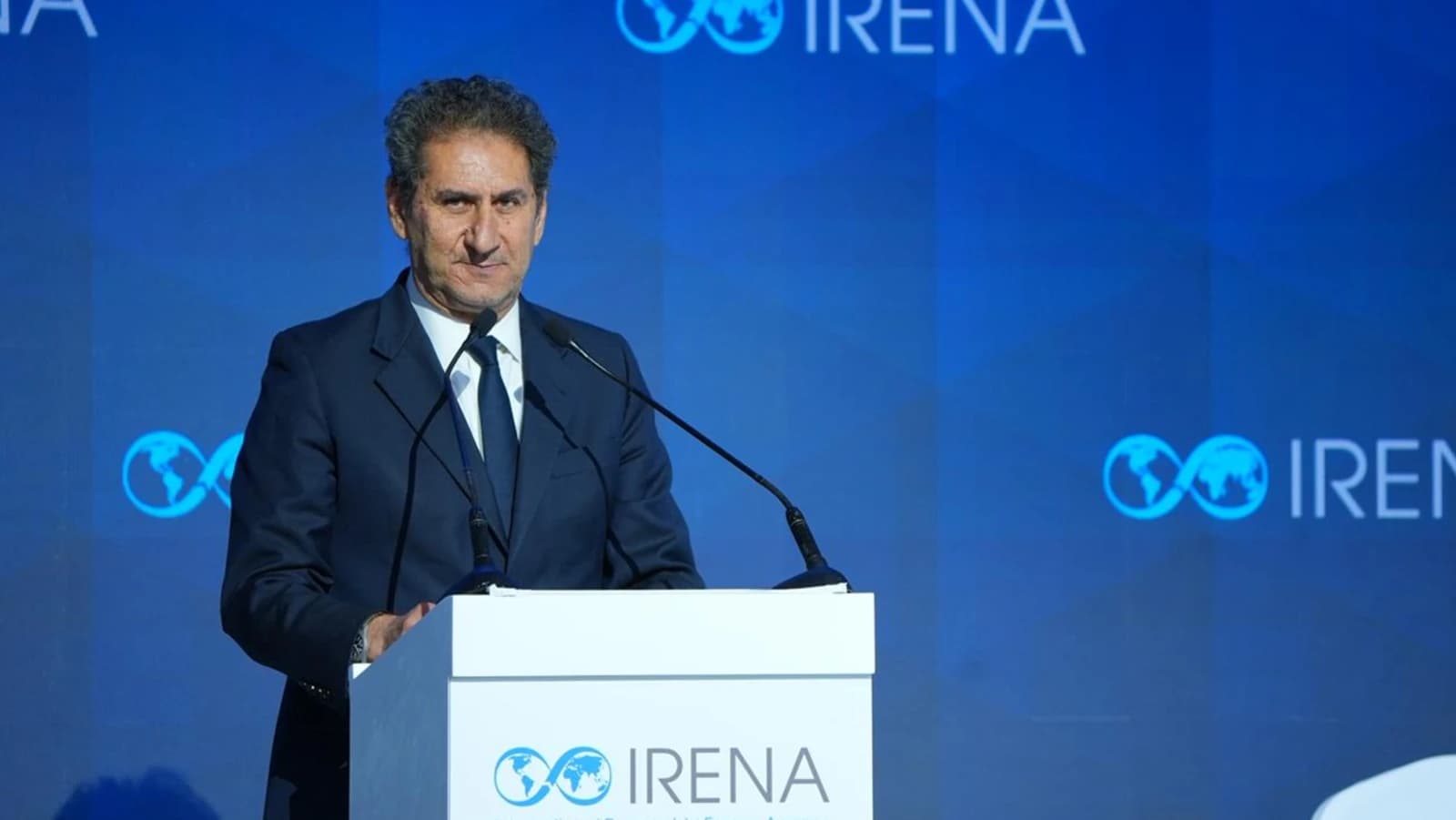
The selection process for the next Director General of the International Renewable Energy Agency (IRENA) has passed its first major hurdle. According to information obtained by Energía Estratégica, 125 applications were submitted, and the shortlist has been narrowed down to 10 candidates , among whom there is at least one representative from Latin America and the Caribbean.
Of the initial applications, 13 came from Latin America and the Caribbean: 10 men and three women . Europe had about 40 applicants, Africa around 20, and Asia a similar number.
The longlist was to be finalized during the first two weeks of August and is now complete, ahead of the interviews scheduled in Abu Dhabi during the first week of September . From there, the process will narrow the group to five candidates and then to two names that will be submitted to the General Assembly.
The profiles remain confidential as it is an internal process. However, sources close to Energía Estratégica indicate that “ at least one Latin American was among the 10 selected, and it is possible that there will be more than one regional representative.”

The succession of Francesco La Camera , who is ending his term after two periods at the head of IRENA, opens a particular opportunity for Latin America and the Caribbean.
Why? After the leadership of a representative from Africa and Europe, the regional rotation places America and Asia as possible protagonists of the new cycle that will begin in April 2027, for a period of four years.
Furthermore, the election will be shaped by technological competition between Europe and Asia. Both blocs seek to preserve their influence over the renewable energy agenda, equipment manufacturing, the development of new solutions, and the value chains associated with the energy transition.
In this context, a figure from Latin America could serve as a balancing alternative. Their viability will depend on the candidate's ability to guarantee neutrality, institutional continuity, and dialogue with all regions.
And while IRENA is looking for candidates who are “ visionary and have great political acumen ”, with at least 15 years of professional experience and 10 or more years in senior management positions within the public or private sector, the technical evaluation will only be one part of the definition.
The candidate's nationality, their country's international standing, and the political support they manage to gather could also prove decisive when the process enters its diplomatic phase.
Latin America already has precedents in advanced stages. Germán Arce , former Minister of Mines and Energy of Colombia between 2016 and 2018, reached the final stage of the previous process, although the Assembly ended up appointing La Camera.
Argentina was also represented. Sebastián Kind , former Undersecretary of Renewable Energy, was among the initial list of 10 candidates in that election, although he did not advance to the final selection. Both cases demonstrate that the region has already managed to pass top-level technical filters within IRENA .
From the interviews in Abu Dhabi to the final vote
After the interviews in September, the list of 10 candidates will be narrowed down to five . Then, only two names will remain, which will be presented to the General Assembly for the final vote.
“Within the selection subcommittee, there is representation from all regions. Since the General Assembly is being led by the Dominican Republic, there is also representation from the Dominican Republic on that committee,” sources from the sector emphasize.
With the number of candidates narrowing, the political component will gain importance. Governments will need to negotiate endorsements and evaluate not only professional experience, but also the regional and geopolitical balances associated with the appointment .
The 17th session of the Assembly is scheduled for January 2027. There, the full members will define La Camera's successor, who will assume office in April for a four-year term, renewable for an additional period.
The race has thus entered a significantly narrower stage. Of the 125 hopefuls, only 10 remain, and Latin America and the Caribbean have managed to keep at least one name in contention , awaiting September's decision on who will advance to the next round.