

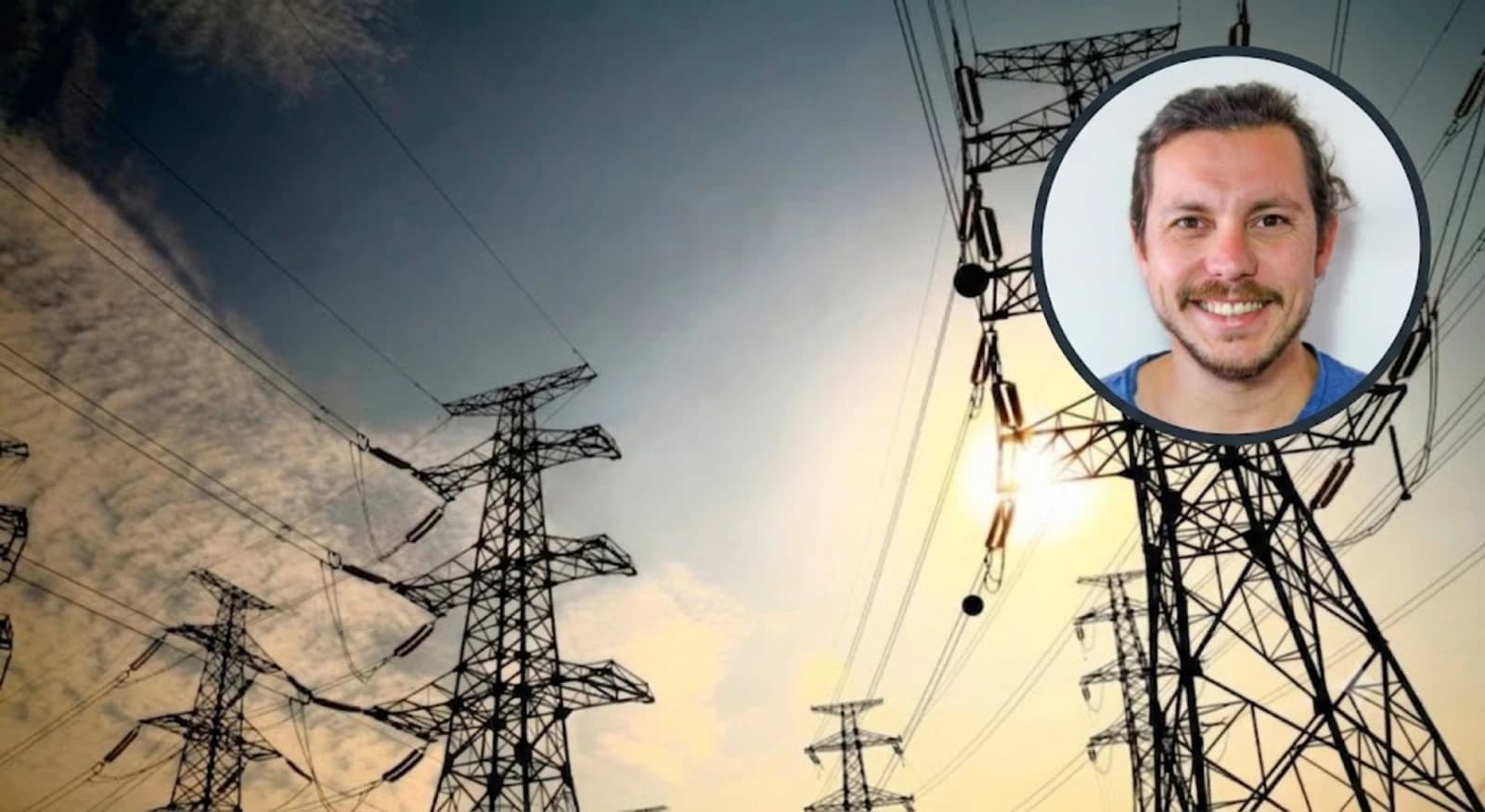
Just over a year ago, Ximena Rincón was still a senator when she signed a letter calling for a voluntary renegotiation of electricity supply contracts in Chile . The initiative, spearheaded by the Energy for All Foundation, garnered around 12,000 signatures from citizens and government officials.
Months later, Rincón arrived at the Ministry of Energy, and that discussion shifted to the regulatory arena. The new regulations incorporated a specific tool allowing the National Energy Commission (CNE), with prior authorization from the Ministry, to promote, on a one-time basis, voluntary modifications to existing contracts or the signing of new agreements, with the authority to review price, term, and other conditions.
For Javier Piedra Fierro , executive director of the Energy for All Foundation, the change has less to do with the emergence of a new idea than with the decision to finally put it into practice.
“There was a government that wanted to contact the companies to talk and, in that way, be able to reach agreements. And there was another government that didn't, whose political will was not focused on activating this mechanism,” he stated in an interview with Energía Estratégica.
The discussion did not begin with the new administration.
An official record from the Ministry of Energy itself shows that, during 2023, the CNE had already reviewed the contracting conditions for the regulated supply, including volumes, duration, prices and indexation formulas .
At that time, the analysis revealed that 26% of the energy contracted for regulated customers was linked to formulas that used the price of coal as an index . Of that volume, 12% corresponded to contracts that ended in 2024, another 3% expired in 2027, and 11% extended until 2032.
Based on that diagnosis, the then executive secretary of the CNE was tasked with voluntarily exploring alternatives with the companies that concentrated the largest volumes indexed to fossil fuels.
In August 2023, meetings were held with AES Andes and Enel Generación . The companies expressed a willingness to talk, although they warned about the risks of modifying the agreements, and ultimately no contractual changes materialized .
The Ministry's own official response acknowledged a relevant limitation: the mechanism provided for in article 134 of the General Law of Electrical Services could only be initiated by one of the contracting parties —supplier or distributor— and the authority was not empowered to activate it .
That is one of the changes that becomes relevant with the new framework: the CNE will have a formal way to promote the process, although it will still be subject to the voluntariness of the parties .
According to Piedra Fierro, the negotiation should not be interpreted as an extraordinary intervention in the market.
“Renegotiating electricity contracts is the most common thing in the world in the electricity sector,” he stated.
“It’s a market instrument, not a state instrument. It’s not that the state is going to expropriate or cancel a contract, but rather that we sit down at the table to talk about the fact that the conditions have changed since the contract was signed,” he added.
The executive also noted that, so far, he had not observed a widespread negative reaction from power generators to the mechanism and recalled that this type of contractual review is already commonly used among large consumers.
“In Chile, the entire mining sector renegotiated its electricity contracts, which are very similar to those held by regulated customers,” he noted.
The difference this time is that the talks will take place under a specific legal framework. The mechanism is voluntary and exceptional , allowing for intervention regarding the price, duration, and terms of the contracts, rather than unilaterally forcing a reopening.
“This isn’t about harming the industry. It’s about ensuring that, in this technological shift we’ve experienced through renewable energy, we all benefit,” Piedra Fierro stated.
After the contracts, distributed generation
With the renegotiation finally incorporated into the regulatory framework, the Energy for All Foundation understands that this discussion can cease to be the focus of its agenda and give way to a new front: distributed generation .
Piedra Fierro placed particular emphasis on residential access and the need for the expansion of solar systems to no longer be conditioned by the economic capacity of each household.
“We need to be able to ensure that solar panels are not only installed in the eastern part of the capital, but that the middle classes of society can also begin to generate their own energy and, in this way, become active participants in generating and managing their energy,” he said.
The segment is experiencing rapid expansion.
As of May 2026, Chile had 41,962 installations under the Distributed Generation Law and 501.8 MW of accumulated power , according to the CNE. Compared to the same period of the previous year, the number of systems increased by 35% and installed capacity by 40% .
The Energy Roadmap 2026-2030 presented by the Government itself sets as a goal to reach 1 GW of distributed generation under Net Billing by 2030 , practically doubling the current capacity.
The document also proposes installing 65,000 new solar systems in residential, commercial, agricultural, industrial and public sectors, among others.
For Piedra Fierro, however, the challenge is not just about adding power.
“There is still a need to think about better public policies to incentivize the development of residential energy, of citizen energy,” he warned.
The proposal also touches on an economic discussion that will gain importance as self-generation grows.
“It’s crucial to understand this clearly: a kilowatt-hour generated in a home is a kilowatt-hour that is no longer purchased from large power generators. And it’s a kilowatt-hour that is no longer used in transmission networks ,” he stated.
The Ministry itself acknowledges this challenge. In its latest Public Account, it noted that, given the massive incorporation of residential distributed generation, it will be necessary to evaluate its effects on tariff schemes and the use of distribution and transmission infrastructure , with the aim of ensuring the efficient development of the technology.
For Piedra Fierro, conflicting interests are inevitable, but they should not postpone the discussion again.
“There will always be winners and losers, but what we must seek is the greater good for the citizens. That is the objective of public policy,” he concluded.