What changes does Spain need to harness its renewable energy potential, reduce energy costs, and attract new industrial investment? With the debate on the next legislative session underway, the Spanish Renewable Energy Association (APPA Renovables) has put forward ten proposals, ranging from tax reform to grid modernization, energy storage, and streamlined administrative processes.
The document, organized into four main areas, proposes an energy strategy that will reduce dependence on imported fuels, accelerate the electrification of demand, and improve the economic conditions for the development of new projects.
The association believes that these objectives require agreements that transcend political cycles and provide stability to long-term investments.
“Security of supply, business competitiveness, job creation, territorial cohesion and decarbonization are common goals for all political forces, so we are confident that we can move forward together to take advantage of our resources,” explains José María González Moya, CEO of APPA Renovables .

Lower taxes and more electrification: the first reforms demanded by the sector
Spain continues to rely on foreign sources to meet a significant portion of its energy needs. In 2025, it imported 68.4% of the energy it consumed and recorded an energy trade deficit of €29.292 billion.
In response to this situation, APPA proposes making the replacement of imported oil and gas with domestic resources a national priority, through measurable targets and regulatory stability. The proposal uses as a benchmark the reduction of energy dependence to 51% projected in the National Integrated Energy and Climate Plan (PNIEC) for 2030.
The sector points out that renewables avoided imports of fossil fuels worth 14.814 billion euros in 2025 and sustained 140,621 direct and indirect jobs.
But energy independence doesn't depend solely on installing more generation capacity. It also requires modifying tax conditions.
In this regard, the second proposal calls for the definitive elimination of the tax on the value of electricity production (IVPEE) , reviewing existing regional taxes and avoiding new charges on renewable installations.
According to the document, the sector contributed 1.296 billion euros in taxes during 2025, of which 536 million corresponded to the generation tax.
APPA also requests extending favorable tax treatment to thermal renewables, biofuels, biogas and biomethane.
The third measure addresses one of the main challenges of the Spanish market: increasing electricity consumption to take advantage of available renewable generation.
Currently, electricity accounts for only 23.9% of final energy consumption, compared to 52.1% for petroleum products and 15.5% for natural gas.
This situation is reflected in the waste. According to APPA, in 2025, 19.7 TWh of peninsular renewable energy production was wasted, of which 11.41 TWh were due to technical constraints and 7.19 TWh to economic reasons.
To reverse this situation, the association proposes a national electrification pathway with targets for industry, transport and buildings, accompanied by a lower tax burden on electricity.
Specific measures include reducing the excise tax to European minimums, applying a reduced VAT rate, and removing energy policy costs not linked to supply from the bill.
In addition, it proposes tax deductions of at least 25% of the investment in self-consumption and behind-the-meter storage , improving grid access for surplus energy, and establishing a national operational registry.
The goal is also to attract new industrial activity to areas where renewable energy generation is available and to prevent part of that production from continuing to go to waste.
Hydraulics, biomass and storage: how to reduce system operating costs
The second set of proposals focuses on the safety and flexibility of the electrical system.
In the area of water resources, APPA is calling for a state policy that guarantees the continued operation of power plants when their concessions expire.
To this end, it proposes enabling renewals or extensions linked to investment and modernization commitments, as well as ensuring that the river basin authorities resolve the administrative procedures within the corresponding deadlines.
The association also calls for a national plan for pumped hydropower and long-duration storage , with incentives to develop new capacity.
In parallel, the fifth proposal seeks to improve the remuneration of biomass electricity, a technology that provides firm renewable generation and contributes to the management of agricultural and forestry waste.
APPA proposes to financially recognize its environmental and territorial benefits, establish mechanisms to modernize and extend the useful life of existing facilities, and promote new power plants through specific auctions and access capacity competitions at certain nodes.
Another key point of the document is the review of the enhanced operation of the electrical system, implemented after the blackout of April 28, 2025.
According to data presented by APPA, these measures increased combined cycle power generation by 30%. Furthermore, the total cost of ancillary services reached €4.219 billion through September 2026 and, if the trend continues, could exceed €5 billion by year-end.
Continue reading
Given this scenario, the sixth proposal calls for defining a roadmap to withdraw the extraordinary measures once the technical safety conditions are guaranteed .
The association believes it is necessary to expand the participation of renewables and storage in voltage control services, develop grid forming capabilities and, where necessary, enable new ancillary services markets that remunerate their contribution to stability.
Added to this is anticipatory planning of transport and distribution networks, the deployment of batteries and pumping, demand flexibility and a capacity market with stable signals for investment .
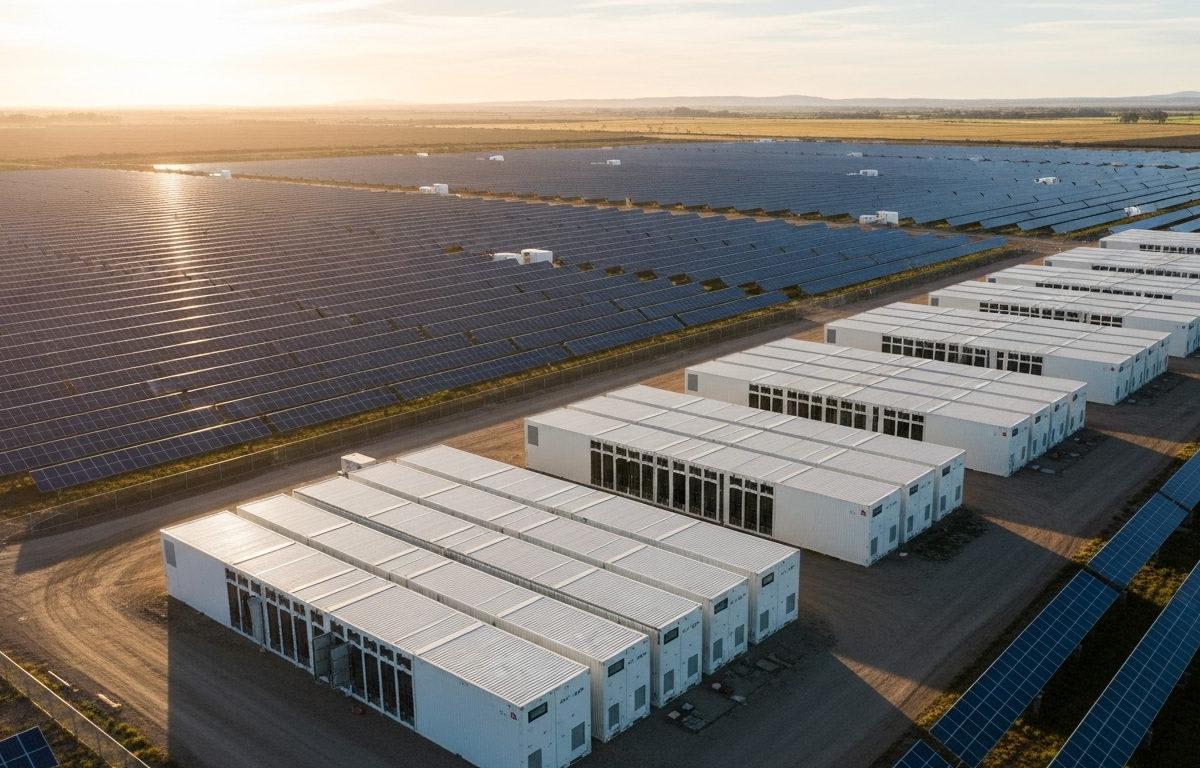
Spain currently has 3,485 MW of storage, compared to the 22.5 GW planned by the PNIEC for 2030.
Faster permits, upgrades and new opportunities for biomethane
Bureaucracy is another of the issues that APPA considers a priority to resolve during the next legislative term.
The seventh proposal aims to harmonize administrative procedures among the autonomous communities, through common criteria, maximum time limits and homogeneous documentation for all renewable technologies.
“The development of these investments, which are very costly and long-term oriented, requires agile and harmonized processing, with common criteria, maximum deadlines and homogeneous documentation agreed with the autonomous communities,” González Moya points out.
The association also calls for the effective implementation of renewable acceleration zones and the consideration of superior public interest as provided for in European regulations.
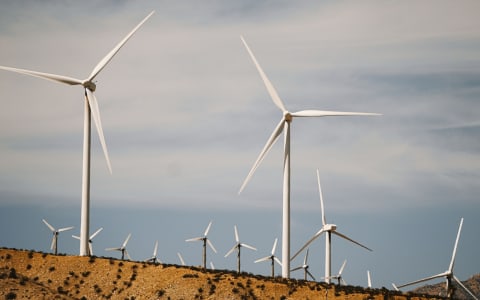
In the wind energy sector, it proposes to approve a National Repowering Roadmap , with simplified procedures and preferential access to the grid, to replace old equipment, produce more electricity with fewer wind turbines and strengthen the services that these facilities provide to the system.
The document notes that more than half of Spain's wind turbines are over fifteen years old.
The eighth measure focuses on biogas and biomethane, a market with ample growth potential, but conditioned by administrative delays and social acceptance.
Spain produced just 0.43 TWh of biomethane in 2025, equivalent to 0.13% of its gas demand, through 22 plants.
However, APPA estimates that between 25 and 35 TWh of biomethane could be mobilized annually by 2035 , which would allow for the replacement of between 7% and 10% of current natural gas consumption.
To move towards that scenario, it proposes adopting as a State objective the 20 TWh of biogas foreseen in the PNIEC for 2030, harmonizing permits and reviewing the costs of connection to the gas network, which currently fall on the producers.
It also calls for long-term contracts and a robust system of guarantees of origin to provide predictability to project revenues.
The association emphasizes the importance of involving local communities from the earliest stages, especially given that around 30% of the identified initiatives have suffered delays or standstills due to territorial opposition.
Biofuels and offshore wind: the bets to diversify the energy mix
The ninth proposal focuses on transportation and aims to increase both domestic consumption and production of biofuels.
APPA proposes moving from diesel B7 to B10 and from gasoline E5 to E10, generalizing these mixtures in Spanish service stations.
It also calls for reducing the taxation of biofuels in the Hydrocarbons Tax and establishing a framework to support domestic production.
The association points out that Spain consumed 2.4 million tons of biofuels in 2025, equivalent to 7.6% of automotive gasoline and diesel consumption, despite having installed industrial capacity to produce twice as much.
Finally, the tenth point of the decalogue addresses innovation and marine energies.
Among the priorities is to convene without further delay the first offshore wind auction , foreseen in Royal Decree 962/2024, in the high potential areas identified in the maritime space planning.
The organization also calls for the promotion of testing platforms and demonstration projects for technologies linked to waves, tides, and currents, along with stable programs for funding, research, and industrial scaling.
APPA highlights that the renewable energy sector allocates 3.13% of its direct contribution to GDP to R&D&I, more than double the Spanish average, which stands at 1.50%.
The ten measures thus form an agenda that combines regulatory changes, economic incentives and infrastructure development for the next legislature.
“Spain has the resources, companies, and knowledge necessary to move forward. Transforming that capacity into a more competitive and resilient economy requires a common strategy, stability for investment, and a willingness to collaborate between administrations,” argues González Moya.
The CEO of APPA insists that achieving these goals requires a political consensus on the use of indigenous renewable energies.
 By Matías Medinilla
 By Energía Estratégica

 By Ailén Pedrotti
 By Emilia Lardizabal