


Magdalena will once again compete in the Guatemalan electricity market after securing one of the PEG-5 tenders . The company is working on a bid for Open Tender 1-2026 and has already expressed its intention to participate in a future PEG-6, although this latter process does not yet have official terms or guidelines.
“There is a tender coming this year that was announced with very little time to prepare, I wish there had been more time, but we will be participating with parks that are already installed and accelerating processes ,” confirmed Jorge R. Leal , Chief Executive Officer of Magdalena, in dialogue with Energía Estratégica.
The new call seeks to contract 300 MW of power and energy to cover the volume that was left pending in PEG-5 and respond to the additional needs derived from the growth of electricity demand.
The process represents the company's immediate objective in Guatemala. Magdalena is analyzing available assets and accelerating various developments to structure a competitive proposal within a timeframe that the sector considers demanding.

At the time of the interview, Leal indicated that the company had " one month and 27 days to submit technical offers " and that the reverse auction is scheduled for October.
The National Electric Energy Commission (CNEE) has authorized Open Tender 1-2026 for major distributors to contract new capacity. The process allows participation from existing power plants, new projects, and generators.
Magdalena confirmed its participation, but has not yet revealed the power or technological configuration of the proposal. The company expects to complete its analysis of the conditions before disclosing the details.
The company already holds a significant position in the national electricity system. It currently supplies between 11% and 12% of Guatemala's energy , primarily through biomass generation using residual sugarcane fiber.
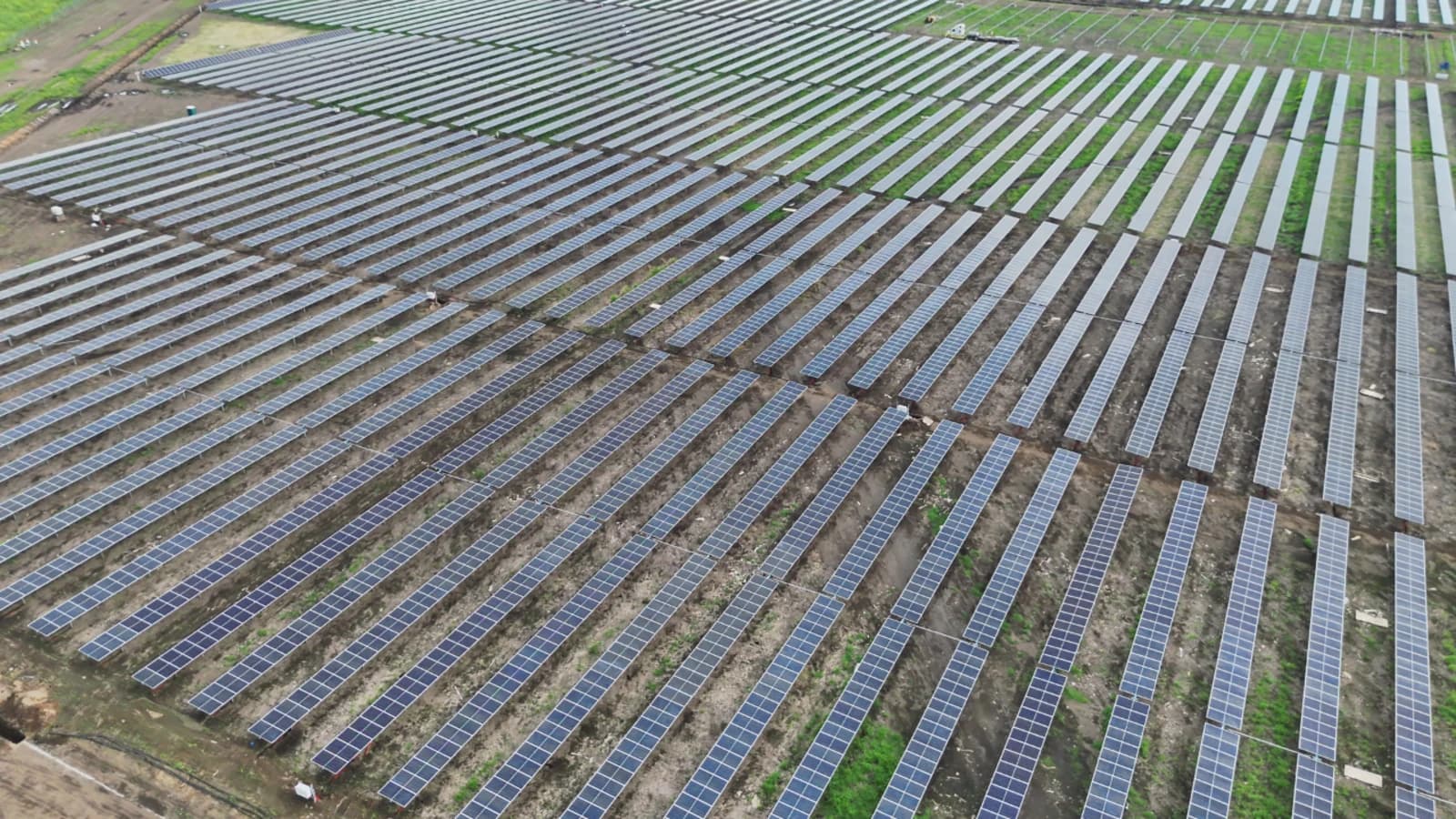
Added to that trajectory is the award obtained in the PEG-5, where it obtained contracts to develop 350 MW solar with six hours of storage and another 145 MW photovoltaic associated with existing plants .
The growth in demand is accelerating new calls for proposals.
Magdalena interprets that Open Tender 1-2026 does not only respond to the outstanding volume of PEG-5. The call for tenders also reflects an expansion of consumption exceeding initial projections.
“Guatemala’s electricity consumption is growing faster than expected,” the CEO warned.
The company believes that new capacity planning should anticipate system needs to avoid generation deficits and greater exposure to high prices.
“ We are firm believers in the system and the way to support it is to invest ,” Leal said.
The electricity crisis that Guatemala experienced during the 1990s, marked by blackouts and restrictions, spurred a reorganization of the market. This regulatory framework made it possible to attract private capital, develop projects, and establish more predictable contracting processes.
However, the incorporation of new generation equipment has progressed at a slower pace than the increase in demand in recent years. Leal explained that regulations require tenders to be held several years in advance, but the sector has lost some of that planning discipline.
Open Tender 1-2026 thus emerges as a short-term response, while the country analyzes a broader call for firm power.
Looking ahead to a future PEG-6
In addition to preparing its immediate bid, Magdalena announced its intention to compete in an upcoming PEG-6 . The company clarified, however, that there are still no official guidelines that would allow for defining technologies, volumes, or prices.
“ For PEG-6, we understand that they will present the terms in the following months and we will prepare ourselves ,” Leal said.
Guatemalan authorities previously announced that they are working on a new process to contract around 300 MW of firm power , after the PEG-5 project failed to cover all the required capacity.
For Magdalena, the design of the next auction should allow competition between different sources without excluding technologies before evaluating their costs and performance.
“As a company, we are convinced that the diversification of the energy matrix should occur naturally and not be forced, leaving only some technologies in and leaving others out,” said Juan Augusto Vidal , Commercial Director of Magdalena.
The executive stated that the evolution of the matrix should be determined by the capacity of each project to offer competitive prices, security of supply and availability.
The company identifies solar energy with batteries, wind power generation, and hydroelectric plants as alternatives capable of strengthening Guatemala's energy sovereignty.
Continue reading
These technologies take advantage of local resources and reduce dependence on fuels that the country does not produce, such as natural gas, coal, or oil.
Magdalena also does not support the idea that the bases of a future PEG-6 should exclude thermal projects in advance.
“ There were rumors that they want to limit gas projects , and we don’t believe that ’s the right path ,” Leal said.
The company's position is that the various sources should compete under comparable rules and that the award should prioritize solutions capable of providing secure, sustainable energy at competitive prices.
“The National Electric Energy Commission needs to be convinced that what we are doing with solar energy with batteries will transform the sector and lower electricity rates, giving a competitive advantage,” the CEO stated.
The PEG-5 tender marked a turning point for these types of solutions. The tender awarded 1258 MW through 57 projects , with a renewable share of nearly 73% and a strong predominance of solar power plants combined with energy storage.
The average mononomic price was approximately $101 per MWh , below various contracts in force in the Guatemalan market.
For Magdalena, the result confirmed that renewable technologies with batteries can compete on price and bring flexibility, power and reliability to the system.
Transmission, a condition for sustaining the new generation
The company warned that the growth in installed capacity will not be enough if Guatemala does not resolve the restrictions of its electrical infrastructure.
“We want to draw the attention of the actors in the system to resolve the congestion of the transmission system,” Vidal stated.
The commercial director defined the network as an indispensable piece for the new parks to be able to dispatch their production and supply the consumption centers.
“ We believe it is a very important link for growth in generation to materialize and reach end users ,” he added.
The issue gains relevance after the outcome of PET-3 , a process aimed at expanding the transmission infrastructure that failed to materialize after being declared void.
Guatemalan authorities later announced the preparation of a new tender, identified as PET-4, which should incorporate the lessons learned from the previous procedure and reduce the risks that discouraged potential participants.
“ We need to see what didn’t work with PET-3 and eliminate the risk factors that discourage investors from building transmission lines ,” Leal said.
The executive identified social conflicts, easements, and the distribution of responsibilities as variables that hindered infrastructure development.
For this reason, he proposed cooperation schemes that distribute risks between the public sector and private investors.
“ The State has to assume its responsibility to ensure that individuals have access to energy; I love the idea of public-private partnerships with shared risk ,” he said.
Magdalena is also exploring the use of batteries to complement the new lines. “Batteries could store energy in locations where it will be used later to avoid overloading,” the CEO explained.
The company plans to accelerate the installation of storage systems during the first half of next year, although it considers it essential to have rules that allow their integration and remuneration within the market.
“ We are going to accelerate the installation of storage systems for the first half of next year, but we need regulation to make them work ,” Leal said.
In this way, Magdalena seeks to link its award in the PEG-5 with an offer for Open Tender 1-2026 and a possible participation in the PEG-6 .
The strategy will depend both on the incorporation of new projects and on Guatemala's ability to coordinate generation, storage, and transmission under joint planning.