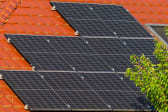
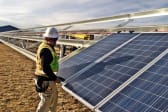
Through the program "Energy, water and food security for indigenous peoples in semi-arid coastal regions of Northern Mexico", the Comcaac community, better known as "Seri People ", has successfully implemented the family garden system to produce their own vegetables. The project falls under Call for Proposals FOP04-2021-03, "National Research and Impact Projects for Transitioning to a Socially and Environmentally Sustainable Energy System," of the National Strategic Program for Science, Technology, and Linkage with the Social, Public, and Private Sectors. According to the report from the University of Sonora and the General Directorate of Energy, among other participating institutions, the photovoltaic systems installed to supply water to the communities—not including those already installed in homes—are 386 kW and 17.5 kW in Punta Chueca and Desemboque, respectively. The initial results of this installation have been very positive , as the electricity consumption of the desalination plant and the well is covered by 217% and 147%, respectively.
These figures were subsequently validated using NREL's PVWatts software. Further details of the program include workshops on the construction, operation, and maintenance of family gardens. The garden consisted of 10 raised beds.
All of them had crops and were protected by 70% shade netting. Currently, there are 20 family gardens in Punta Chueca, which were installed in November 2021. The concept consists of a metal structure for mounting photovoltaic modules with an optimal tilt and orientation for the latitude where they are installed. The purpose of this integration is to combine photovoltaic solar technology with family gardens, allowing families to replace their dependence on butane gas with electricity. The simple design of the agricultural and photovoltaic panel systems makes them highly versatile for adjusting the tilt of the solar modules according to the latitude where these systems are installed. Likewise, their design allows for the adaptation of hydroponic and/or aquaponic systems to increase food production capacity, as well as rainwater harvesting devices. Similarly, these systems can be easily adapted to shelter farm animals, support beekeeping, and/or the production of other foodstuffs. 
Public-Private Partnerships: The developments undertaken have positively impacted the quality of life of the inhabitants of the Comcaac nation, who have actively participated in the actions carried out by the research group. In this regard, the aim is to develop a methodology for social intervention and innovation to replicate these types of actions in other communities and thus contribute to issues as relevant today as scientific and technological development geared towards social solutions. The success achieved so far is due to the enthusiasm and interest of the Comcaac families and the support of various public and private institutions that have provided ongoing training and material assistance for the construction of community gardens. Therefore, it is considered important in this first stage that this support and guidance continue.

 By Florencia Guglielmetti
 By Energía Estratégica

 By Matías Medinilla
 By Ailén Pedrotti