Ecuador faces a decisive moment for its electricity sector. After experiencing one of the most severe energy crises in recent years, with rationing of up to 14 hours during 2024, the country seeks to accelerate the incorporation of new generation capacity and attract private investment to reduce its dependence on hydroelectric power.
“There are between 400 and 450 MW that are waiting for the process to be completed and that will be able to connect to the grid at the end of 2027 and the beginning of 2028,” said Eduardo Rosero Rhea , president of the Ecuadorian Association of Renewable Energies and Energy Efficiency (AEEREE) , in an exclusive interview with Energía Estratégica during Expo Solar Colombia.
However, the need to incorporate firm power contrasts with the difficulties that developers still face in financing, enabling and connecting new renewable projects, in a country where 70% of electricity generation comes from hydroelectric sources .
"We have an energy crisis where certain conditions are accelerating this investment process. We need to cover roughly 1,300 to 1,800 MW of firm power. This, for example, triples the capacity for the photovoltaic or wind power sectors," warned Rosero Rhea, who believes that the power deficit, the dollarization of the economy, and the growing need for security of supply could drive a new stage of renewable energy development.

If these remaining 400 MW are completed, Ecuador could add a significant amount of new renewable capacity over the next two years. However, this forecast still depends on the completion of the necessary procedures and the fulfillment of the conditions required to commission each facility.
According to the president of AEEREE, a study identifies approximately 970 MW of additional projects aimed at injecting electricity into the grid and selling it to the State , a portfolio that demonstrates the interest of investors in taking advantage of the new regulatory modalities available.
It is worth remembering that the Government of Ecuador recently moved forward with an electricity market reform aimed at facilitating the incorporation of new private generation , in an attempt to reduce the regulatory and financial barriers that historically limited the development of renewable energies.
As reported by Energía Estratégica , through Executive Decree No. 515 , published in October 2026, the Executive Branch established a simplified regime for non-conventional renewable energy projects. One of the key changes is that renewable energy projects up to 100 MW will be able to access prioritized permitting procedures , while initiatives exceeding that capacity will have to undergo public selection processes.
In addition, renewable energy plants up to 10 MW will have preferential dispatch, while those between 10 and 100 MW will be subject to the centralized dispatch of the operator CENACE.
The reform also expressly recognizes energy storage and complementary services, including frequency regulation, voltage control, reserves and black start.
Another relevant point is the opening to new private investments in electrical infrastructure, especially when distribution companies are unable to carry out the necessary expansions to meet the growing demand.
Payment guarantees: the IDB seeks to reduce one of the biggest risks for investors
One of the central points of the Ecuadorian market is financing and the need to ensure payments to private generators.
Rosero Rhea warns that developers require mechanisms that guarantee compliance with contractual commitments, especially in projects whose investment recovery is structured on long-term horizons.
He pointed out that the permits and contracts for certain projects cover periods of at least 25 years , so the security of income is essential to obtain financing.
In this context, he highlighted the intervention of the Inter-American Development Bank (IDB) through payment guarantee mechanisms linked to projects awarded in previous calls.
The leader recalled that the projects corresponding to a block of approximately 500 MW were awarded between 2021 and 2022 , while the signing of the contracts took place later, during 2023 and 2024.
To support the financial commitments associated with these initiatives, he explains that a guarantee mechanism was structured with an initial fund of approximately USD 80 million .
According to Rosero Rhea, this instrument was designed to cover between six and eight months of payments , considering a scenario in which all the projects included enter into commercial operation.
The tool is an important signal for developers and financial institutions, as it aims to reduce one of the main risks associated with selling electricity to the State.
But the scope of these guarantees could extend to new contracting methods. Rosero Rhea maintains that the IDB is also considering supporting private projects developed under regulatory frameworks different from traditional auctions.
These are initiatives that seek to market electricity through private contracts with the State and that, like projects awarded through public tenders, need to ensure the receipt of their income.
Large solar projects: 200 MW in Loja and opportunities in Santa Elena
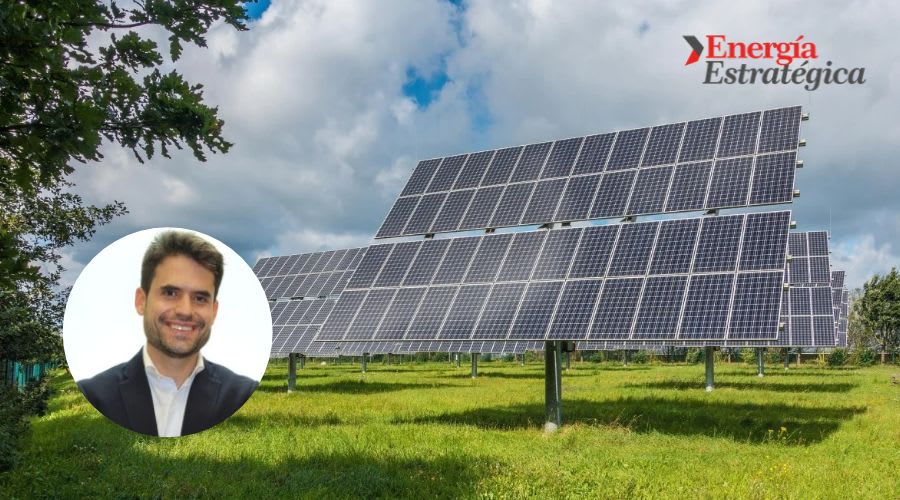
The association states that the government is considering several larger-scale photovoltaic projects, including an approximately 120 MW initiative in the province of Santa Elena and a 200 MW solar complex planned for Loja , in the south of the country, near the border with Peru. The latter has not yet entered the selection process. There is a photovoltaic development pipeline that currently includes several projects under development, with an estimated total capacity of 2,500 MW in the industrial self-consumption segment as of November.
According to the president of AEEREE, during the last four years Ecuador promoted processes for selecting energy projects that failed to translate into the expected execution of investments , due to different obstacles.
Among the main difficulties mentioned are financial structuring, payment guarantees, and infrastructure restrictions for connecting new power plants.
"Network connection points are already very scarce for projects of that scale," warned Rosero Rhea.
For developers, this restriction also impacts costs and execution times, since a power plant with financing and favorable renewable resource conditions does not necessarily have a technically viable connection point.
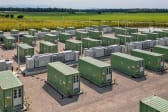
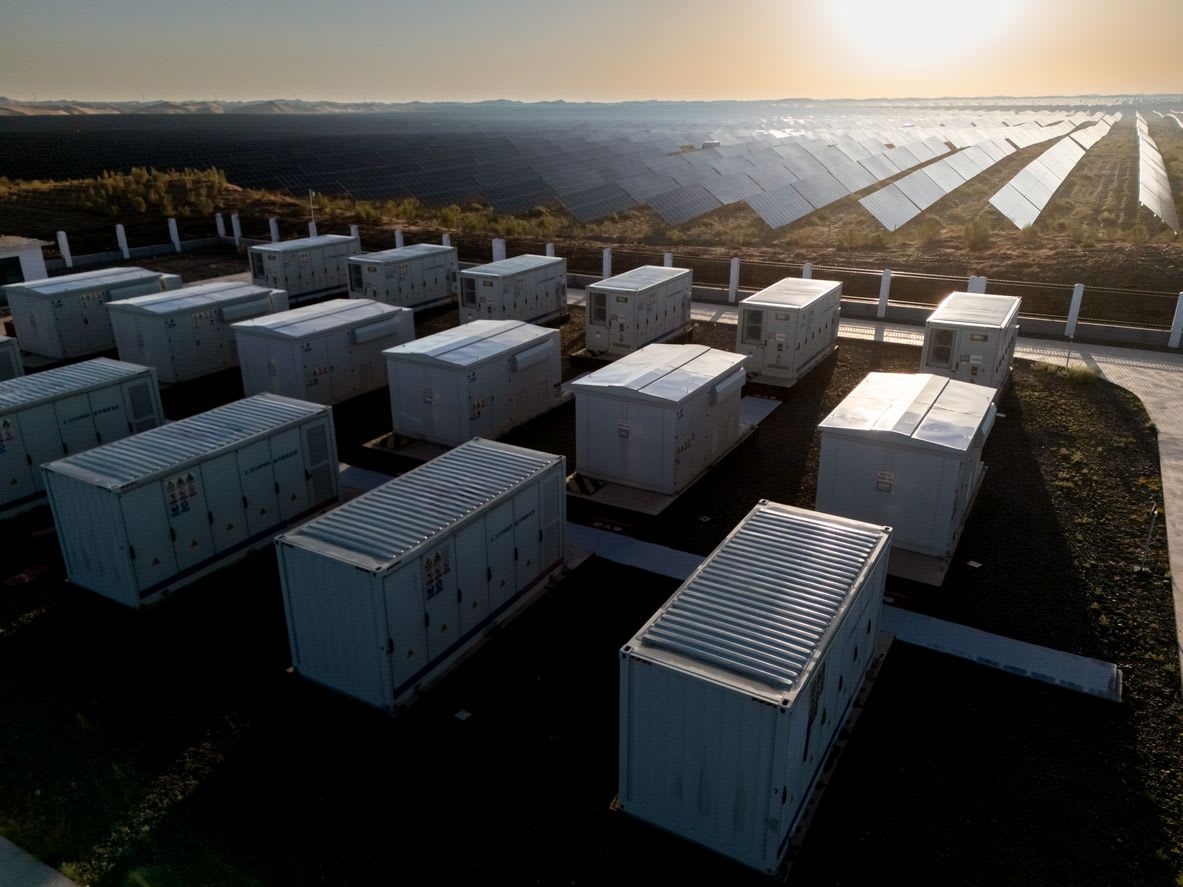
Mandatory batteries: Ecuador requires storage for certain types of projects.
Rosero Rhea explains that Ecuadorian regulation contemplates different project segments, with differentiated requirements according to their capacity and marketing method.
These include distributed generation systems of up to 10 MW and projects intended for the sale of energy in the 10 to 100 MW segment, where there are specific requirements for solar and wind power plants.
In these latter cases, it notes that the regulations include a storage component equivalent to 10% of the installed power, with the capacity to supply energy for four hours .
This means that a 100 MW solar or wind power plant must incorporate a battery system with an energy capacity of 40 MWh.
For projects covered by this scheme, Rosero Rhea mentions a rate recognized by the Ecuadorian state of USD 0.0822 per kWh .
"For large projects, it will depend a lot on the site. If it has very good solar radiation, it's much more attractive. It has a much faster return," the leader explained.
Self-consumption leads the growth: 120 MW under construction and another 350 MW planned for 2027
The Distributed generation for self-consumption became the fastest growing segment of the Ecuadorian renewable energy market during 2026 , according to the association's representative.
"Over the past 12 months, nearly 120 MW have been commissioned in the self-consumption segment. An additional 350 MW are expected to be added next year," he revealed.
If this projection is fulfilled, the volume of new projects that would enter execution during 2027 would be approximately 67% higher than that recorded in the previous twelve months .
The expansion is largely due to the productive sector's search for greater energy predictability, especially after the supply problems that affected the country.
“In the self-consumption segment they use a net metering system, in which energy is compensated between USD 0.09 and USD 0.11 per kWh,” Rosero Rhea said.
This is especially attractive for commercial and industrial facilities capable of sizing solar systems of one, two or three megawatts according to their consumption.
A market that is maturing and an industry that is looking towards 2027
Looking back at 2026, the executive believes that the Ecuadorian market managed to consolidate a broader ecosystem of companies, suppliers, and financial actors linked to renewable energy.
Currently, the association has approximately 43 member companies and an influence community made up of more than 3,000 technicians and professionals related to the energy sector.
Looking ahead to 2027, the organization plans to continue promoting spaces for collaboration between companies and authorities, with the aim of encouraging greater private participation and helping the energy transition translate into concrete investments.
"The conditions in Ecuador are good, it simply lacks a boost from the business sector, which is already being seen, but could be much greater," Rosero Rhea said.
In this regard, the president of AEEREE considers it essential to deepen the collaboration between the State and the private sector to accelerate the development of new renewable power plants and mobilize investments in electrical infrastructure .
The challenge takes on special relevance in a market historically dominated by the public sector, where private participation is conditioned by the constitutional and regulatory framework.
According to the executive, moving towards a more diversified energy mix will reduce the system's vulnerability to periods of low water availability, improve security of supply, and support economic growth. All of these topics will be further addressed during the event that AEEREE organizes annually for March 2027: ExpoEnergía and Energy Summit Ecuador 2027.
The expectation is that in the coming years more companies will incorporate energy availability as a strategic variable for their competitiveness, while the authorities move forward in creating conditions that facilitate the execution of projects.
 By Ailén Pedrotti
 By Matías Medinilla


 By Energía Estratégica