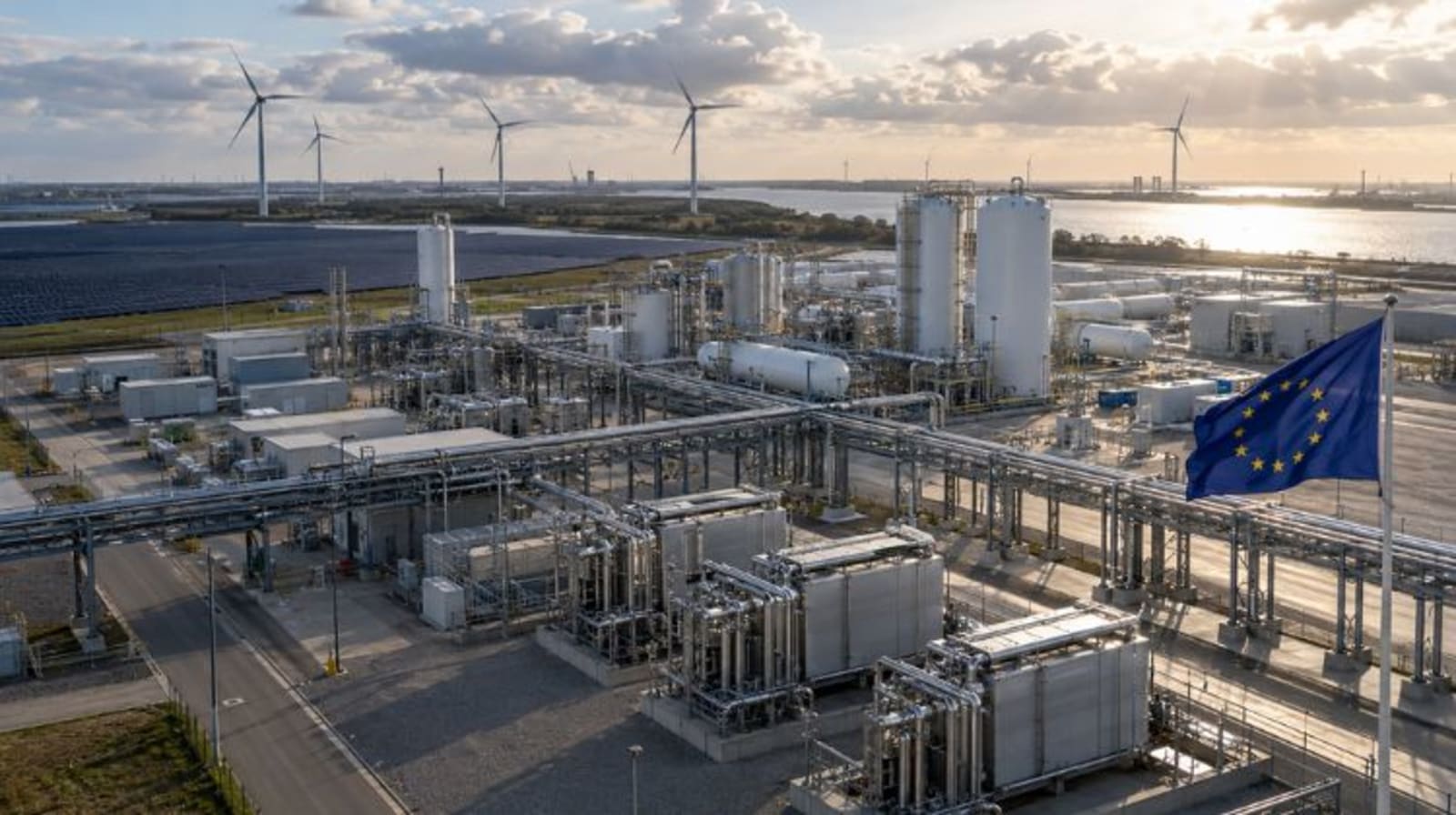
The European Commission has launched a four-week public consultation to develop a new hydrogen strategy, aiming to strengthen the industry's competitiveness, stimulate project development, and provide greater predictability for investors.
The initiative, announced on October 26, 2026, includes a call for evidence and a specific consultation aimed at stakeholders in the sector. Both will remain open until November 23, when the deadline for submitting comments will end.
The process responds to the difficulties the European market is experiencing in expanding the production and consumption of renewable and low-emission hydrogen, whose development is progressing at a slower pace than initially anticipated by the EU authorities.
As the Commission itself acknowledges, operational capacity remains limited and obstacles persist in bringing projects to sufficient levels of maturity, despite the regulatory framework established since the publication of the first European hydrogen strategy in 2020.

In this scenario, Brussels seeks to gather information on existing barriers and possible solutions that will accelerate the consolidation of the value chain, from both the supply and demand sides.
The new roadmap will prioritize developing a resilient and competitive European industry, ensuring regulatory stability, and improving investment predictability, factors considered relevant for market expansion.
Furthermore, its development will be carried out in parallel with the future renewable energy framework for the period up to 2040, with the purpose of aligning both policies with the Community climate objectives.
This coordination also responds to the geopolitical pressures that the European Union faces to reduce its dependence on fossil fuel imports and strengthen its energy independence.
Brussels acknowledges difficulties in accelerating the hydrogen market
The review comes six years after the presentation of the first European strategy, which laid the groundwork for promoting hydrogen as a tool for decarbonizing industrial activities and certain segments of transport.
Since then, the European Union has implemented various regulatory instruments to facilitate its development, including the revised Renewable Energy Directive and the legislative package on hydrogen and decarbonized gas markets.
However, the existence of this regulatory framework has not translated into the expected deployment of production facilities and consumption projects, a situation that motivates the updating of the strategy.
The Commission also notes that the Renewable Energy Directive provides for the development of a strategy for hydrogen produced within the Community territory and imported hydrogen.
This provision seeks to promote the European market, increase domestic production, support the achievement of renewable energy targets and guarantee both security of supply and fair competitive conditions in international trade.
In parallel, the European Court of Auditors recommended updating the strategy to ensure the availability of decarbonization alternatives in industrial processes where direct electrification is not technically viable or economically competitive.
The debate becomes relevant when considering the objectives set out in the 2022 REPowerEU plan, which aims to achieve 10 million tons of domestic renewable hydrogen production and another 10 million tons of annual imports by 2030.
Continue reading
These goals are part of the current strategic framework and serve as a reference for evaluating the development of the sector, although the new consultation process does not yet establish modifications to these volumes.
According to data published by the European Commission, in 2022 hydrogen accounted for less than 2% of European energy consumption, while 96% of its production came from natural gas.
In the long term, the organization anticipates that renewable hydrogen will cover around 10% of the European Union's energy needs by 2050, mainly through its use in energy-intensive industries and transport.
A consultation aimed at the entire value chain
The procedure opened by Brussels includes the participation of national, regional and local authorities, regulatory bodies, hydrogen producers and consumers, infrastructure operators and technology providers.
Contributions may also be submitted by promoters of renewable energy projects, energy companies, financial institutions, industrial associations and research centers, as well as environmental organizations and consumer representatives.
The consultation expressly includes industrial users and actors linked to agriculture, aviation and maritime transport, sectors in which hydrogen and its derivatives can perform specific decarbonization functions.
The objective will be to gather evidence, experiences and proposals that allow us to identify the difficulties that limit the adoption of renewable and low-emission hydrogen, including its derivatives.
The update will also be developed on a regulatory structure that has incorporated new provisions in recent years.
These include the 2023 delegated acts on renewable hydrogen and non-biological renewable fuels, as well as the methodology approved in July 2025 for calculating greenhouse gas emissions from low-emission hydrogen.
The latter establishes that, in order to obtain this classification, hydrogen and derived fuels must achieve a minimum reduction of 70% in emissions compared to fossil fuels used without emissions reduction measures.
The combination of these provisions and the future strategy shapes the framework within which developers of new facilities, consumer companies, and infrastructure operators will have to operate.
Therefore, one of the central elements of the process will be to determine what additional measures are needed to translate community objectives into operational projects and consolidate a competitive market.
Contributions may be submitted until 23 November 2026 at 23:59, Central European Time, through the mechanisms enabled by the Commission.
The questionnaire is available in English, although responses can be submitted in any of the official languages of the European Union. Furthermore, participants can only answer questions related to their activity.
Once the consultation period has ended, the contributions will serve as input for the preparation of the new strategy. At the moment, Brussels has not announced a definitive date for its publication nor any specific modifications to the existing objectives.

 By Energía Estratégica
 By Florencia Guglielmetti
 By Matías Medinilla
 By Ailén Pedrotti