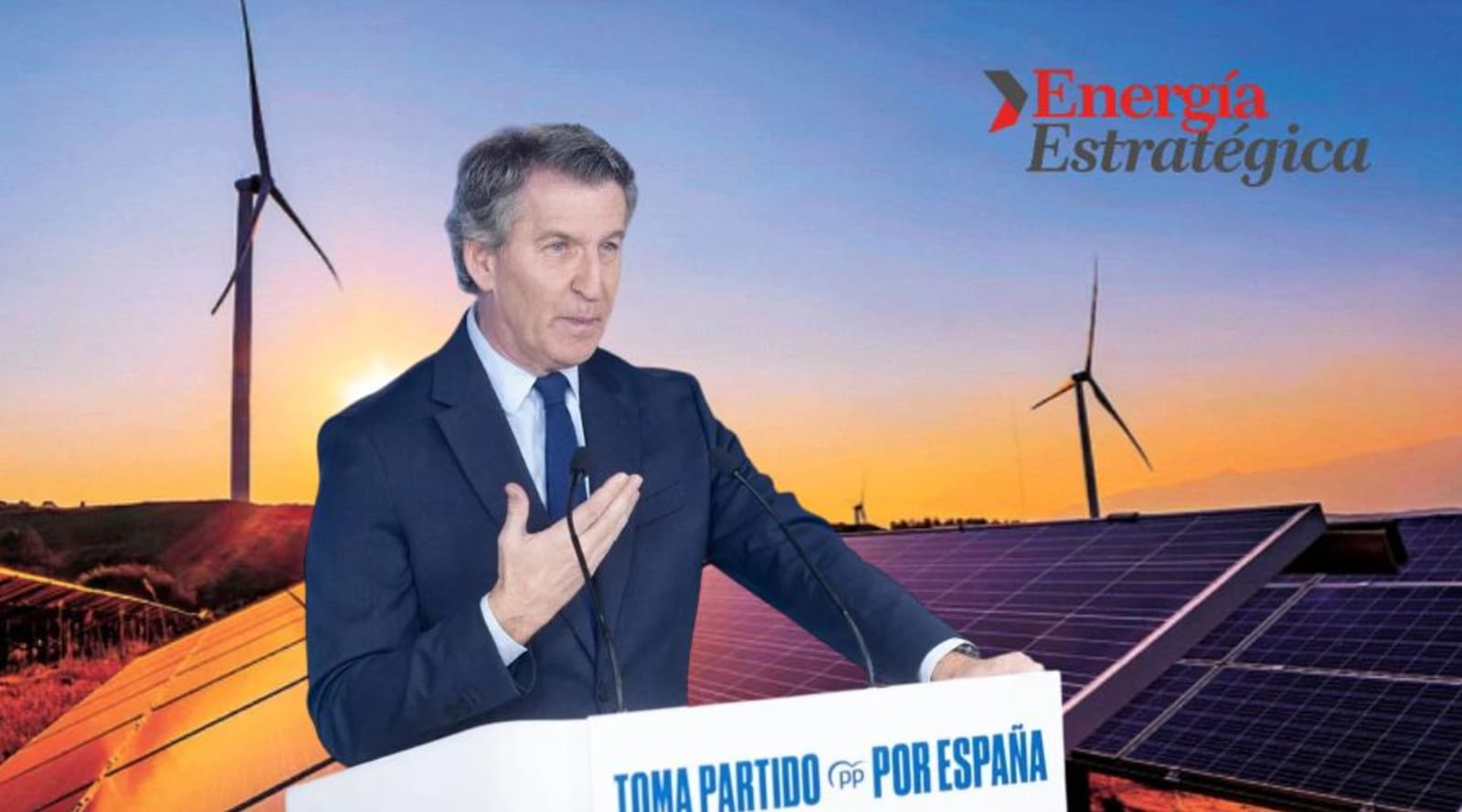
Spain heads into the general elections on November 29th with energy decisions that will have consequences for industrial investment, energy storage, and renewable energy development. Against this backdrop, the People's Party presented "National Reconstruction ," a program that proposes reviewing energy planning, extending nuclear power plant operations, and accelerating the connection of electricity grids.
Will these commitments be enough to unlock investments, or will the gap between announcements and their implementation continue to dictate the pace of the sector?
The program comes after various specialists warned, in dialogue with Energía Estratégica , about the difficulties in turning projects into works.
In the November 9 publication, José Luis Bernal Albendín anticipated a two-speed renewable energy market: mature developments could maintain their schedules, while those without a defined connection or sufficiently predictable income would face greater demands to obtain financing.

Xavier López, from RMM Energy Advisors , also pointed out three key decisions for the next government: the implementation of capacity market auctions, the treatment of ancillary services, and the future of the nuclear fleet.
The PP's proposal addresses several of these issues and incorporates specific deadlines: one hundred days to process the life extensions of nuclear power plants, six months to update the operating rules of the electrical system, and an 18-month emergency plan to resolve the obstacles to connection.
The comparison with 2023 shows continuity in nuclear defense and storage, but more detailed development of networks, backup power, and security of supply. For investors, the question will be how these commitments translate into available connection capacity, predictable regulations, and revenues to finance new projects.
Networks: an 18-month plan and industrial connections planned in six
Measure 230, on page 72, proposes resolving within 18 months the obstacles hindering the connection of new projects. This includes anticipating capacity for industrial, logistics, and technology zones, housing, and data centers, as well as reviewing whether the reserved capacity corresponds to viable initiatives.
The plan also proposes making better use of existing networks, prioritizing transport and distribution infrastructure, and strengthening interconnections with Europe.
Measures 191 and 192 broaden the approach to include industry. The PP proposes strategic innovation zones with guaranteed electrical and digital connectivity , as well as favorable tax conditions for seven years for projects that include batteries.
For investments declared strategic that create at least one hundred jobs, it proposes a planned electrical connection within six months . Precision matters: the text commits to planning within that timeframe, not to the physical execution of all connections.
Continue reading
Nuclear: a proposal that goes beyond the Almaraz extension
Measure 228, on page 71, proposes to eliminate the closure schedule for Almaraz , Ascó, Vandellós, Cofrentes and Trillo and to process the extension of their useful life during the first one hundred days of Government , with the approval of the Nuclear Safety Council.
The proposal comes with a concrete precedent: the Government has already authorized the operation of the two Almaraz units until June 8, 2030. That decision, published in August, maintained the target date for closing the entire nuclear power plant in 2035. Therefore, the difference in the PP's approach lies in revising the plant's timeline and extending that approach beyond the Almaraz case.
In his previous interview with Energía Estratégica, López had considered it likely that other power plants would follow a path of expansion, linking this to the need to maintain dispatchable generation and contain costs. This was his forecast for the sector, not an evaluation of the program subsequently presented.
Nuclear continuity was already included in measure 114 of the 2023 program. The new document adds a national strategy and participation in European initiatives for advanced reactors and small modular reactors, without committing to a power output or a number of facilities.
Batteries and pumping: technological support, no auction schedule in the program
Energy storage is presented as part of the reinforcement of the electricity system . Measure 231 includes batteries, pumped-storage hydroelectric plants, and other competitive technologies, along with new operating rules within six months, voltage control, and real-time monitoring.
It also conditions the closure of gas or hydroelectric power plants necessary for supply on the existence of an alternative whose capacity for replacement is technically accredited.
Reversible pumping is also included in measure 126 of the National Water Pact. The up to €40 billion allocated until 2030 corresponds to all the water-related actions contemplated, not exclusively to storage.
For investors, the crucial point will be how this technological support translates into predictable revenue to finance the projects . The capacity market was already created by Order TED/966/2026, published in September. In interviews with Energía Estratégica in early November, specialists identified its operational development as one of the main outstanding issues for the sector.
Xavier López had warned about the need to finalize the economic and operational conditions for the first auctions. José Luis Bernal Albendín, for his part, considered a first call for bids in 2027 possible, although he did not consider it a certainty, and pointed out that a review of the design or a prolonged formation of the next government could delay its implementation.
The PP's program does not establish an auction schedule or detail the remuneration conditions for storage. In 2023, the party did explicitly mention a capacity mechanism to promote renewable energy storage. The new document outlines the technologies it intends to promote and their role in security of supply, but it does not specify how this support will be integrated with the already approved market.
The distinction matters for those who must commit capital: political backing for batteries and pumped storage sends a signal, but financing will also depend on participation rules, availability obligations, and the revenue that each project can demonstrate.

 By Emilia Lardizabal

 By Ailén Pedrotti

 By Florencia Guglielmetti

 By Energía Estratégica