


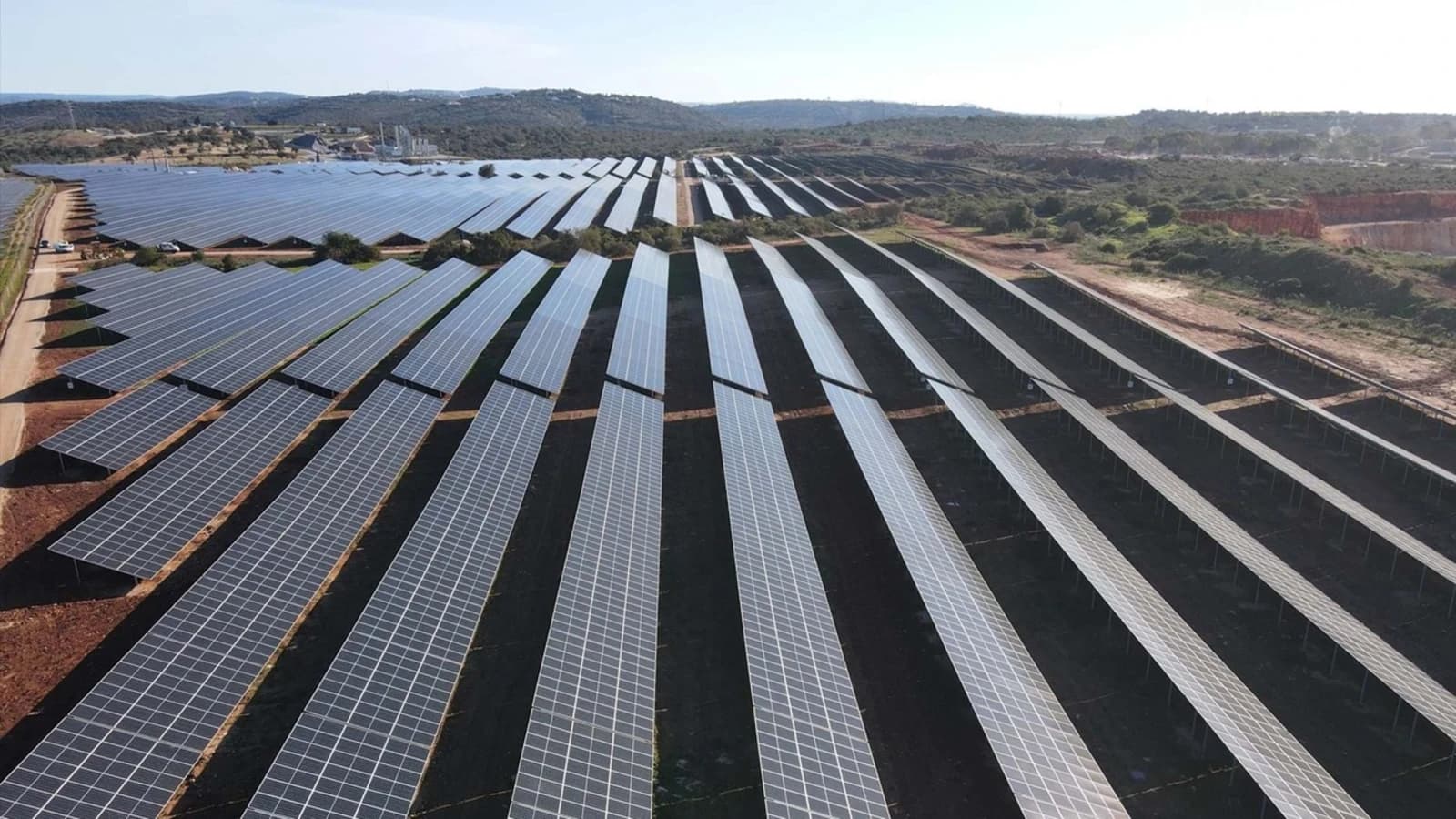
Under the title “Challenges of the second phase of the energy transition (2025-2030)” , the Spanish Photovoltaic Union (UNEF) has today presented its Annual Report , which analyzes, with the collaboration of the University of Castilla-La Mancha , the evolution of the Spanish photovoltaic industry during 2025 and the main challenges that will mark the development of the sector during the second half of the decade.
In the international context, Spain was the second largest photovoltaic market in Europe in 2025 , with 67.2 GWp installed. Globally, photovoltaics was once again the energy source with the most new installed capacity , at 698 GWp, and the cumulative global capacity exceeded 3 TWp.
In our country, the data shows the stabilization of the sector and its significant economic and industrial impact . 2025 ended with 8,985 MW of new ground-mounted photovoltaic capacity in our country, bringing the current total to 46,286 MW and 1,139 MW of self-consumption, with a current cumulative total of 9,276 MW.
A sector with a strong economic and industrial impact

In 2025, the photovoltaic sector contributed 9841 million euros to the national GDP , approximately 0.5% of Spain's GDP, and its total economic footprint reached 14121 million .
Associated employment stood at 134,708 people, exports totaled 3,208 million euros and companies in the sector allocated 473 million to R&D&I, with an innovative intensity of 3.6%, more than double the average of the Spanish industry (1.6%).
Photovoltaics, with a contribution of almost 23%, is already the technology with the greatest weight in the Spanish electricity mix , which is helping to significantly contain electricity prices during daylight hours , in the face of the escalating prices of fossil fuels, helping to control inflation and providing savings for citizens and competitiveness for companies that develop their activity here.
These low prices, however, have also reduced the prices captured by photovoltaic installations , which went from €42.28/MWh in 2024 to €36.39/MWh in 2025 and €29.68/MWh in the first half of 2026.
Adding to this pressure is the increase in solar hours with zero or negative prices: in 2025, 797 hours were recorded with a price equal to or less than €0/MWh and significant photovoltaic generation. By July 7, 2026, that figure had already been matched and was around 900 hours by the beginning of September.
Electrification, storage and an electricity market adapted to the new reality of renewables: the keys to turning our solar resource advantage into an economic and industrial advantage
The report shows that the electrification of end uses is the main challenge of this new phase. Spain already has 71.5 GW of demand connection points granted or planned for 2030, in addition to 24 GW of capacity requested and pending approval. Data centers, industry, hydrogen, storage, and electric mobility account for a significant portion of this new demand.
Facilitating access to competitive renewable electricity for these consumers presents an opportunity to strengthen industrialization, attract investment, and improve the competitiveness of the Spanish economy.
The deployment of energy storage is also key to this. Significant progress was made in 2025, especially behind-the-meter storage (540 MWh were installed, 65% more than the previous year, totaling 2,745 MWh since 2022). Currently, we have 261 MW of installed ground-mounted storage, 241 MW of hybrid storage, and 20 MW of stand-alone storage, with 33,031 MW of permits granted and 14,607 MW in the permitting process. For this storage potential to materialize, UNEF emphasizes the importance of measures such as developing flexible access and connection permits and streamlining permitting processes.
UNEF also emphasizes the crucial need to adapt the market pricing system to the characteristics of a renewable energy system in the medium term , establishing price floors and ceilings to prevent the proliferation of zero or negative hours. In the short term, UNEF calls for measures such as compensation for technical constraints, ICO loans for project financing and the promotion of hybridization in existing systems, and adequate compensation for voltage control services.
According to Rafael Benjumea, president of UNEF : “Photovoltaics has shown that it can be deployed on a large scale, generate employment, attract investment, improve the competitiveness of our economy and provide us with security of supply at a competitive price.”
"Now begins a second, more complex stage, in which we must move forward in taking advantage of this opportunity by electrifying our economy, deploying large-scale storage and self-consumption, adapting the electricity market to the new reality, and strengthening the social integration of projects. If we do this, photovoltaics will be not only a decarbonization tool, but also one of the major drivers of competitiveness, industrialization, and economic growth for our country," he added.