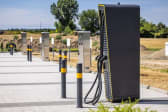
Spain approved a reform of self-consumption of electricity that makes collective projects more flexible, incorporates distributed storage and enables new formulas for sharing surpluses .
The Royal Decree, promoted by the Ministry for Ecological Transition and the Demographic Challenge (MITECO), modifies the framework in force since 2019 and aims especially to facilitate developments in communities of owners, neighborhoods, municipalities and industrial parks.
One of the key changes is in the management of collective self-consumption. Registration can be completed with the first distribution agreement received from the distributor , while future modifications will only require the signatures of the affected users.
The minimum stay in the different modalities is also reduced to one month and rules for non-voluntary departures are incorporated.

Added to this is the development of the self-consumption manager role, designed to simplify the administration of projects with multiple participants.
The reform also allows a single consumer to be associated simultaneously with more than one type of self-consumption , a demand raised especially by industrial agents.
Furthermore, it simplifies ownership requirements and opens up space for models in which a third party makes the investment , an alternative that can facilitate electrification projects without requiring the consumer to directly assume the initial outlay.
Shared surpluses and distributed storage
The regulation creates a new type of "shared surplus," which will allow a consumer to transfer only the surplus energy from their installation.
The change seeks to encourage the participation of public and private actors with available land to generate more electricity than they consume and expand the possibilities of collective self-consumption.
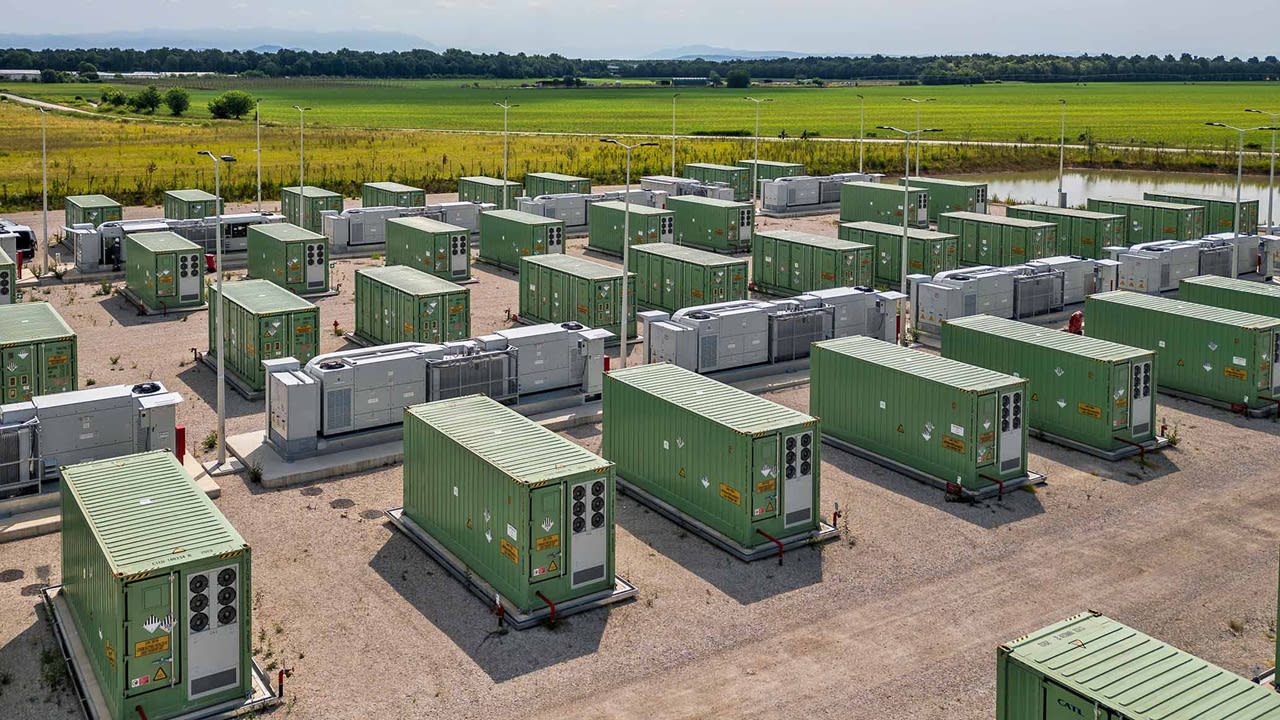
In parallel, the Government gives a specific fit to distributed storage associated with the consumer , which is now recognized as a type of connection comparable to the different modalities provided for by Royal Decree 244/2019.
The specific terms of application will have to be developed later through regulations.
The new framework also tasks the System Operator with creating a panel of self-consumers with aggregated information on generation, consumption, energy fed into the grid, storage, power and modality.
The tool should offer a representative sample by province and allow for better monitoring of the evolution of this segment.
More changes are already in the works.
The approved reform will not be the last.
The MITECO announced a new public hearing to introduce additional modifications related to the activation of facilities, permitted distances and hybridization.
Among the planned points is an update to the "delay discount" , designed to strengthen compensation to users when there are delays in the start-up of self-consumption.
There are also plans to extend the distance between generation and consumption for hydroelectric and storage facilities to 5000 meters .
For renewable energy projects located in service areas of ports of general interest, the proposal contemplates eliminating that limit.
Another relevant change will be the update of the definition of installed capacity , with the aim of facilitating the hybridization of renewable generation with batteries.
The next review will also complete the regulation of the self-consumption manager.
 By Florencia Guglielmetti
 By Energía Estratégica
 By Matías Medinilla
 By Ailén Pedrotti