

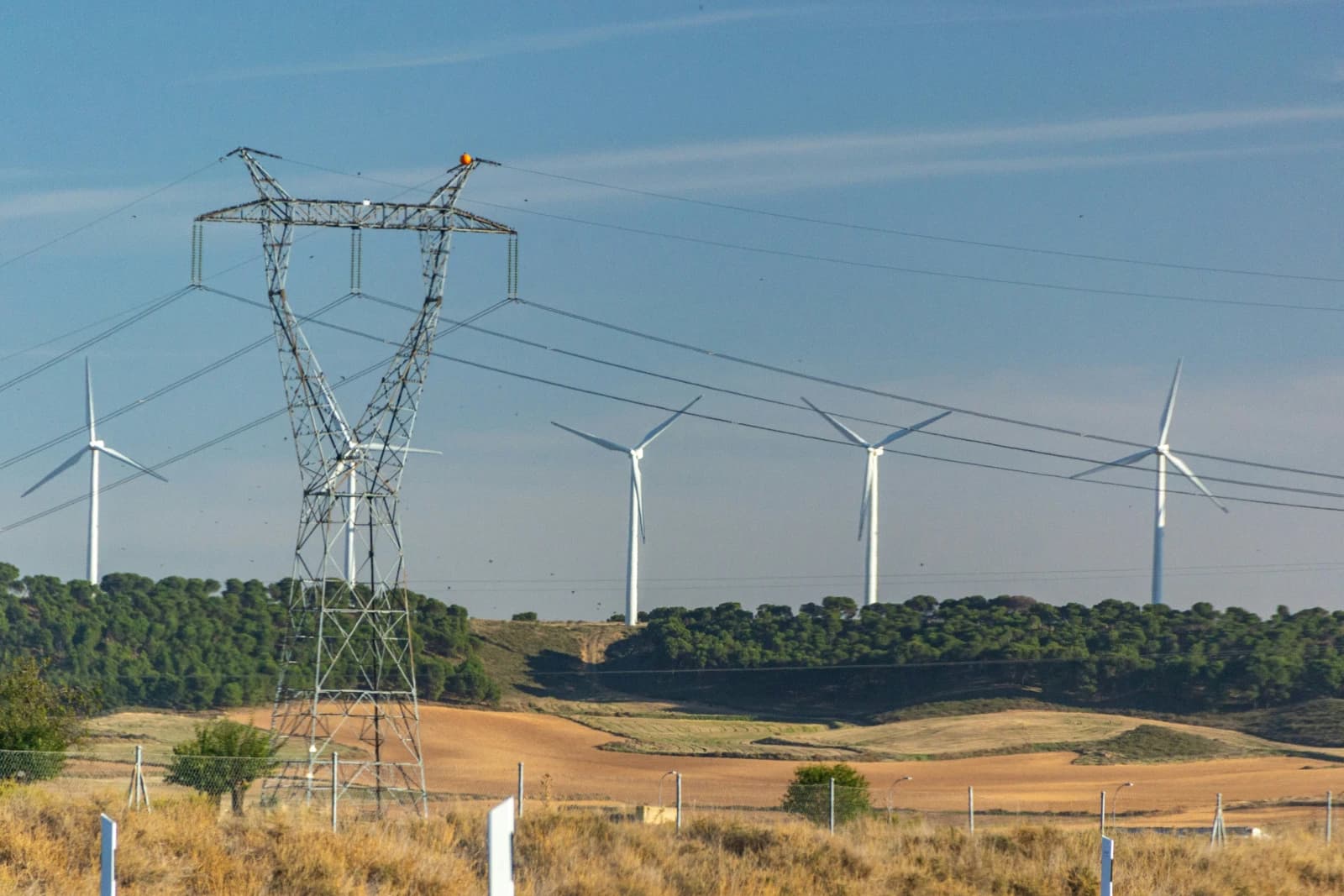
Spain has authorized an additional investment of up to €17.9 billion in electricity networks by 2030 to expand connection capacity for new industries, homes, and electrified transport systems. The measure aims to prevent a lack of infrastructure from becoming a limiting factor for demand growth and the electrification of the economy.
The new Royal Decree approved by the Council of Ministers will allow for up to €10.2 billion to be allocated to distribution networks and another €7.7 billion to the transmission system . Combined with ordinary resources linked to GDP, the total expenditure could exceed €35 billion by the end of the decade.
The extraordinary investment will follow an increasing trajectory from 2027. In distribution, €1.02 billion will be allocated during that year, €2.55 billion in 2028, €3.06 billion in 2029 and €3.57 billion in 2030.
In transport, the additional amounts will reach €700 million in 2027, €1.85 billion in 2028, €2.3 billion in 2029 and €2.85 billion in 2030. Its implementation will depend on the Electricity Grid Planning with a 2030 horizon that the Government finally approves.
Until now, annual investments financed by the electricity system were limited to 0.065% of GDP for transmission and 0.13% for distribution. The government believes these limits are no longer sufficient to meet the volume of access requests associated with new demand.
The review comes in a context marked by the emergence of electricity-intensive industrial projects, data centers, storage facilities, new residential developments, charging infrastructure and production processes that seek to replace fossil fuels.
However, the increased resources will not mean that distributors can allocate them freely. The decree defines the categories in which the additional investments must be concentrated and establishes new obligations to justify their planning and execution.
The priority will be connecting industrial and residential demand, as well as projects related to the decarbonization of transport. Companies will also be able to use up to 20% of the extraordinary funds for voltage control, remote monitoring, telecontrol, observability, and cybersecurity.
These tools will improve our understanding of how networks work, anticipate risks, and manage an electrical system with greater participation of distributed resources, new loads, and bidirectional energy flows.
Another 20% can be allocated to anticipatory investments. These are infrastructure projects that can be built even when demand is not guaranteed for the next five years, provided they enable connections in areas without networks, with exhausted capacity, or with the potential to attract new projects.
This point represents a significant shift from planning based solely on formal requests. Networks will be able to anticipate demand in industrial areas or regions where a lack of capacity currently hinders investment.
The decree also reserves up to 10% to adapt power lines to the regulations for the protection of birds and another 10% to improve resilience against adverse natural phenomena and the effects of climate change.
The regulation will also allow operators to acquire existing private lines, such as certain infrastructure used to evacuate generation, and integrate them into the grid. This alternative could avoid duplication of installations when capacity is available in nearby assets.
The government argues that expanding the network will also allow for the distribution of system costs across a larger user base. If demand grows, the total network costs could be spread among more consumers, reducing the burden of tolls on final bills.
Furthermore, the government attributes a driving effect on economic activity to these investments. Studies cited by the Ministry estimate that every million euros invested in networks can generate €1.27 million in Gross Value Added and a multiplier effect of 20 on employment.
More control over distributors and their investments
The new framework not only increases the volume of resources, but also modifies the way in which distribution companies must prepare and present their investment plans.
Companies will have to submit their proposals for prior consultation so that government agencies, industries, developers, and other stakeholders interested in the connection can provide feedback. The documents will be public and must explain how the contributions received were considered.
The publication will allow potential users to know more precisely what actions the distributors plan to carry out, in which areas they will concentrate and what additional capacity could be enabled.
Companies will also be required to prepare public compliance reports at the end of each fiscal year. They will have one month to detail the degree of completion of the committed works and justify any deviations.
The decree incorporates a penalty system for distributors that repeatedly invest below or above the planned amounts. In such cases, their investment limits may be reduced in subsequent fiscal years.
The measure seeks to prevent companies from accumulating authorizations that they then do not execute, but also from making disbursements outside of the approved planning and subsequently claiming their recognition at the expense of the electricity system.
With this combination of increased investment, public planning, and compliance monitoring, Spain seeks to reduce the uncertainty that projects face when applying for network access.
The challenge will be to translate these new economic margins into projects completed within the planned timeframes. The availability of an additional €17.9 billion expands the capacity to respond, but the effective connection to new demands will depend on administrative procedures, territorial coordination, and the speed with which companies develop the infrastructure.
The grid is thus becoming a key component of Spain's energy transition. Without sufficient transmission and distribution capacity, industrial electrification, electric mobility, and the growth of new energy consumption can be hampered, even when generation capacity is available to meet these demands.