Renewable hydrogen in Spain could enter a new stage of development in 2027, driven by the emergence of consumption obligations, the maturation of commercial projects and greater participation of independent producers.
However, the gap between announced capacity and actual committed investments remains one of the main challenges for the market, in a scenario marked by European regulatory uncertainty.
The latest Census of Projects by the Spanish Hydrogen Association (AeH2) This contradiction is reflected in the fact that during 2026, only two projects, with a combined capacity of 400 MW, reached the final investment decision (FID).
In contrast, the forecasts for 2027 include 15 initiatives totaling 2362 MW, although their realization will depend on the promoters overcoming technical, commercial and administrative barriers.

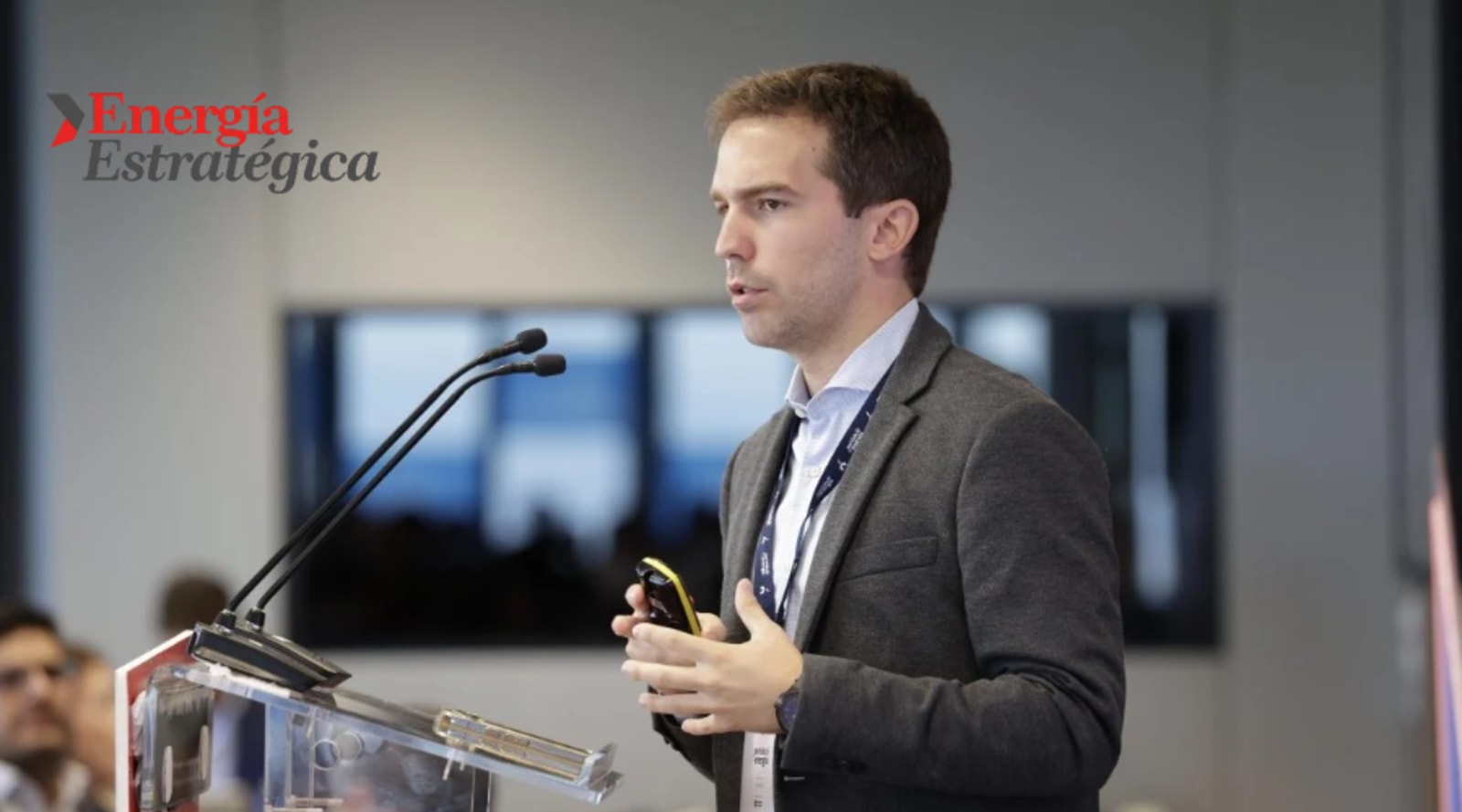
In a dialogue with Energía Estratégica , Javier Pollos Ezquerra , CEO of atlantHy , an engineering and consultancy specializing in renewable hydrogen, synthetic fuels and CO₂ capture, anticipates a change of scenario: “For us, 2027 changes the whole panorama a lot, since this transposition of RED III in Spain comes into play.
The key will lie in the consumption obligations for non-biological renewable fuels (NBRF), which could provide the necessary demand to unlock investments that have been postponed until now.
“This transposition of RED III in Spain means that the transport sector, that is, refineries, large consumers and large wholesale operators, are obligated to consume renewable hydrogen. And if they don't, they will receive fines or compensatory payments,” he explains.
Will this regulatory signal be enough to ensure that the announcements finally translate into concrete installations? The interviewee identifies a particularly relevant opportunity for independent developers, whose viability depends on securing buyers and supply contracts.
“This will accelerate many small projects. And I can assure you, or I would like to assure you, that in 2027 many not-so-large projects will begin to be implemented, to be developed under the protection or umbrella of this royal decree,” he maintains.
The figures allow us to understand both the expectations and the remaining challenges. According to the latest census by the Spanish Hydrogen Association (AeH2), 15 projects totaling 2,362 MW expect to reach the final investment decision (FID) in 2027. Another 11, equivalent to 930 MW, maintain that target for before the end of 2026. In contrast, 49 developments, representing around 7 GW, still lack a defined timeline for taking that step.
Beyond capacity growth, the coming year could also alter the business structure. While large energy companies are currently leading many of the major projects, the interviewee sees room for distributed installations designed to meet specific industrial needs.
“In Spain, Repsol, Moeve, and a few other developers have projects totaling hundreds of megawatts, which almost overshadow the rest of the developers. But that doesn't mean there aren't developers like ourselves, who are promoting projects of a few megawatts—10, 15, 20 megawatts—that will be scattered throughout the peninsula and that are starting to gain momentum,” he explains.
This coexistence between large industrial complexes and smaller-scale producers becomes relevant in light of the expansion needs of the European market.
The Clean Hydrogen Monitor 2026 , produced by Hydrogen Europe, reports 677 MW of operational electrolysis capacity as of July of this year and another 3.7 GW under construction . Although installed capacity continues to grow, the pace is insufficient to meet the consumption obligations projected for the end of the decade.
The organization estimates that Europe would need to add between 25 and 30 GW and mobilize between 50 and 60 billion euros in investments in electrolysis over the next 12 to 24 months to meet its 2030 targets.
Ultimately, the challenge is no longer simply expanding announced portfolios, but ensuring that existing initiatives move beyond the planning stage. For Spain, 2027 will test whether new market conditions will allow for bridging the gap between renewable energy potential and actual investment decisions.
Spain has the most competitive hydrogen, but investments are not taking off.
Why is Spain failing to translate its cost advantage into new investments? According to Hydrogen Europe, Spanish projects submitted to the third auction of the European Hydrogen Bank registered an average levelized cost of €5.3/kg, compared to €8.1/kg for the rest of Europe .
“Spain is the country with the best potential to produce cheaper hydrogen, basically and above all because of its cheap renewable resources. You have plenty of sun, you have wind, and in the end, 70-80% of the cost of your hydrogen will be the electricity cost,” explains Pollos Ezquerra.
This advantage is further enhanced by the possibility of transporting the fuel to industrial centers in Europe using the infrastructure developed by Enagás. However, 55% of Spanish commercial projects remain in preliminary stages and another 32% are in the FEED engineering phase , according to the AeH2 census.
The main obstacle, the executive warns, is securing demand: “What is extremely important and the primary need of any project is to find a consumer. Someone who will consume that hydrogen, that methanol, that ammonia, someone who will take that gas and use it.”
From that commercial agreement onward, permits, water availability, and energy supply come into play. “In Spain, for example, our electricity grid is very saturated, and sometimes you have to opt for building your own wind and solar farm, not only to reduce costs, but also because it's necessary, because there's no capacity to connect to it,” he points out.
The problem extends beyond the Spanish market. Hydrogen Europe identifies the lack of long-term power purchase agreements as one of the main barriers to accessing financing. Of the 2.1 GW awarded by the European Hydrogen Bank, only 164 MW had reached FID and were under construction at the time of the report.
For the CEO, the equation is clear: “The electrical connection, the consumer, and the regulatory procedures are the three pillars you need to build a project that moves forward.”
Brussels threatens to weaken demand signals
Regulatory uncertainty is adding pressure on developers. A draft from the European Commission, published by Argus Media , proposes replacing binding national renewable hydrogen targets beyond 2030 with an indicative goal of eight million tons per year by 2040 , although a final legislative proposal has not yet been issued.
“Above all, in my view, we need clear regulations that are not modified according to any interests that may arise,” warns Pollos Ezquerra.
Currently, RED III requires that renewable fuels of non-biological origin reach 1% of the supply of transport fuels in 2030, while industry must cover 42% of its consumption with renewable hydrogen in 2030 and 60% in 2035.
According to Hydrogen Europe, these obligations represent three million tons of annual demand in 2030 , distributed between transport (1.4 million) and industry (1.6 million).
Could a review of these goals jeopardize the planned investments? For the executive, regulatory stability is crucial.
“Right now, the European Union is reviewing its hydrogen strategy. Right now, the European Union is also reviewing the RFNBO requirements for RED IV. Reviewing is one thing, but changing what you've already said was in place is another, as that could discourage investors from pursuing those kinds of investments,” he points out.
The concern also reached Brussels: 170 companies in the sector called for the binding targets to be maintained beyond 2030. However, the expert assures that the major energy companies are maintaining their commitment, especially Moeve and its Andalusian Hydrogen Valley project.
“These are investments of billions of euros for the entire sector, for the entire hydrogen ecosystem. Questioning certain objectives or requirements can, as is normal, discourage investment in the short term,” he concludes.
Market cleansing: fewer projects, but more mature ones
The census of the Spanish Hydrogen Association (AeH2) records 101 commercial projects in 2026, compared to 145 the previous year , a reduction of 44 initiatives mainly concentrated in the early stages of development.
“I think the word is streamlining. At the beginning, there was a huge number of projects, many of which were unfeasible, or perhaps the promoters were overly optimistic. Now, fewer projects isn't necessarily bad news. It means that the good projects, the mature projects, the projects with purpose, are still moving forward,” says Pollos Ezquerra.
However, the figures reveal significant delays. Of the 52 projects that expected to reach FID between the end of 2025 and 2026, only two, totaling 400 MW, managed to do so by the time the census was updated. Another 11, equivalent to 930 MW, maintained that forecast for the end of the year, while initiatives totaling 1.5 GW postponed their timelines.
The adjustment also affects installed capacity expectations: AeH2 projects 7 GW of cumulative electrolysis by 2030 , far from the 12 GW established in the PNIEC.
So what distinguishes the initiatives that manage to move forward?
“I imagine, because I don’t know all the projects, that they are projects that have done well from the beginning, that have studied the regulations, have obtained a clear offtaker , had the necessary permits to execute the projects and had the correct electrical connection,” explains the CEO of atlantHy.
Among the business opportunities identified is blending , through the injection of renewable hydrogen into the natural gas network. The consulting firm is involved in several initiatives related to Enagás' capacity tenders.
"This opens up a huge opportunity because it allows us to reach a consumer, which is that large network of natural gas pipelines, and we participate in it with several projects," he points out.
Thus, the challenge for 2027 will not only be to recover the pace of investment, but also to ensure that the existing portfolio moves towards construction , with identified buyers, secured permits, and regulatory conditions that allow for its viability.
 By Emilia Lardizabal
 By Florencia Guglielmetti
 By Energía Estratégica