


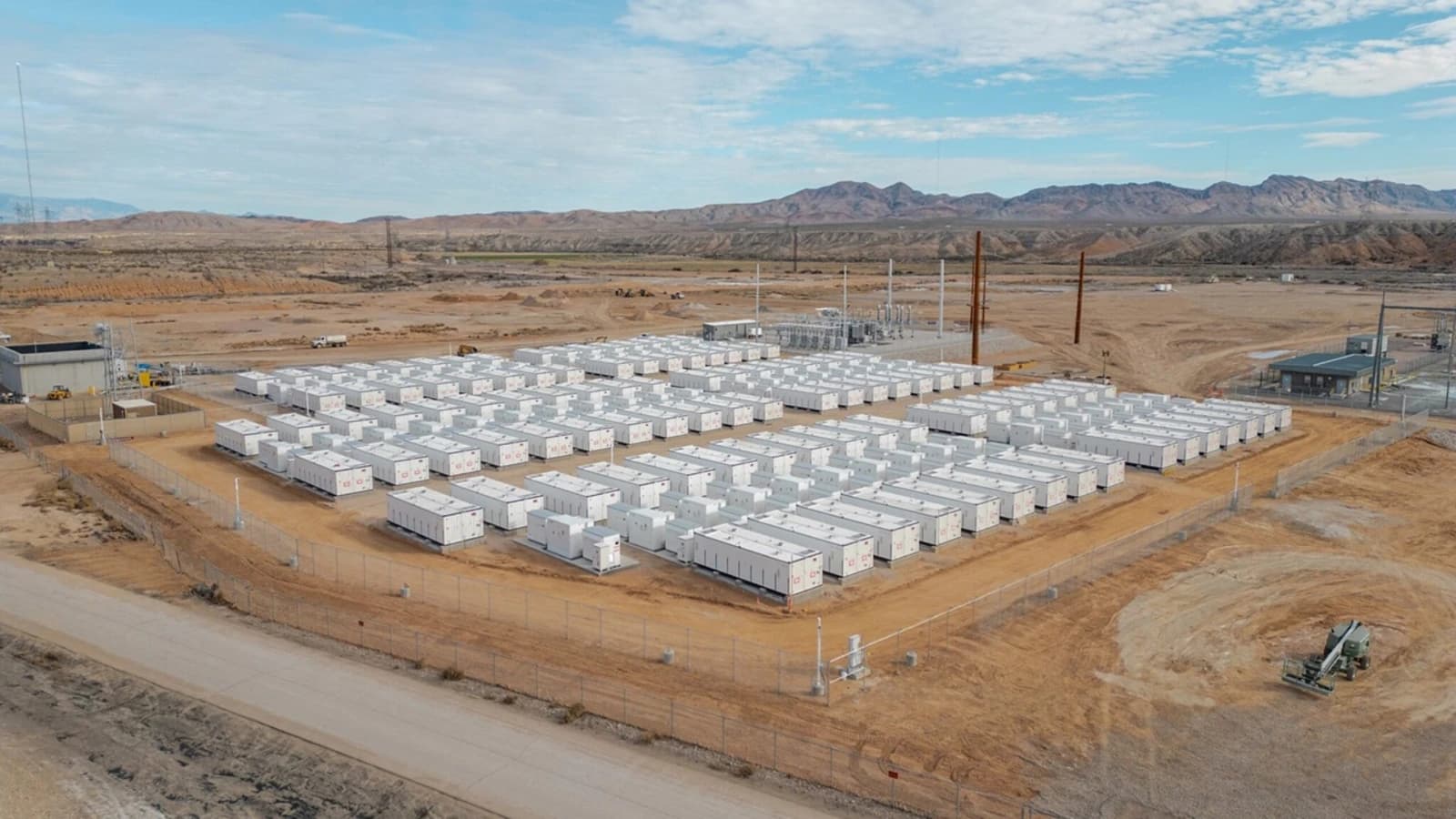
The US energy market began 2026 with unprecedented figures in energy storage. During the first quarter of the year, the sector added 9.7 GWh of new capacity, the best performance ever for this period and a year-over-year growth of 32%, according to the US Energy Storage Market Outlook Q2 2026 report, prepared by the Solar Energy Industries Association (SEIA) and Benchmark Mineral Intelligence.
Growth was led by large-scale installations, which accounted for 7.8 GWh of the total incorporated, consolidating themselves as the main driver of the business amid a context marked by regulatory uncertainty, higher commercial costs and delays in permits for new energy projects.
Behind this surge lies a structural factor that is redefining the country's electricity demand: the accelerated expansion of digital infrastructure. The growth of data centers—driven by artificial intelligence, cloud services, and technological platforms—is forcing a rethinking of energy supply strategies.
Giants like Google and Meta are already moving forward with schemes that combine different technologies to guarantee a reliable and emission-free supply. In addition to lithium iron phosphate (LFP) batteries to manage peak demand, some companies are investing in ultra-long-life energy storage systems (LDES) and hybrid architectures with high-power UPS systems to respond to internal load fluctuations.

The phenomenon is also beginning to transform the geographic landscape of the business. 71% of the utility-scale systems installed during the quarter were deployed in states that supported Donald Trump. Texas, Arizona, and California continue to lead the rollout, while Georgia, Iowa, and Mississippi are emerging as new areas of expansion.
Not all segments followed this trend. Behind -the-meter storage fell to 1.91 GWh, mainly due to the collapse of the residential market. Installations in homes reached only 515 MWh, a 35% drop compared to the previous quarter and a 28% decrease compared to the same period in 2025, following the expiration of the 25D residential tax credit.
Analysts anticipate that this contraction will persist in the short term as the market absorbs the elimination of incentives. However, they maintain that rising electricity costs could make residential solutions economically attractive again in the coming years. By 2026, they project 2,024 MWh in residential installations, which would represent a year-on-year decrease of 37%.
In the commercial and industrial segment, performance also showed some moderation, with 648 MWh installed, below the 785 MWh of the fourth quarter of 2025. Even so, the figure far exceeds the 419 MWh recorded a year ago.
The expansion of the business is also beginning to reshape the industrial chain. Manufacturers traditionally linked to the automotive sector, such as Ford and Ultium Cells, are redirecting part of their production capacity towards stationary solutions, while projections indicate that domestic cell manufacturing could exceed 120 GWh if all planned projects are completed.
Meanwhile, the regulatory landscape continues to generate noise. Increased tariffs on imported systems and cells under Section 301, along with new trade investigations and restrictions on foreign players, are adding pressure on costs and supply chains.
Despite this scenario, market expectations remain optimistic. The report forecasts that cumulative energy storage capacity in the United States will reach 613 GWh by 2030, with annual installations exceeding 110 GWh by the end of the decade.