

Law 3/2026 improves the conditions for developing energy projects in the Valencian Community, but does not offer an automatic path to authorization nor does it guarantee that the facilities will end up being built .
The main contribution of the regulation is different: it allows for limiting the administrative risk assumed by developers during development and makes the costs and deadlines analyzed by banks, funds, and industrial partners more predictable before committing capital.
This is the view of José Luis Bernal, an energy expert and communicator, and head of the Energy Office at the Chamber of Commerce and Industry. His analysis is technical and personal in nature and does not constitute an official position of the Chamber.
“This is not an automatic approval of existing projects. This is an opportunity to review the strategy of each project and determine which instruments of the new law can be applied,” he argues.
The warning is especially relevant for facilities that are already in the permitting process. The impact will depend on whether they have passed the public consultation phase, have an environmental impact statement, obtained any authorization, or introduced modifications during development.
Projects that have already undergone public consultation will be able to avoid repeating it if the changes are not substantial and meet the established requirements. A rearrangement of panels, a modification of the fencing, adjustments to transformer substations, or changes to evacuation lines will no longer necessarily require setting back the process by several months.
This option also cannot be used to introduce substantial modifications covertly. If the change incorporates new land, affects third parties, or generates different environmental or territorial impacts, the corresponding consultations and assessments must be carried out.
The reform also introduces an obligation that works against the reduction of administrative costs: photovoltaic power plants must financially guarantee their future dismantling and the restoration of the land .
The amount will be calculated by taking the highest of three values: 3% of the material execution budget, the amount foreseen in the dismantling plan or 20,000 euros for each MWp installed .
This means that a 50 MWp plant must back at least one million euros; for a 100 MWp project, the minimum will be two million, provided that the other two calculations do not yield a higher amount.
The warranty will have a minimum validity of five years, must be renewed throughout the installation's useful life, and updated periodically. Although it does not necessarily represent an equivalent outlay, it must be considered from the outset in the project's financial structure, either through equity or lines of credit.
This requirement adds predictability about future obligations, but it also increases financial exposure during development and operation.
Time, cost and risk: the equation behind the permit
For Bernal, the business scope of the reform can be summarized in three variables: time, cost and risk .
Each month without authorization keeps engineering, consulting, financing, guarantee, land, and study update expenses active. The delay can also cause agreements with landowners and suppliers to fall through or jeopardize milestones related to access and connection permits.
“A project can be technically viable, have land, financing and a connection point and yet remain blocked by the concatenation of reports, corrections or changes of criteria,” he points out.
Continue reading
Law 3/2026 attempts to reduce this risk through the simultaneous coordination of reports, the joint processing of certain authorizations and the possibility of resorting to accredited documentary certification .
This latter mechanism allows a collaborating entity to validate the documentation submitted by the developer beforehand. The Administration may then deem it complete, sufficient, and adequate without repeating the entire formal verification process, although it will retain its powers of inspection, control, and correction.
The certification will have a price for the company, but it introduces a choice between assuming that outlay at the beginning or risking that a documentary deficiency will paralyze the procedure.
“For the developer, there will be a cost, but that cost should be compared to the cost of having a file stalled for months due to formal deficiencies or successive requirements,” says Bernal.
When the project belongs to the so-called second group, does not require a declaration of public utility or environmental assessment and provides that certification, the Administration must jointly resolve the prior administrative and construction authorizations within one month.
The deadline does not apply to all energy installations. Meeting all three conditions is mandatory, and certification does not replace the public decision. The regulation shifts part of the document verification to an earlier phase, but it does not privatize the authorization process.
Greater predictability can have a direct effect on financing. Although the law does not guarantee credit or automatically reduce its cost, it makes administrative risk easier to measure.
For a financial institution, evaluating a facility with identifiable phases and requirements is not the same as committing funds to a file exposed to an uncertain sequence of reports and corrections.
“Procedural security is part of the bankability of an investment,” the expert summarizes.
Expedite mature projects, not speculative schemes
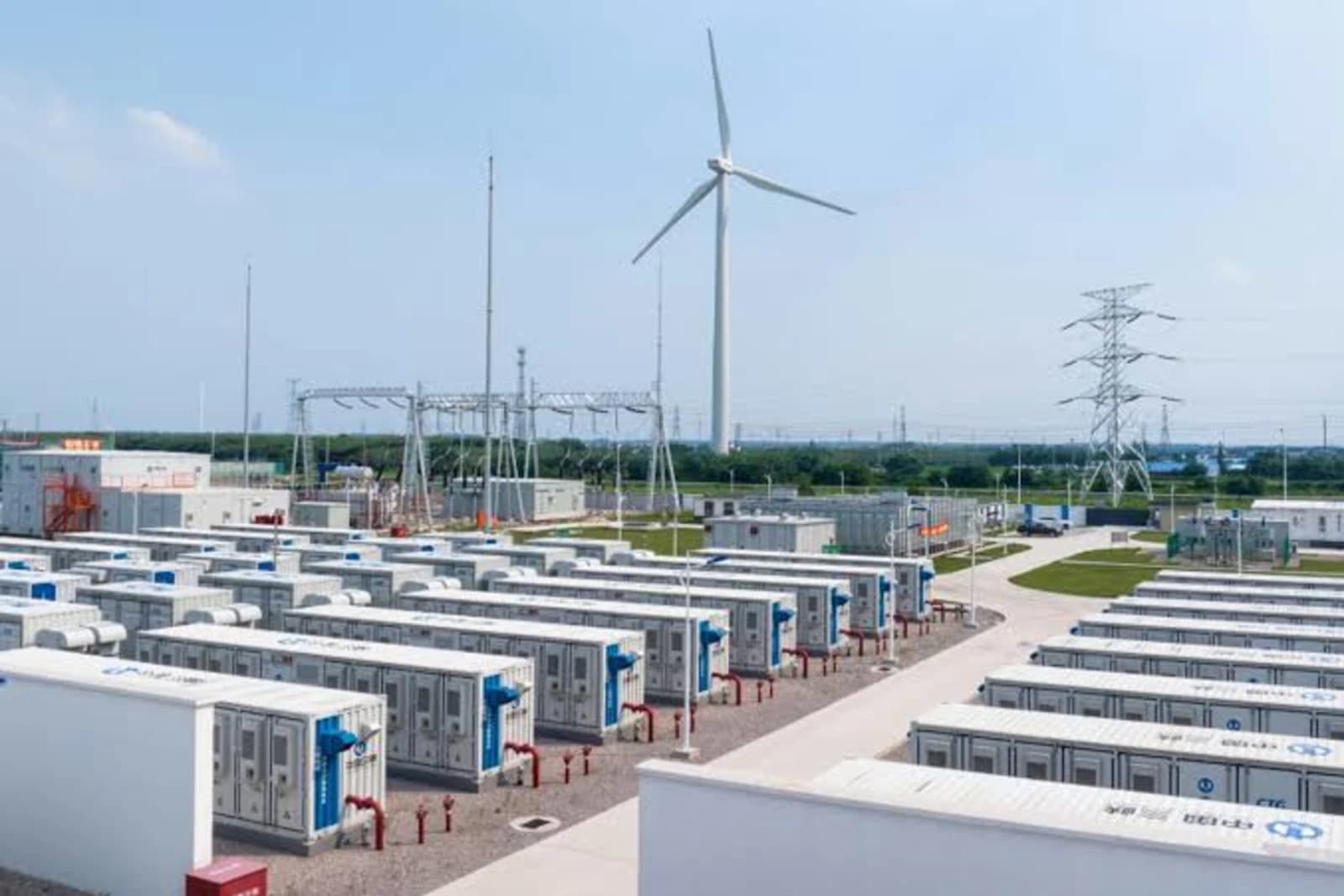
The new framework can improve Valencia's position to attract investment in independent energy storage, hybridization, self-consumption, distributed generation, and electrical infrastructure. It also opens up opportunities for engineering firms, installers, consultancies, certification bodies, and control system providers.
However, Bernal argues that simplification should primarily favor sound projects that are properly designed and have sufficient documentation , not initiatives that lack technical or economic viability.
This distinction also applies to small and medium-sized enterprises (SMEs). SMEs typically lack dedicated legal, environmental, and technical teams focused solely on processing permits for installations. A clearer procedure can facilitate investments in self-consumption, batteries, process electrification, or charging, although the cost of obtaining external certification must be factored into the decision.
The reform doesn't remove all the barriers either. A project can obtain regional authorization beforehand but still not be built due to insufficient grid capacity. Municipal permits, electrical planning regulations, and environmental, territorial, urban planning, and safety requirements remain in effect.
Therefore, the outcome will not be measured solely by administrative resolutions. The true test will be how many viable cases are transformed into operational assets.
“The effectiveness of the law will not be measured by the number of articles amended or by the deadlines stipulated in the text. It will be measured by the number of viable projects that manage to move from the planning stage to construction and from construction to commissioning,” Bernal concludes.