
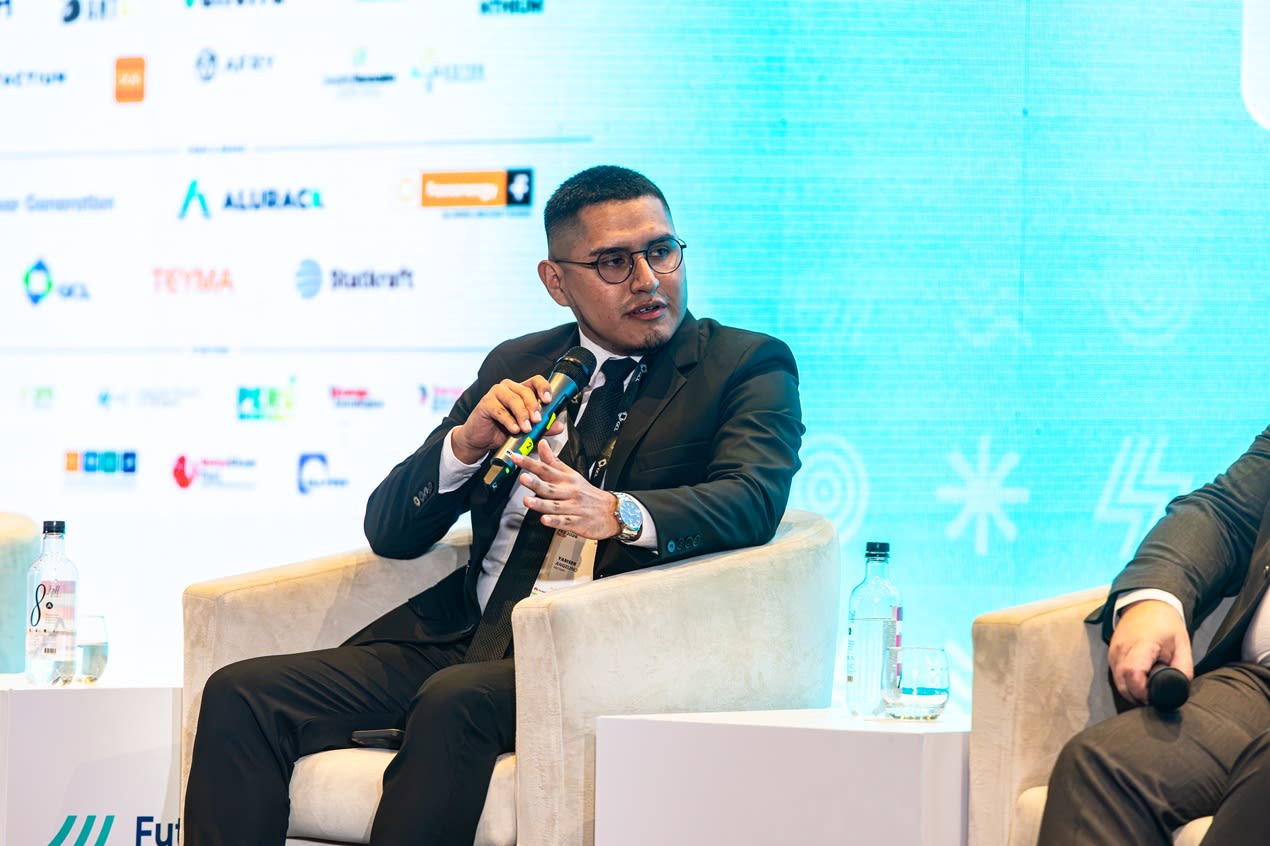
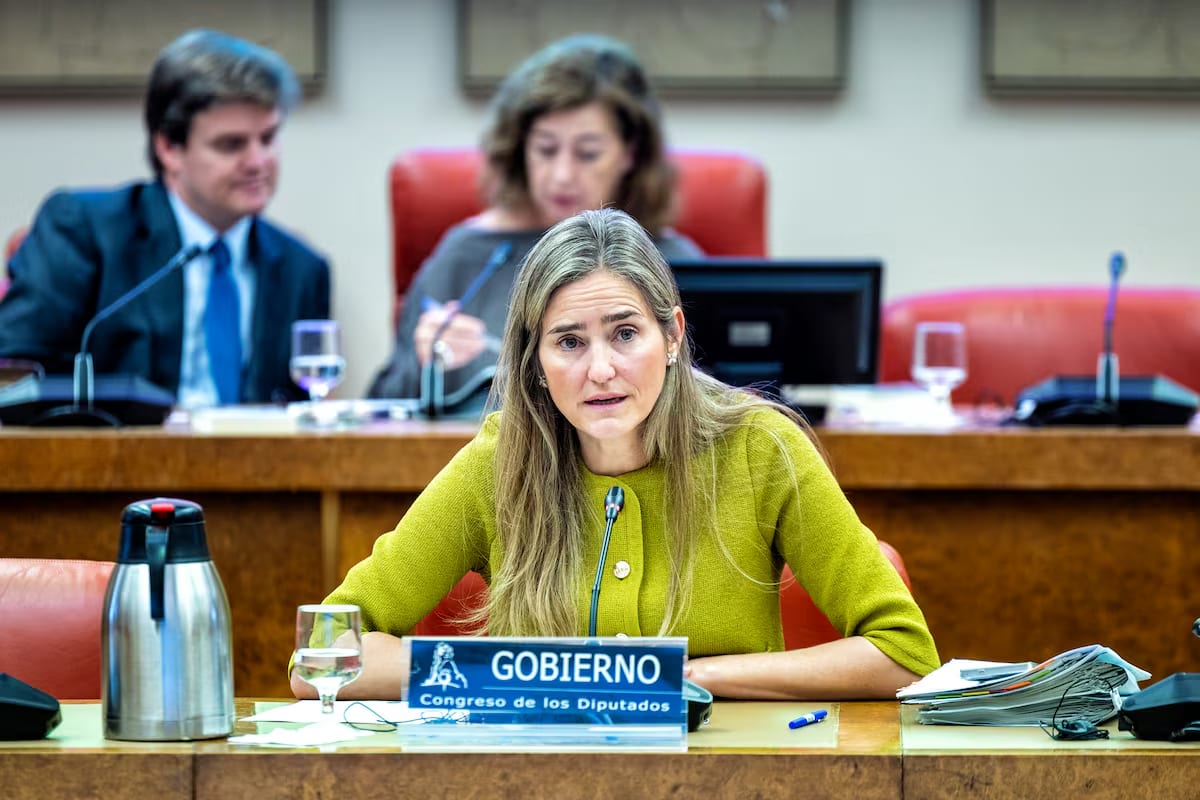
The National Development Finance Corporation (FDN) is about to finalize its participation in the first solar project with battery storage structured under a project finance scheme in Colombia , as announced by Patricia Gómez Escobar , the entity's commercial manager, during the Future Energy Summit (FES) Colombia.
“We’ll be finalizing it in the coming weeks; you’ll be hearing about it very soon. We’re also working on another large storage project,” Gómez Escobar revealed.
The announcement comes amid an expansion of the institution's energy portfolio, which has already financed nearly 900 MW of generation, including 800 MW exclusively solar, and has new projects in the process of financial structuring.
“We expect to double that financed generation capacity in the country in the coming months,” the executive said.

If the planned operations materialize, the solar capacity financed by the FDN could reach approximately 1600 MW in the next five months , consolidating its participation in the development of renewable infrastructure in Colombia.
Although Gómez Escobar did not specify the installed capacity, investment amounts, or the developers involved in the two hybrid projects, the announcement anticipates the application of long-term debt structures to initiatives that integrate renewable generation and storage.
The FDN already has experience with this type of financial instrument linked to solar energy. One example is Bosques Solares de los Llanos 1 , developed by Trina Solar in Puerto Gaitán, Meta, with a capacity of 27.23 MWp and an estimated annual production of 51 GWh . It was presented as the first Colombian photovoltaic park structured under the project finance model, with financing of approximately 45 billion Colombian pesos and participation from the FDN and Davivienda.
Recently, the institution awarded 37.481 billion Colombian pesos for the construction and operation of the Chicalá Solar Park , developed by Verano Energy in Sabanalarga, Atlántico.
The project includes 13 MWp of installed capacity and an estimated generation of 25.9 GWh per year , through a project finance structure that allows supporting the development of photovoltaic infrastructure with long-term financing.
These operations are in addition to the Puertos de Santander Solar Park , located in Cimitarra, which obtained financing of 230 billion Colombian pesos , with a term of five years.
The initiative, promoted by Patria Investments and Ashmore, includes a power of 250.8 MWp , an authorized evacuation capacity of up to 200 MW and a 36.8-kilometer transmission line to connect the facility with the Primavera Substation.
In addition, its commercial structure includes power purchase agreements with AES Colombia, Nitro Energy and BTG Pactual Comercializadora de Energía, along with Firm Energy Obligations awarded for 20 years .
What conditions does the FDN require to finance renewable projects?
Beyond the new operations, the FDN's commercial manager explained that the availability of financial resources is not necessarily the main obstacle to the development of renewable projects , but rather the ability of the promoters to present technically mature and economically sustainable initiatives.
“Banks specializing in infrastructure financing always have resources to finance good projects. The important thing is to find that good project,” said Gómez Escobar.
In that regard, he warned that having a location with high levels of solar irradiation is not enough to guarantee access to credit.
Among the fundamental requirements, the directive highlighted the need to guarantee the legal availability of the land, have solid title studies and have a connection point to the electrical grid .
Continue reading
He also noted that developers should prioritize equipment from recognized manufacturers, preferably Tier 1, and hire engineering, procurement and construction (EPC) companies with technical and financial capacity.
“So the important thing is to get that project to really be Ready to Build, that it has all the permits and licenses, that it has all that defined before being able to hand it over to a funder; that is super important,” he emphasized.
Once that condition is reached, the bank's evaluation focuses on the asset's income-generating capacity and the mechanisms that will support debt repayment.
In these operations, the FDN considers long-term financing structures that allow the economic flows of each project to be isolated through an autonomous asset fund , so that the credit assessment focuses on the income generated by the asset itself and its ability to meet debt service obligations.
Power purchase agreements (PPAs) are one of the main elements of bankability , although the FDN also considers models that incorporate revenue from the spot market. "We can also support that type of revenue; it works for us," he explained.
“The PPA and the revenues and the sizing of those revenues is super critical because in the end it determines how the debt is sized,” Gómez Escobar pointed out.
Another crucial aspect relates to risk coverage during construction , particularly in the event of possible delays in the execution of the works.
To this end, the financial institution considers mechanisms such as contingent capital contributions and liquid guarantees, in addition to evaluating the promoters' equity capacity and their availability of their own resources.
The institution also has an investment banking area that can assist developers during the structuring of their initiatives, until they reach the necessary conditions to access long-term financing.
In this context, Gómez Escobar believes that the sector has mechanisms to finance new energy projects without depending exclusively on future regulatory changes , and emphasizes that the FDN remains open to evaluate investment proposals.
“There are things that are already a given and there are many things we can do right now with what we have in all these sectors we are talking about,” the commercial manager emphasized.
FDN expands its strategy towards wind, gas and thermal power generation
The expansion of the renewable portfolio is part of a broader strategy by FDN to diversify its investments within the Colombian energy sector , including wind power generation, transmission infrastructure, thermal power plants and projects linked to natural gas.
“I believe that the deficit we have is not really solved solely by investing in or financing solar projects; nor is it solved by only supporting wind power,” said Patricia Gómez Escobar, the entity's commercial manager.
Diversification also addresses the energy supply challenges facing Colombia. In particular, the executive highlighted the importance of strengthening natural gas infrastructure and mentioned FDN's participation in the Pacific Regasification Plant , while also confirming that the entity is evaluating new regasification initiatives.
Another priority segment is electricity transmission infrastructure , where the institution has already participated in the financing of a Regional Transmission System (STR) project and seeks to expand its activity, taking advantage of its experience in the development of roads, transport systems, ports, airports and railways.
The FDN has participation from the Colombian government and international shareholders, including the International Finance Corporation (IFC), CAF and the Japanese bank Sumitomo , a structure that supports its activity in strategic infrastructure projects.
Regarding the conditions for mobilizing new investments, Gómez Escobar maintained that there are opportunities to structure projects within the current regulatory framework , without needing to wait exclusively for new provisions, provided that the initiatives meet the necessary technical, commercial and financial conditions.
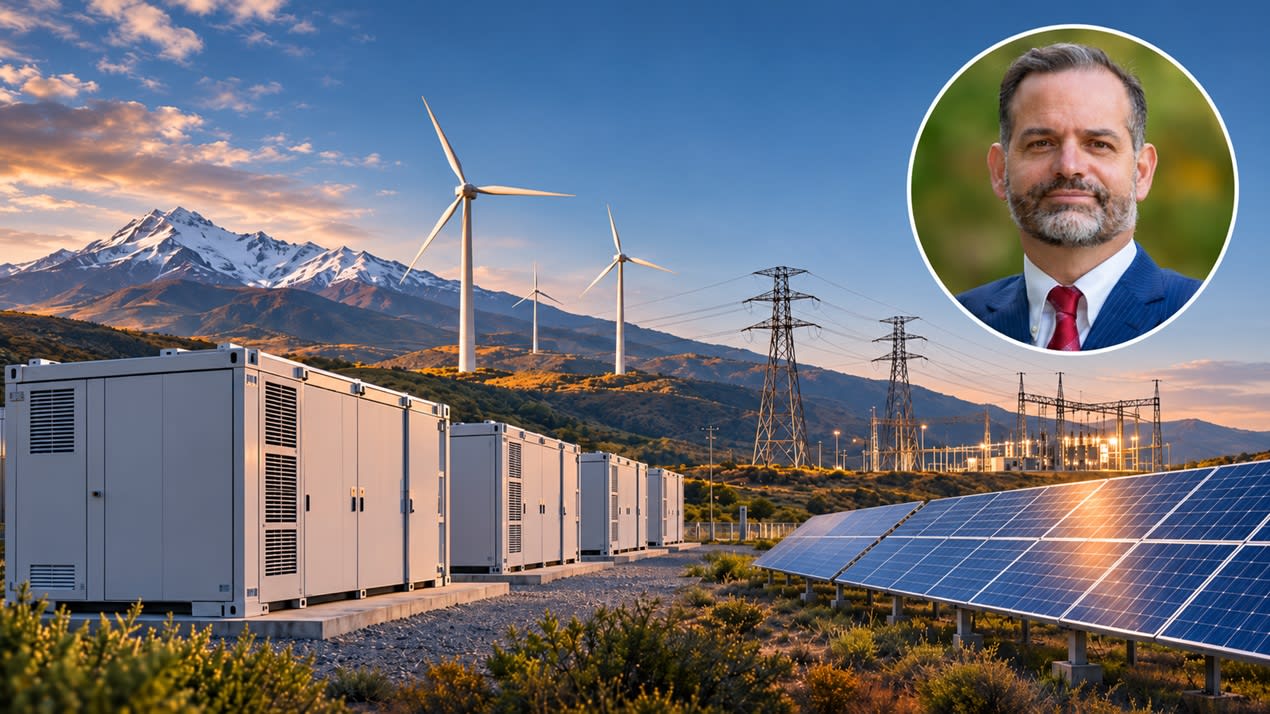
Thus, the upcoming completion of a project finance operation for a solar project with batteries and the prospect of doubling its renewable portfolio mark the next steps for FDN, in parallel with a strategy that aims to strengthen Colombia's energy security through investments in generation, natural gas and electricity networks.
 By Florencia Guglielmetti
 By Emilia Lardizabal

 By Ailén Pedrotti