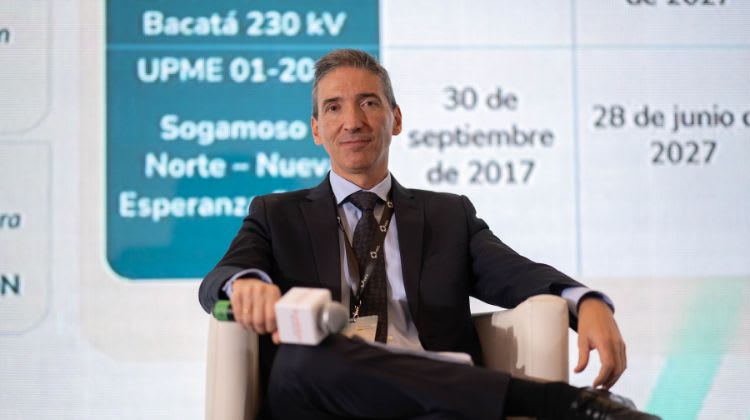
Argentina's Energy Secretariat expressed its support for amending Law No. 27,191 , which expires on December 31, 2025 , to guarantee a 20-year extension of tax stability .
The current regulations, approved a decade ago, were key to incentivizing the construction of renewable energy projects in a context where the technology was still in its infancy and expensive. "The law was necessary, and the result was positive."
Thanks to that system, today more than 17% of electricity generation comes from renewable sources, and the goal is to reach 20% by mid-2026,” said María Tettamanti , head of the national energy ministry. However, the situation has changed considerably.
Technology has advanced, reducing the costs of constructing renewable energy projects, meaning that many items included in that law no longer make sense to extend beyond December 31, 2025,” he added. Specifically, the country achieved a 16.5% share of its electricity supply from renewable energy sources in 2024 , with some months exceeding 20%, although it has not yet reached the legal target of 20% participation by the end of 2025. However, the national government is not promoting an update to that target nor does it foresee adding additional tax incentives.

Rather, the focus is on providing long-term predictability . The debate has already begun in the Industry Committee of the Chamber of Deputies , where they are analyzing extending the law without modifying the renewable energy participation target or introducing further tax benefits.
Therefore, the private sector emphasizes that the biggest obstacle is not the lack of incentives, but rather country risk and regulatory volatility. The official proposal includes a guarantee for two decades that no new taxes will be imposed on the access and use of renewable energy sources , a recurring concern for the sector, which seeks to avoid tax burdens at the national, provincial, or municipal level. "Renewable technologies are capital-intensive, and there is no better way to encourage investment than to reduce the risks associated with that investment."
“And the risks are reduced by lowering country risk, regulatory risks, and also costs, and among the costs are tax costs,” the Energy Secretariat stated. In this context, the Government considers that the current regime has already fulfilled its initial objective and that current market conditions allow renewables to compete with other technologies without the need for subsidies. “ Today, renewables are perfectly positioned to compete with other technologies,” Tettamanti pointed out, in accordance with the guidelines that seek to enable free contracting, marketing, and competition in wholesale electricity market contracts. So much so that, at the beginning of the year, the Energy Secretariat reinstated thermal, hydroelectric, and nuclear power plants to participate in the Term Market (MAT) , provided they have a commercial commissioning date after January 1, 2025. And it is worth remembering that, from the date the MAT comes into effect, distributors in the Wholesale Electricity Market (MEM) must cover at least 75% of their seasonal demand through bilateral contracts.
This means that each distributor will have to source its energy through long-term agreements with generators or retailers, rather than relying exclusively on centralized dispatch. " We believe this is the way for companies to freely choose their energy provider , considering not only price, but also their own compliance with environmental or corporate regulations," Tettamanti stated.
Transmission works: focus on private financing Beyond regulatory definitions, the Government is also working to resolve bottlenecks in electricity transmission capacity , especially in the CABA and Greater Buenos Aires region, where the network is at its limit.The
The projects have already been identified, and the aim is for them to be privately financed , without the use of public funds. The alternative being considered is a public works concession , whereby the company building the lines would recoup its investment over the long term.To make this possible, the Executive is working with
International organizations that can provide guarantees to reduce financial risk. One of the selected projects is AMBA I, with more than 500 km of infrastructure that will improve supply capacity in the Buenos Aires Metropolitan Area, reducing the need for inefficient generation and improving system reliability in one of the country's main consumption centers, where 40% of national energy demand is concentrated. "For the investment in transportation in Greater Buenos Aires, while the final price will obviously be determined by the outcome of a bidding process, we estimate it could be around US$1 billion," noted the head of the national energy ministry. "It is essential that there be legal certainty for those carrying out the works.""When investors see that they can make the investment and that they will be able to repay that investment, which is very long-term, and that there won't be any changes to the rules of the game, they invest," he concluded.

 By Florencia Guglielmetti
 By Energía Estratégica

 By Matías Medinilla

 By Emilia Lardizabal