


Google announced an investment of at least €13 billion in Finland during 2027 and 2028 , which the company describes as its largest single investment in Europe. The package will be used to expand digital infrastructure and artificial intelligence capabilities, with new data centers and supporting assets.
The rollout will also have a strong energy component. Google will support the expansion with new wind power capacity, storage, agreements linked to nuclear generation, and measures to strengthen the flexibility of the Finnish electricity grid .
Among the assets already planned is a 94 MW battery system near its Kajaani facilities, which is scheduled to become operational by the end of 2027. In addition, onshore wind power purchase agreements bring the company's new supported capacity to 629 MW .
The strategy also includes a PPA with Fortum associated with extending the lifespan of the Loviisa nuclear power plant by 22 years , as well as a memorandum of understanding between the two companies to explore new flexible capacity and possible business models that improve the viability of future reactors at that site.

Google is thus seeking to ensure a reliable and carbon-free electricity supply to support an expansion that includes Hamina, Kajaani, Muhos and Vaala , with a special focus on the north of the country.
The company stated that the choice of new locations in that region is due to the possibility of leveraging existing grid infrastructure near carbon-free energy sources. The goal is to reduce the need for new electricity investments and contain overall system costs.
During the initial construction phase, between 2027 and 2028, Google estimates that the plan could contribute an annual average of €3.6 billion to Finland's GDP and generate more than 37,000 jobs in the country.
Of that total, approximately 16,000 jobs would be in the construction sector. Once the new infrastructure is operational, the company projects an impact equivalent to about 7,000 jobs annually across direct operations, suppliers, and related economic activities.
The investment deepens a presence that Google has maintained in Finland for more than 15 years, with the Hamina data center as one of its main assets.
This facility arose from the conversion of an old paper factory acquired in 2009 and already incorporated solutions such as seawater cooling and heat recovery to supply the local urban heating network.
Nuclear, wind and batteries to sustain the new demand
The energy component becomes one of the central axes of the expansion.
The agreement with Fortum seeks to provide financial support for the extension of the operation of Loviisa, a power plant that currently supplies around 10% of Finland's electricity and employs about 580 people.
In parallel, Google and Fortum will analyze new flexibility and generation solutions to support the growing demand for data centers, as well as explore schemes for potential new reactors.
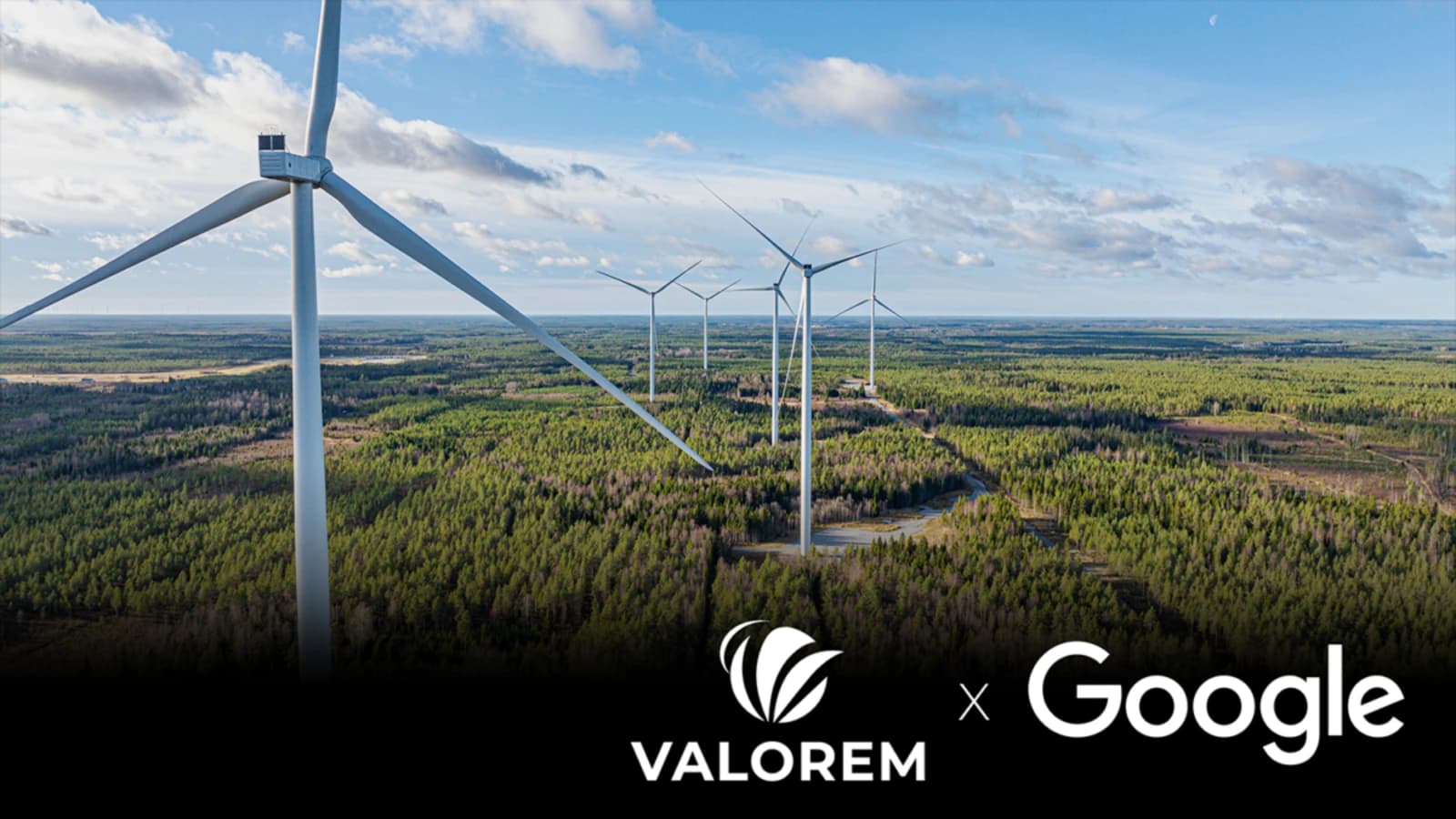
The company also expanded its wind power agreements with Valorem and Suomen Hyötytuuli , bringing the new onshore capacity supported by its contracts to 629 MW.
One of these developments is the 148.5 MW Matkussaari park, located in South Ostrobothnia and operational since May 2025. The project has 27 Nordex N163 wind turbines of 5.5 MW and is part of the 313.5 MW VIIATTI complex.
This portfolio will be complemented by the planned 94 MW BESS in Kajaani, designed to provide flexibility to the system, help balance the grid and moderate price volatility during periods of low wind power generation.
The €13 billion plan thus combines digital expansion and new energy infrastructure in one move, with Finland positioning itself as one of the main European growth hubs for Google's data centers and artificial intelligence.