


Grenergy closed a EUR 100 million senior non-recourse financing for Oviedo , its 618 MWh stand-alone BESS project , in the first transaction of its kind completed in Spain.
The agreement, which also includes credit lines, was signed with Santander and Sumitomo Mitsui Banking Corporation (SMBC). The transaction opens a new financing avenue for stand-alone storage facilities, without associated renewable generation, in a market that needs greater flexibility to manage its solar surpluses.
Oviedo has already begun construction on an industrial site adjacent to the La Estrecha substation in La Corredoria. This location will allow the battery system to be directly connected to the electrical grid, reducing the additional infrastructure required for its commissioning.
Grenergy expects the plant to begin operations during the first half of 2027. The project also has a long-term contract signed with an international energy company with an investment-grade credit rating, which will be valid for ten years starting in 2028.

The combination of non-recourse financing and long-term revenue contracts represents an advance for the bankability of stand-alone BESS projects in Spain, where a large part of the projects still depend on revenue expectations linked to arbitrage, electricity markets and ancillary services.
“Spain needs to decisively promote energy storage to harness the solar energy that is currently wasted during the middle of the day and release it when it is most needed, thus reducing gas consumption during peak hours,” said David Ruiz de Andrés , CEO of Grenergy.
The executive noted that batteries will be a central component in achieving a more flexible, competitive, and independent electrical system, and considered that the Oviedo operation represents a new milestone for the development of energy storage in the country.
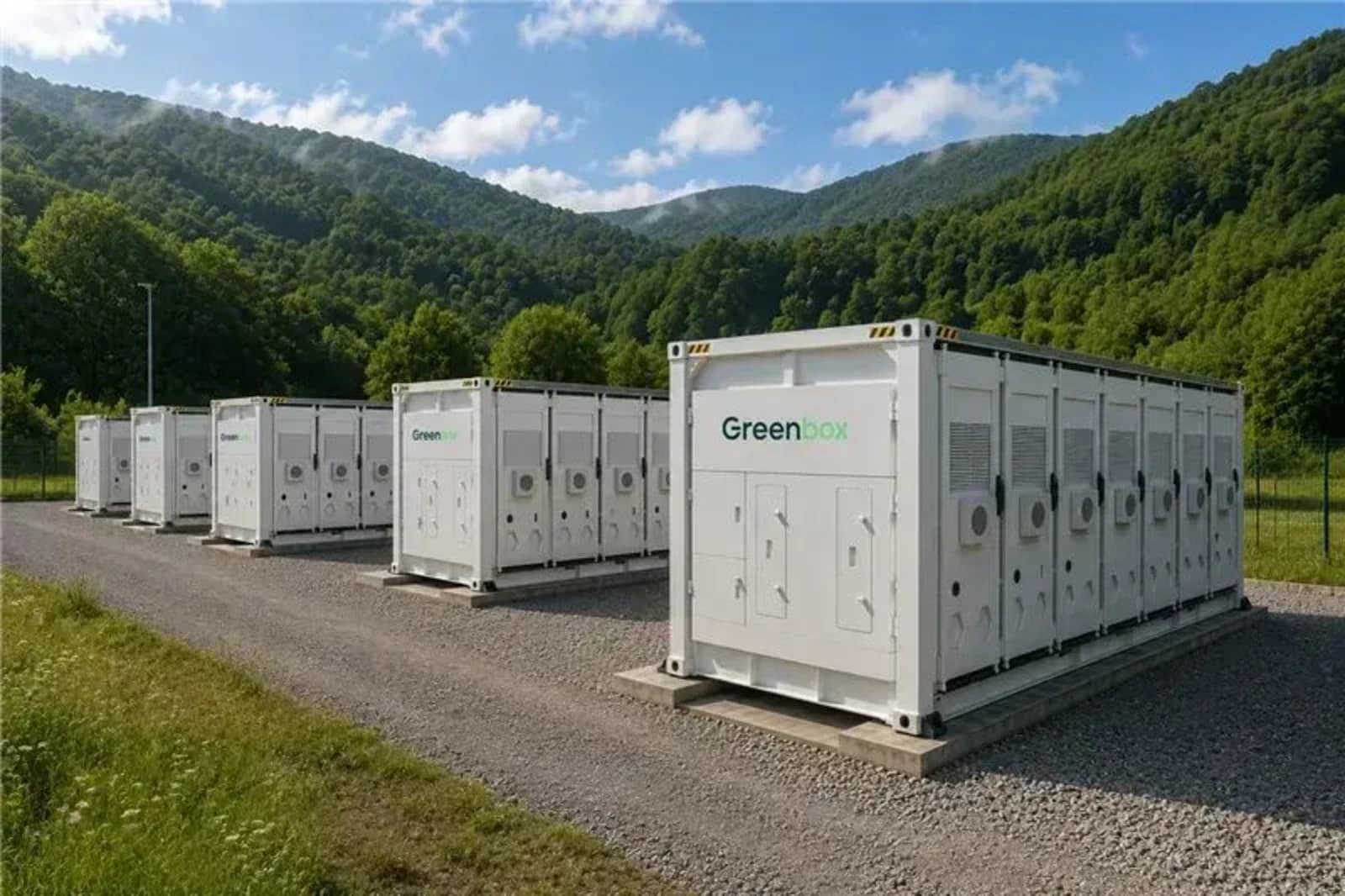
The asset will be Greenbox's flagship project in Spain, Grenergy's platform exclusively dedicated to the development of independent storage systems in Europe.
Greenbox's portfolio is close to 30 GWh distributed across six markets: 7 GWh in Italy, 6 GWh in Spain, 5 GWh in Poland, 5 GWh in Romania, 4 GWh in the United Kingdom and 2 GWh in Germany.
Unlike hybrid projects, stand-alone systems connect directly to the grid and operate independently of a solar or wind power plant. Their function is to store electricity during periods of lower prices or greater surplus and release it when demand increases or renewable generation decreases.
This capability allows solar production to be shifted from the central hours to the afternoon and evening, reducing curtailments, responding to local restrictions, and providing flexibility services to the electricity system.
Spain is thus consolidating its position as one of Grenergy's priority markets. The company is combining stand-alone storage projects with hybridization initiatives, within a strategy that seeks to capitalize on the growth of solar power generation and the need to incorporate dispatchable capacity.
The banking sector is beginning to recognize storage as a new asset class.
Santander believes the financing marks a turning point for the sector and could facilitate the development of similar new operations in Spain.
“We believe this milestone will pave the way for the development of a new asset class, essential to accelerating the energy transition,” said Javier Trueba, CEO of Banco Santander.
The executive stressed that the future of the electricity system will depend on greater flexibility, smarter energy management, and the strengthening of the grid, functions in which batteries will play an increasing role.
SMBC also placed the operation within the process of adapting the Iberian system to greater renewable energy penetration. Rafael Villergas, Head of Structured Finance for Iberia at the bank, noted that independent BESS (Basic Energy Service Systems) will be fundamental to strengthening the electricity grid.
The financing of Oviedo demonstrates that stand-alone projects are beginning to attract bank capital under structures typical of infrastructure financing, although their replicability will depend on the stability of income, regulatory evolution and access to contracts capable of reducing market exposure.
With 618 MWh, a ten-year contract and EUR 100 million in financing, the project becomes a benchmark for a segment that will have to grow rapidly if Spain intends to take advantage of its renewable production, reduce gas consumption during peak hours and meet its storage targets.