Zenit Group surpasses 1040 MWp of installed solar power and expands its presence in the Argentine renewable energy market with the addition of new photovoltaic projects in Formosa and Chaco. The company reaches this milestone while simultaneously executing nine projects, representing approximately 300 MW under construction .
The expansion is supported by an operational structure that combines specialized teams, proprietary machinery, and the capacity to intervene at different stages of projects. To date, the company has installed more than 1.6 million photovoltaic modules , a figure that reflects the scale of its construction activity.
Its growth mirrors the advancement of solar power generation in Argentina, where installed capacity reached 3,015 MW in September 2016 , according to CAMMESA data. During that month, photovoltaic production registered a year-on-year increase of 23%, while renewable energy sources covered by Laws 26,190 and 27,191 supplied 22.7% of the national electricity demand.
The outlook also shows opportunities for expansion. A study prepared by Energy Markets for the Argentine Chamber of Renewable Energies (CADER) projects that the country could exceed 4,000 MW of solar capacity by 2030 , based on announced developments. This forecast represents a potential growth of at least 985 MW compared to the capacity recorded in September 2026.

In this scenario, the activity of companies specializing in construction becomes relevant to realize new developments, especially in a context where projects require coordination of supplies, availability of equipment and compliance with construction schedules.
From Cuyo to northern Argentina: Grupo Zenit deploys nine construction fronts for 300 MW
Currently, Grupo Zenit has around 300 MW under construction distributed across nine projects , with operations in San Juan, Mendoza, Santiago del Estero, Corrientes and Buenos Aires, in addition to new projects in Formosa and Chaco.
Expanding its territorial presence represents a new operational challenge, as it requires organizing human resources, machinery and logistics in different provinces, according to the technical characteristics and deadlines planned for each installation.
Mendoza accounts for a significant portion of its experience, with over 400 MWp of projects completed in the province and a history of electromechanical contracts exceeding 150 MWp for a single project. Its involvement also includes work related to capacity expansions.
Among the projects identified in their portfolio are Anchoris II and IV, with 145 MWp, the first stage of the San Rafael Solar Park of 100 MW and its expansion by 40 MWp. In addition, they developed a 60 MW park in the Malargue department, Los Molles.
In San Juan, the company has experience working on photovoltaic power plants of varying sizes, including mechanical assembly and electrical infrastructure. Among its previous projects are the 130 MWp San Juan Sur project and the 24 MWp Tocota project.
Company representatives say they are finalizing 50 MWp for the Provincial Energy State Company (EPSE San Juan).
Its activity also includes developments under EPC (engineering, procurement and construction) modality in Santiago del Estero, with projects such as Bandera, of 24 MWp, and Añatuya, of 12 MWp.
In Corrientes, the company participates in projects that integrate mechanical and electrical assembly, while the incorporation of new initiatives in Formosa and Chaco extends its operations to other points in northern Argentina.
Continue reading
Up to 200 workers per project: the operational muscle of Grupo Zenit
To sustain this level of activity, Grupo Zenit has its own machinery and equipment intended for tasks such as pile driving, assembly of structures, installation of panels and execution of electrical infrastructure.
The scale of their contracts is also reflected in the mobilization of personnel. In their major projects, the workforce has reached around 200 employees on a single project , depending on the scale and stage of construction.
The scope of their services ranges from engineering and component acquisition to electromechanical assembly, cable laying, connection, commissioning, operation, and maintenance of facilities.
From solar parks to batteries: Zenit Group expands its energy business
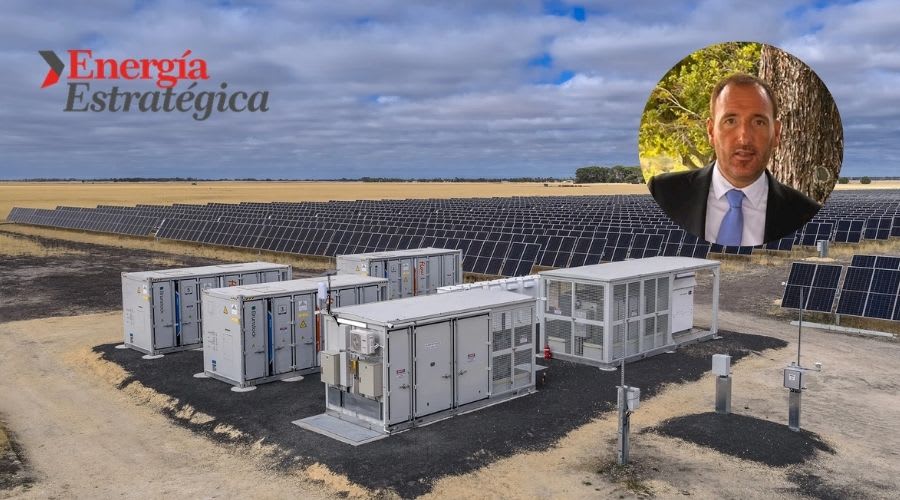
In addition to its photovoltaic activity, Grupo Zenit is beginning to incorporate services linked to battery storage systems , known as BESS.
In the province of Buenos Aires, it is currently involved in commissioning tasks for this type of facility, expanding its scope of action towards a technology that is gaining greater prominence in the Argentine electrical system.
This diversification coincides with the development of new storage projects. In July 2026, the national AlmaSADI tender awarded 700.5 MW distributed across 20 projects , according to Energía Estratégica.
The call received 235 technical bids for 8338 MW , more than eleven times the power finally awarded, with an average price of $8,427 per MW per month.
The geographical distribution of the awarded capacity also reveals opportunities in the north of the country. The Chaco-Formosa region received 161.5 MW of awarded capacity , while Misiones-Corrientes obtained another 50 MW.
While these awards do not imply a contractual participation by Grupo Zenit, they reflect the growth of a segment towards which the company is beginning to extend its technical capabilities.
Storage systems allow for managing electricity availability, providing operational flexibility, and complementing renewable generation, particularly in scenarios of production variability and infrastructure constraints.
For specialized construction companies, this technology opens up new opportunities in electrical integration activities, equipment installation, testing, commissioning and start-up.
With more than 1 GWp built, nine simultaneous projects and nearly 300 MW under construction , Grupo Zenit expands its activity in the Argentine renewable market.
The new developments in Formosa and Chaco are added to a portfolio that combines photovoltaic construction, electromechanical services and participation in storage infrastructure, in a sector that continues to add capacity and diversify its territorial presence.

 By Florencia Guglielmetti
 By Energía Estratégica

 By Matías Medinilla
 By Ailén Pedrotti