The Government of Honduras announced a public investment of more than Lps. 12578 million (USD 510 million) in the energy sector for the year 2026 , with the aim of consolidating the transition towards a cleaner, more efficient and sustainable model.
The plan includes strategic works such as the modernization of hydroelectric power plants , high-voltage transmission lines , and energy storage projects using renewable sources .
The budget includes significant allocations for the National Electric Energy Company (ENEE) , especially for renewing its hydroelectric infrastructure.
The modernization of the El Cajón, Cañaveral Río Lindo and El Níspero power plants is planned, which are fundamental assets for the national energy matrix.

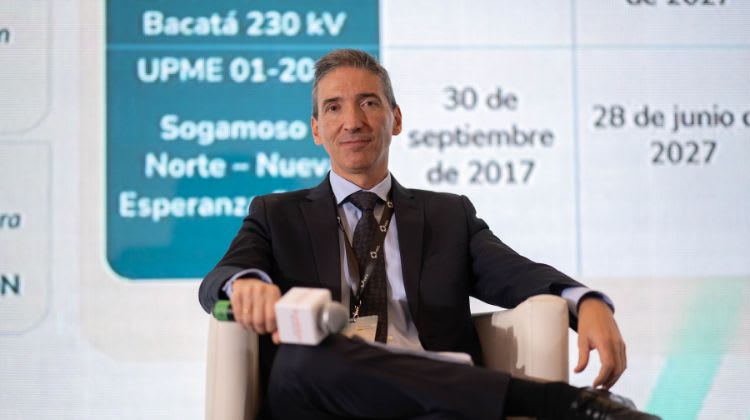
"There are important renewable energy projects for the country that are being considered in the disbursements of the 2026 general budget of the Republic," said the Secretary of Energy, Erick Tejada Carbajal .
The head of the energy portfolio stressed that final disbursements will also be made for the installation of a 50 MW solar farm and a 75 MW/300 MWh energy storage system , key projects to increase the resilience of the national electricity system.
In parallel, the budget will finance a decarbonization plan that involves the incorporation of solar energy with storage in state-owned power plants.
This approach seeks to reduce the use of fossil fuels and advance electrification with clean energy.
"The decarbonization project, which involves the installation of solar energy with storage at state-owned power plants, is being financed," Tejada Carbajal pointed out.
Furthermore, one of the most relevant components of the budget is the investment in the expansion of the electricity transmission network , which is included in the Transmission Network Expansion Plan 2022-2038 .
The project anticipates an expenditure of more than USD 200 million for 230 kV line infrastructure that will cross the national territory.
"The budget includes a component of just over $200 million for disbursements for transmission lines," the minister explained.
Among the emblematic works are the La Paz Erandique, Juticalpa II El Carbón, El Bijagual Zamorano and Masca Bermejo lines, considered crucial to ensure the reliability of the electrical system and enable the incorporation of new renewable plants.
"The iconic power lines that will cross the entire country will be crucial as a component of public investment in 2026 and for the integration of renewable energy over the next 8 years," Tejada Carbajal emphasized.
The Transmission Network Expansion Plan 2022-2038 , developed by ENEE, proposes an ambitious investment scheme that will allow new renewable generation plants to be connected to the country's main consumption centers.
This technical document identifies bottlenecks in the current infrastructure and prioritizes interventions in strategic areas such as the west and south of the country, where accelerated growth of solar and wind projects is expected in the coming years.
The La Paz Erandique line, for example, will strengthen transmission in the western zone, facilitating the entry of solar projects in Lempira and Ocotepeque.
For its part, the Masca Bermejo line will serve as a backbone for evacuating renewable energy towards the Atlantic coast, connecting future plants with the main distribution nodes.
In addition to the technical impact, these investments will bring significant social benefits .
The implementation of these projects is expected to generate thousands of direct and indirect jobs , especially in rural areas with high rates of energy poverty.
The electrification of isolated communities through hybrid systems with storage is also part of the inclusive approach of the decarbonization plan.
"With this investment, we not only improve the reliability of the national electricity system, but we also guarantee fairer and more equitable access to energy for the entire population," Tejada Carbajal emphasized.
The focus on storage responds to the need to integrate intermittent sources such as solar photovoltaics without compromising grid stability.
The 75 MW/300 MWh battery system, scheduled to become operational in 2026, will be one of the largest in Central America and will function as backup during periods of low renewable generation or peak demand.
These technologies will maximize the use of available clean energy , reduce operating costs, and decrease dependence on imported fossil fuels, which in turn will improve the country's trade balance and contribute to its climate goals .
Finally, the public investment strategy in energy is aligned with the international commitments assumed by Honduras under the Paris Agreement and the Nationally Determined Contribution (NDC) .
The Government seeks to position itself as a regional leader in just energy transition , with a focus on sustainability, inclusion and resilience to climate change.

 By Florencia Guglielmetti

 By Energía Estratégica

 By Matías Medinilla
 By Emilia Lardizabal