


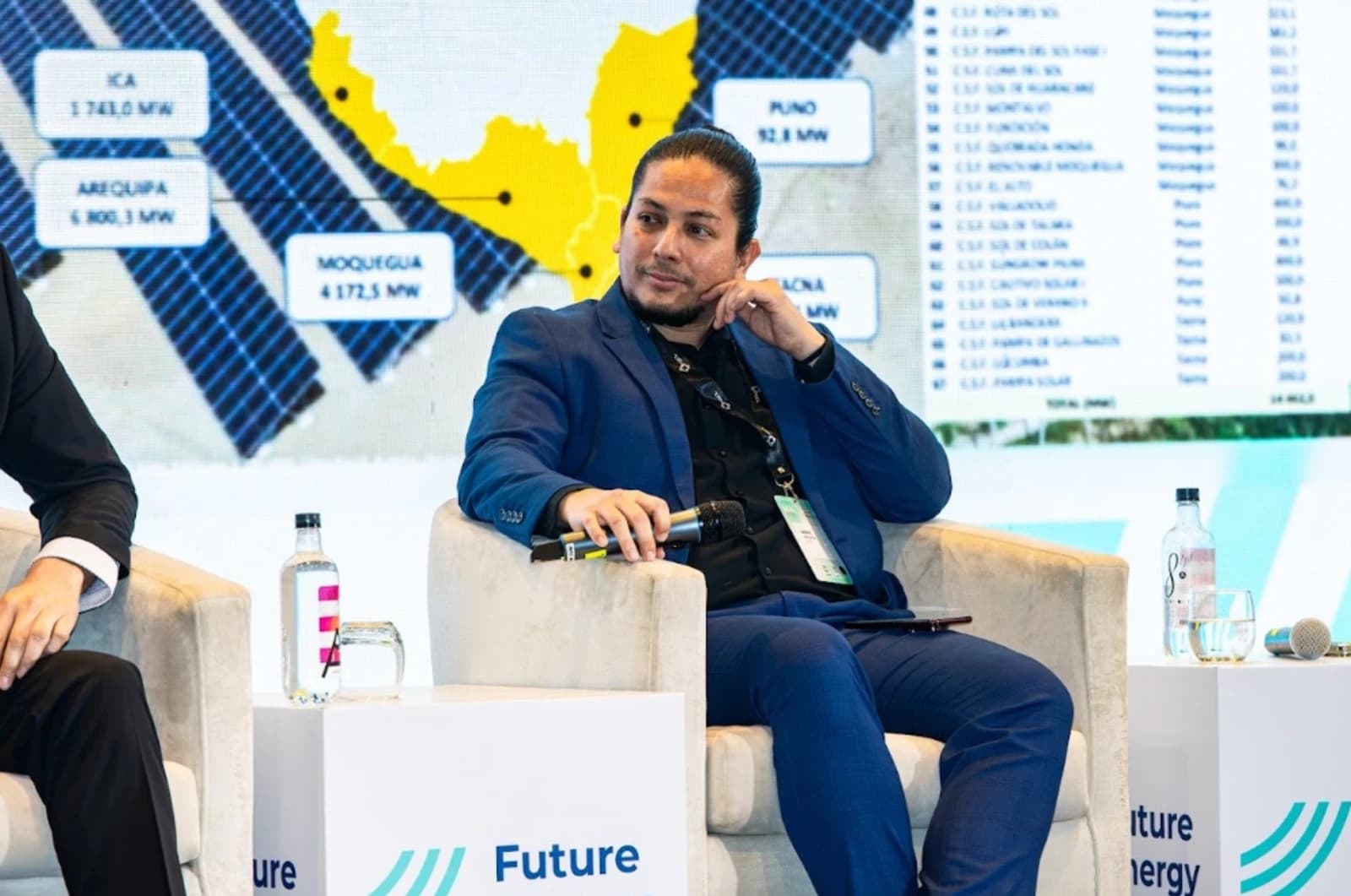
Huawei estimates that Peru could incorporate between 6 and 8 GW of solar projects by 2030 , according to Gabriel Valencia , Commercial Manager of the company, during Future Energy Summit (FES) Peru 2026.
The potential stems from a considerably larger portfolio. Valencia estimated that around 12 GW of projects are currently awaiting development, a figure close to the universe surveyed by Osinergmin: the agency registers 63 photovoltaic plants with Pre-Operational Studies approved by COES, totaling 13.4 GW , although only a portion of them have received final concessions.
The difference shows the gap that still exists between the identified pipeline and the initiatives that reached a more advanced stage of development.
The change is also beginning to be reflected in the business inquiries Huawei receives. “At the beginning of the year, we mainly received requests for photovoltaic solutions. However, as the year has progressed, we've seen a rise in requests for BESS quotes. These have started to grow,” Valencia noted.

Regarding the scale that storage could reach, he added: "We could be talking about approximately 25% or 30% of what solar projects will be."
As he explained, this addition responds to specific needs of developers, including capacity restrictions, the presence of weak networks, and the conditions of projects located in isolated areas.
Tenders, a key element to unlocking the portfolio
The possibility of converting that pipeline into new capacity will depend, among other factors, on the new electricity contracting scheme that Peru began to build after the approval of Law 32249 .
The regulation modified the previous system to allow distributors to contract for energy blocks or for both power and energy separately or jointly. It also defined long-term contracts, with terms of up to 15 years; medium-term contracts, with terms of up to five years; and short-term contracts, with terms of up to three years.
The separation between the two products expands the possibilities for participation of renewable technologies that do not necessarily provide firm power on the same terms as conventional generation.
For Valencia, however, the call for proposals alone does not guarantee that this change will translate into investments.
“The design of the auction is even more important than the auction itself,” he stated.
From their perspective, the guidelines should establish sufficiently clear criteria to distinguish between projects with real possibilities of execution and those that do not yet have the conditions to move forward, as well as opening up space for new participants and preventing opportunities from being restricted to established actors.
Continue reading
The other component will be the contractual structure. “From a commercial point of view, it is very important that there be bankability for these types of projects,” said Valencia, who emphasized that developers need agreements capable of supporting the financing of investments.
The new regulatory framework is moving in that direction, although it is still undergoing implementation. The Ministry of Energy and Mines (MINEM) has begun regulating the changes introduced by Law 32249, including new contracting mechanisms for regulated users.
BESS: from technical requirement to economic signal
In energy storage, the discussion is at a different stage. Valencia believes that Peru has already made progress in defining technical requirements, but still needs to consolidate remuneration mechanisms that allow generators to recover the investments necessary to provide new services to the system.
One of the steps was taken in February 2026 with the approval of the new Technical Procedure PR-22 , concerning the Revolving Reserve for Secondary Frequency Regulation. The resolution stipulated that COES conduct the first process to allocate reserves through the Hedging Market, with results applicable from January 1, 2027 .
In parallel, the Ministry of Energy and Mines published this year the draft Regulation of Complementary Services, which contemplates the incorporation of storage systems and other technologies capable of providing flexibility to the operation of the SEIN.
“What is definitely missing is the issue of compensation, of how to make this type of regulation economically profitable, not only for the manufacturer but also for the generators,” Valencia stated.
The definition will be relevant due to the impact of these solutions on the initial investment. According to the executive, incorporating batteries can represent between 10% and 20% additional CAPEX , depending on the required duration and the configuration of each project.
This expenditure, however, can enable other sources of value. In addition to meeting technical requirements, BESSs can participate in ancillary services and perform load shifting , storing electricity during peak production times to later shift its injection to other time slots.
Huawei also observes a growing role for inverters with grid-forming capabilities, able to provide functions such as synthetic inertia and primary frequency regulation. Peru has already defined technical parameters for the contribution of synthetic inertia, another step in adapting the grid to a greater presence of power electronics-based generation.
“This type of regulation is forcing the market to mature,” Valencia summarized.
Thus, the challenge for the Peruvian market is no longer just about generating a portfolio of projects, but about creating the commercial, financial and technical conditions that will allow a significant part of it to be put into construction during the next four years.