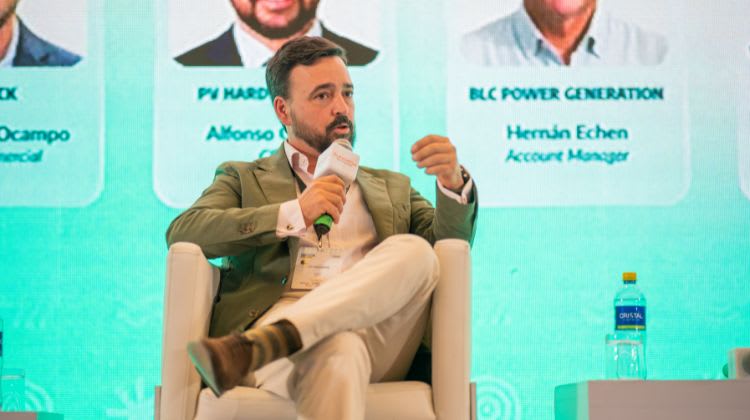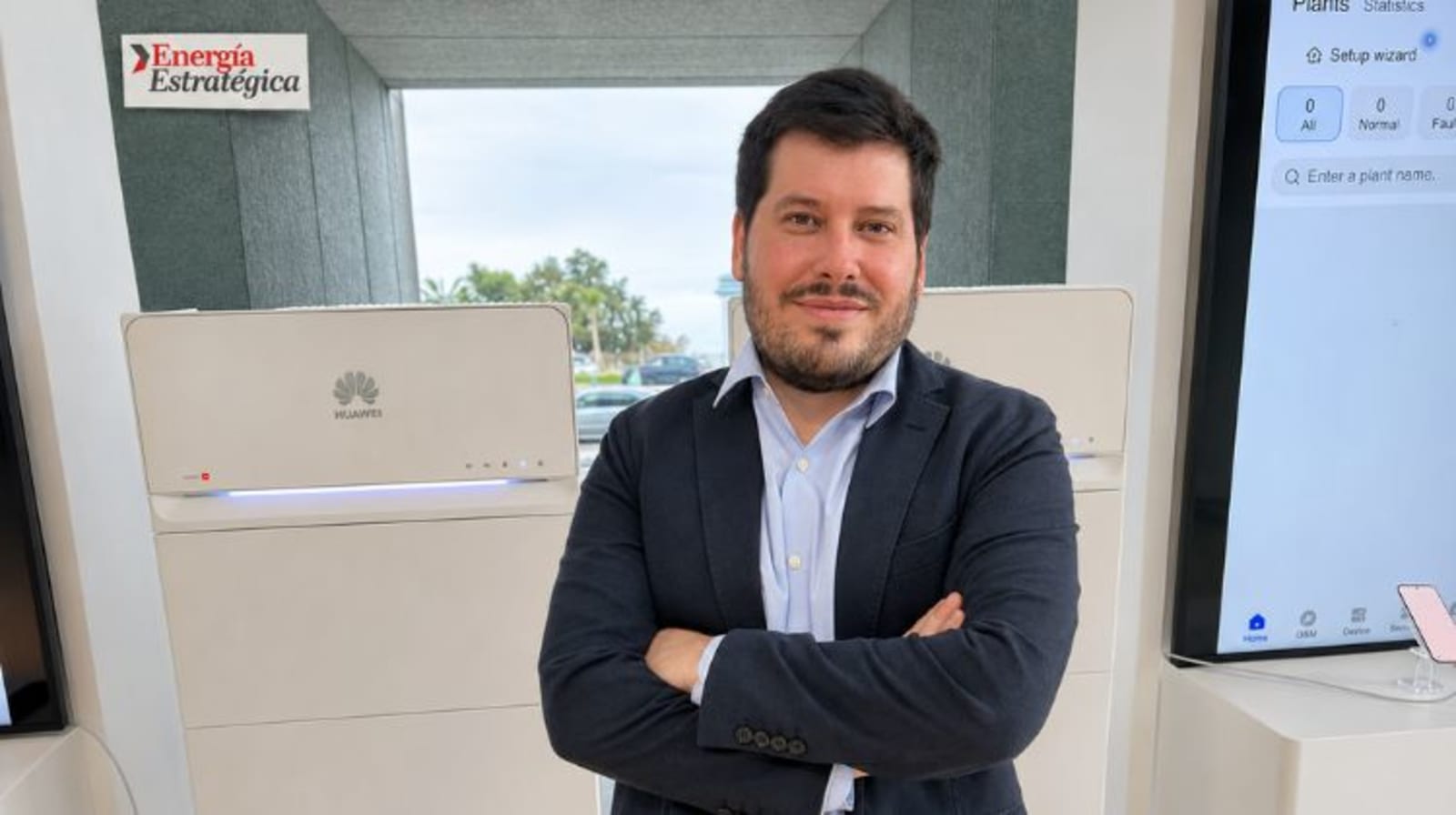
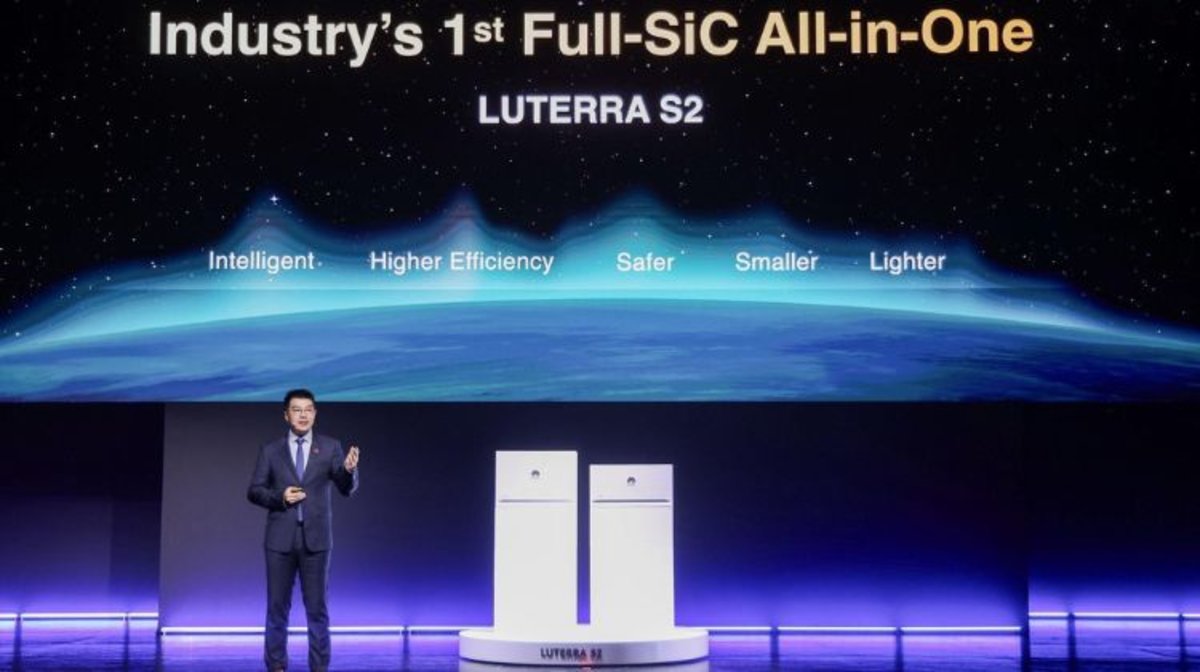
Pablo Sánchez-Blazquez, technical director of distributed generation for Huawei in Iberia, spoke with Energía Estratégica during the presentation of the Huawei LUTERRA S2 at an event organized by the company in Palma de Mallorca to detail the new features introduced by the new technology that will begin official commercialization in Europe in January 2027.
In short... How does LUTERRA S2 work?
It is a residential energy system that combines a hybrid inverter, a modular battery, and an electrical backup system into a stackable unit.
It's a hybrid inverter. In the previous version, we had, on the one hand, the inverter, which converts the direct current generated by the photovoltaic panels into alternating current, and, on the other hand, the battery. Now we've unified both components into a single unit.

We have also integrated the backup system, which was previously an external component.
Does this define “all in one”?
We call it all-in-one because it means that everything is integrated into a single product (inverter, batteries, backup...).
And what does that imply?
There are advantages for both the user and the installer. For the user, one is economic: manufacturing a single unit costs less than manufacturing three separate ones. And it also requires less space.
On the technological front, we've incorporated silicon carbide MOSFET transistors. This technology allows for higher frequencies and reduces heat loss. The electronics take up less space, weigh less, and offer greater energy density. By reducing heat loss, efficiency is also improved and noise is decreased. The user receives a more compact, lighter, and quieter device. Furthermore, we've carefully considered its appearance so it blends seamlessly into a residential environment.
It seems to be a product designed as just another household appliance...is that right?
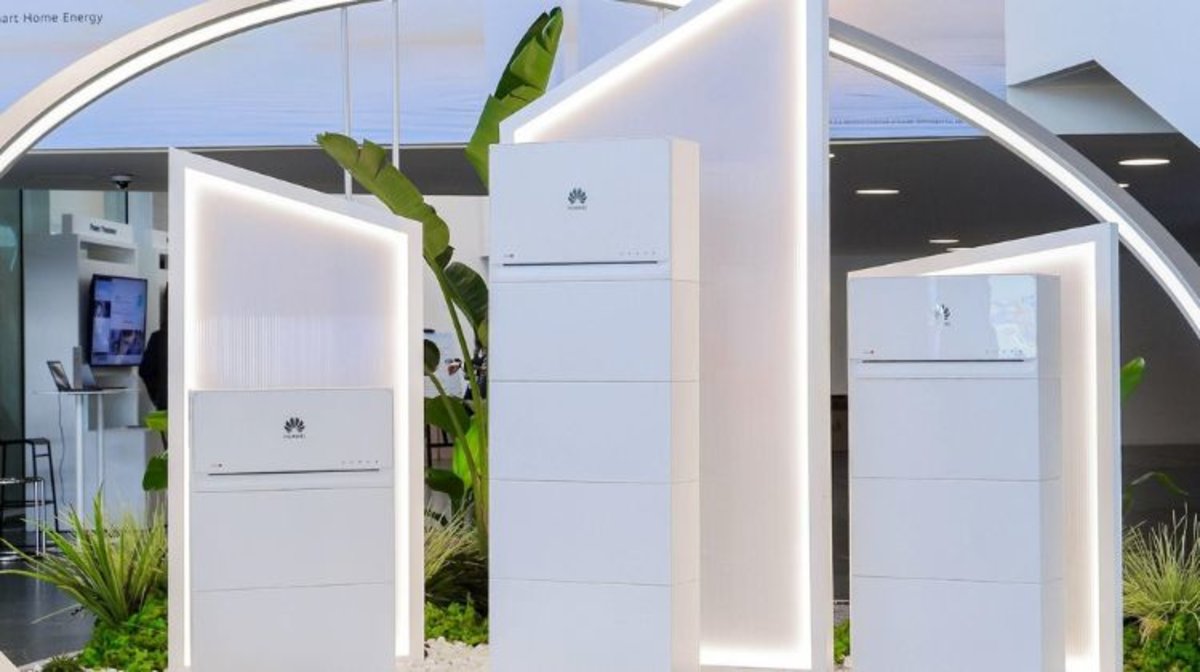
It's a product that will be in a home, so it's important that it complements the house and that the user feels comfortable having it there. That's why we aimed for the most minimalist design possible, with a white finish and simple geometric shapes that blend into the space.
This visual simplicity extends to the equipment itself and its assembly. It has a single format, color, and shape. Installation involves simply fitting one block into another, taking no more than 10 minutes. The design simplifies the installer's work.
Considering the variety of households and energy consumption... how flexible is it?
We have launched two versions, one single-phase and one three-phase. In both, the upper unit performs two functions: it acts as an inverter and as a battery management system (BMS). The battery modules are placed below it.
How many modules?
Between one and four modules can be installed, depending on the required storage capacity. The power of the top unit can also be selected according to each installation.
The expansion can also be done by connecting up to three units in parallel. From the smallest to the largest configuration, the single-phase version ranges from 2 to 6 kW. The three-phase version has various options, ranging from 5 kW to 20 kW in its highest power version.
How does it work in an "average" home?
As a reference, an inverter between 5 and 15 kW is typical for a home. Some installations require more power. For energy storage, we offer 5 or 7 kWh modules; up to four can be installed per tower, and up to three units can be connected in parallel. For an average home, the capacity could range from 5 kWh to 15 kWh, depending on the specific situation.
It's designed for commercial and industrial use, right?
The solution can also be suitable for a small business or small industry. Connecting three 20 kW units in parallel provides 60 kW, a considerable power output for a business with high energy consumption.
In storage, a tower with four 7 kWh modules reaches 28 kWh. Up to three 28 kWh towers can be connected per inverter, and up to three inverters can be installed in parallel in a single installation, allowing a maximum capacity per plant of up to 336 kWh.
There is a lot of intrigue surrounding the use of artificial intelligence in the system.
It's an evolution of the smart system we had already integrated. It uses weather forecasts to estimate how many hours of sunshine there will be the next day and how much energy the photovoltaic installation will produce hour by hour.
It also analyzes the user's consumption history: what times they typically consume the most and how that pattern changes between weekdays and weekends. With this data, it can predict how much they will consume and when.
Continue reading
Does it allow you to predict generation or does it also guide the user on when to take advantage of it?
It also offers recommendations. That's where the artificial intelligence comes in. In addition to forecasting generation and consumption, we can predict electricity prices. With these three curves, the system makes automatic decisions so the user can save as much as possible.
AI also provides support if the user wants to decide, for example, when to run a washing machine or charge an electric vehicle. They can ask the assistant this question and receive a recommendation on the most convenient time slot. To do this, the system takes into account how photovoltaic production, projected consumption, and electricity prices align.
Does the user have to configure the software to decide when to consume or dispatch energy?
A little configuration is needed to adapt it to each user.
If the user does not change any settings, what does the system do by default?
The basic mode automatically maximizes self-consumption and utilizes surplus energy. To get the most out of it, you need to tell the device which energy tariff the user has contracted.
In Spain, there are different types of tariffs: fixed, indexed, or regulated. Simply configure the one that applies to you, and the system will take it into account.
As a technology expert… what else would you describe about the new technology?
Above all, ease of installation. This is an advantage that is especially noticeable for the installer, because the product has been designed for quick and easy assembly.
The components are designed to connect wirelessly. The connectors snap into place when the modules are joined. First, prepare the installation area and attach the fixings to the wall or floor. Once this preparation is complete, the unit can be assembled in under five minutes.
To conclude…with the advancement of storage, what future do you see for independent investors?
We are in a period of transition. Something similar is happening in the automotive sector, where different technologies coexist. The same will happen with investors.
Some users know from the outset that they want to install a battery. For them, the integrated hybrid solution is the most suitable. Others prefer to start with an inverter and leave open the possibility of adding a battery later. The solution we offered previously is still a good fit for those customers.
The trend is to incorporate more and more batteries.
The technology is maturing, it's safer, and prices are improving.
This allows for greater savings, increased self-consumption, and progress towards a more sustainable use of energy.
Official Launch
This week Huawei presented the LUTERRA S2 at the Palma de Mallorca Conference Centre, before a full audience.
The meeting brought together customers, distributors, installers, authorities and professionals from the energy, storage and electric mobility sectors.
Huawei executives from Europe and the global team detailed the technological innovations of the system to an attentive audience, with particular interest among the distributors and installers present.
The program included a cocktail reception that allowed attendees to chat and exchange impressions about the launch.
About LUTERRA S2
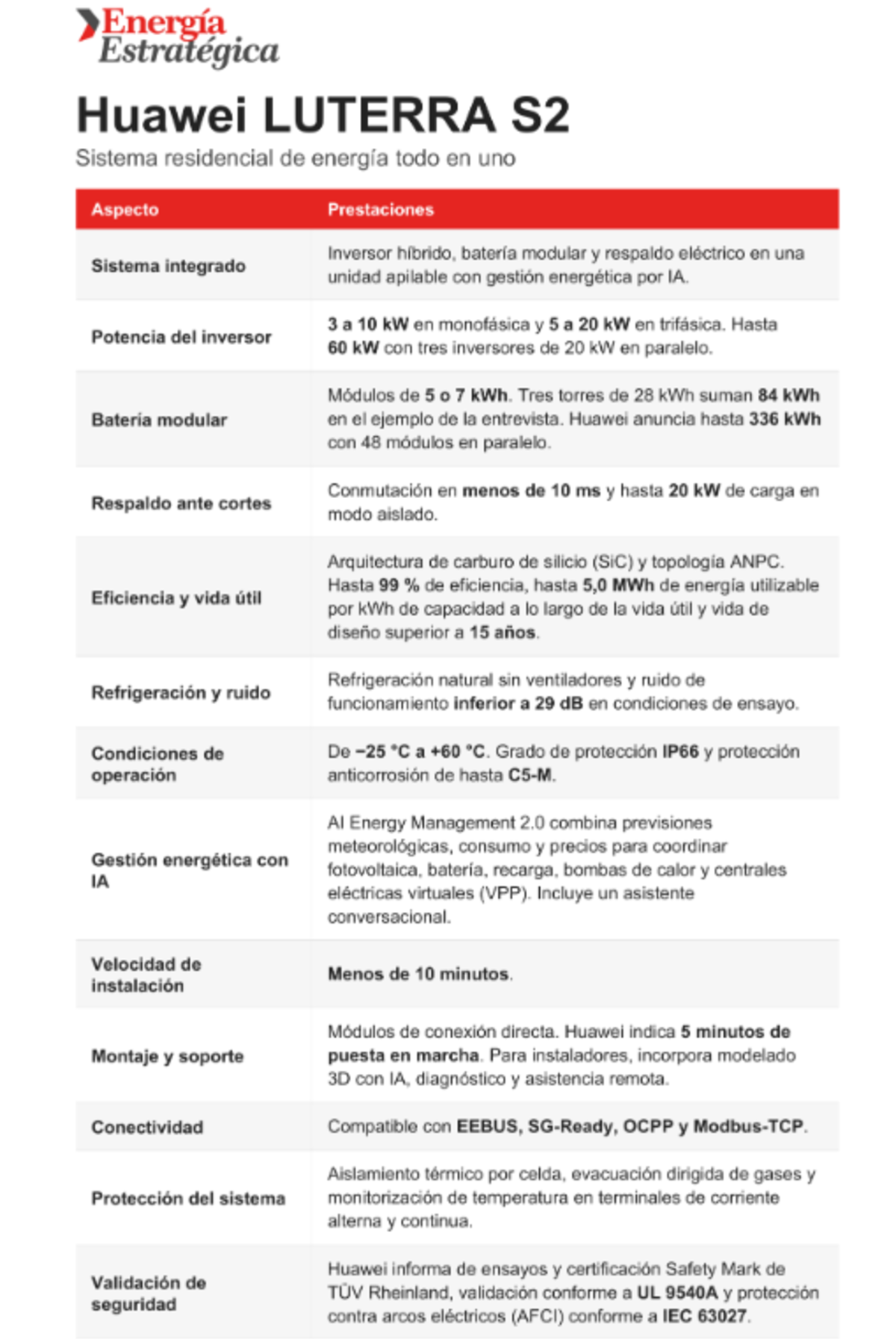
The Huawei LUTERRA S2 is a residential energy system that integrates a hybrid inverter, a modular battery, and a backup power system into a single stackable unit. It is available in single-phase versions from 3 to 10 kW and three-phase versions from 5 to 20 kW. Storage capacity can be expanded with 5 or 7 kWh modules, depending on the installation's requirements.
Its energy management platform combines forecasts of solar generation, consumption, and electricity prices to optimize self-consumption. It can also coordinate the charging of electric vehicles and the operation of compatible heat pumps. In the event of a grid outage, the backup system allows for powering loads in off-grid mode.
According to Huawei, the device achieves up to 99% conversion efficiency and operates below 29 dB under test conditions, with natural cooling and no fans.
 By Emilia Lardizabal

 By Matías Medinilla

 By Energía Estratégica