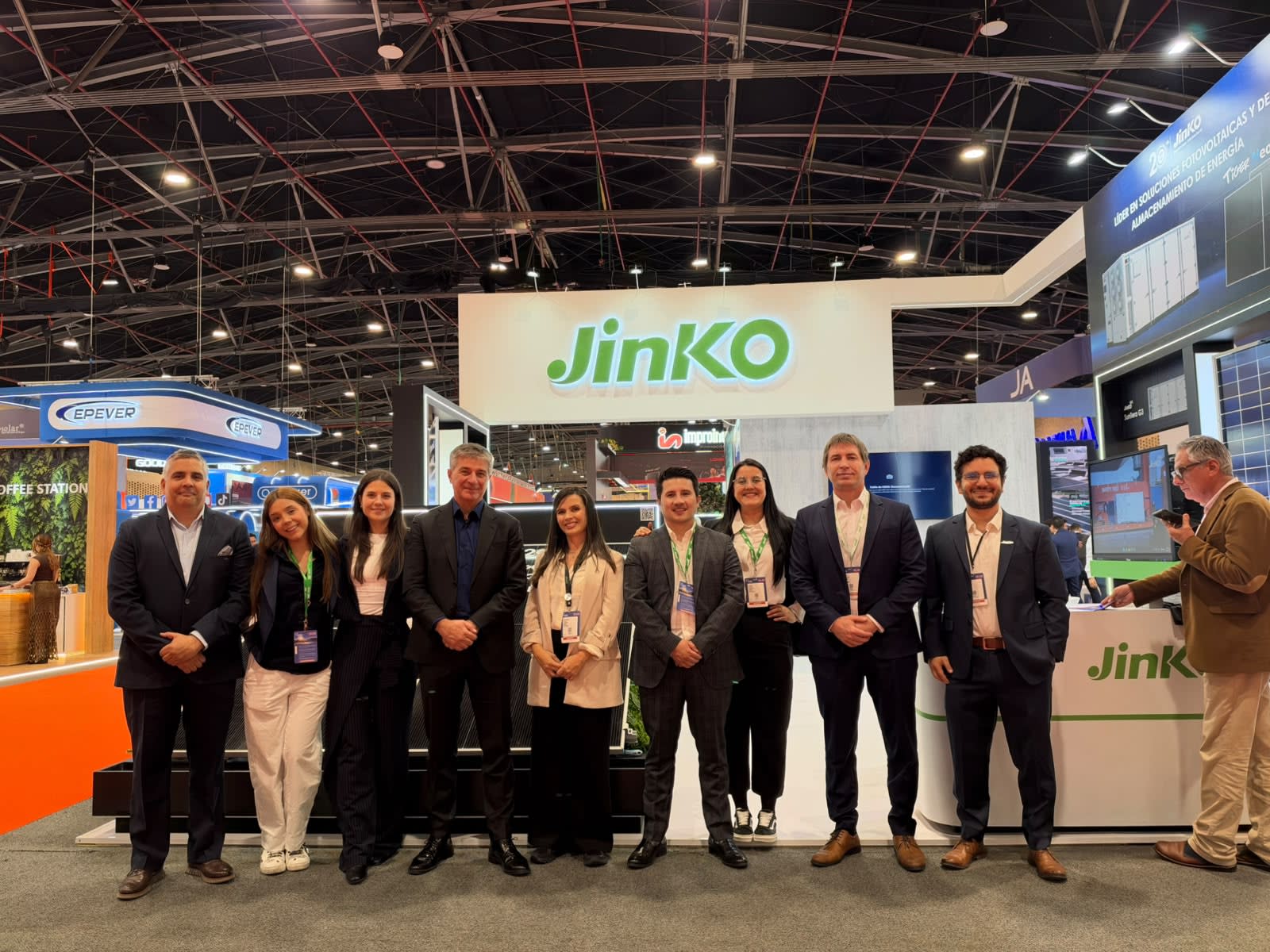
Jinko Solar expects to close 2026 with global deliveries of between 70 and 75 GW of photovoltaic modules , of which 4 GW correspond to Latin America , despite a 25% drop in Chinese demand.
The company is thus maintaining the volumes of the previous year, supported by a greater commercial participation outside the Asian giant.
“2026 was a very good year. As expected, there was a downturn in the Chinese market (around 25%) which impacted the volume of module deliveries worldwide. But we are already thinking about 2027, which I believe will be better,” said Alberto Cuter , Vice President of Jinko Solar for Latin America and Italy.
“How much can it increase in Latin America? It could be 15-20% compared to 2026 among all countries,” he said in an exclusive interview with Energía Estratégica during ExpoSolar Colombia 2026.

This scenario represents a shift in the geographical distribution of demand. While China is expected to maintain similar levels to current ones over the next fiscal year, Latin America presents greater expansion opportunities than those anticipated for Europe , where Jinko expects relatively stable performance.
In this context, the manufacturer also modified its commercial strategy, prioritizing contracts with better economic conditions and discarding deals that demand excessively low prices.
This policy takes on relevance after the preliminary financial results for 2025, when Jiangxi Jinko recorded revenues of 65.49 billion yuan (approximately $9.5 billion), a year-on-year decrease of 29.18% .
In the same period, the net loss attributable to shareholders reached 6.79 billion yuan (US$984.5 million) , compared to a profit of 98.9 million yuan (US$14.34 million) during 2024.
Given this scenario, the recovery of demand in international markets becomes more important for the manufacturer, which identifies particularly favorable prospects in Colombia.
“Colombia is really getting going. While Colombia didn't have many utility projects this year, next year it will have more than 2 GW of projects,” Cuter predicted.
Mexico is also among the markets with the greatest potential , while Ecuador offers opportunities associated with electricity supply difficulties.
In this latter country, the shrimp farming industry is among the sectors with specific supply needs due to scheduled power outages affecting its operations. This situation creates an opportunity for new photovoltaic installations intended for industrial consumption.
“Furthermore, the Argentinian market is also going to grow significantly. This year there were very few projects, but next year it will increase considerably, for example, with companies like YPF, 360Energy, and MSU,” stated the VP of Jinko Solar for Latin America and Italy.
Regarding Europe, Cuter estimates that photovoltaic demand is around 70 GW per year and believes that diversification of energy supply will continue to be a determining factor in sustaining investments.
The need to reduce dependence on imported fuels keeps solar power generation among the alternatives considered due to its shorter implementation times and competitive costs.
Globally, the industry's growth also reflects this trend. Cumulative photovoltaic capacity increased from 100 GW in 2012 to 1 TW in 2022 , while the second TW was reached just two years later.
Meanwhile, Jinko Solar reached 400 GW of modules sold worldwide , according to figures provided by the executive. The company began operations in 2006 and moved into cell and module manufacturing in 2009, supporting the sector's expansion with efficiency improvements and cost reductions.
Higher efficiency storage and modules: Jinko Solar's strategy
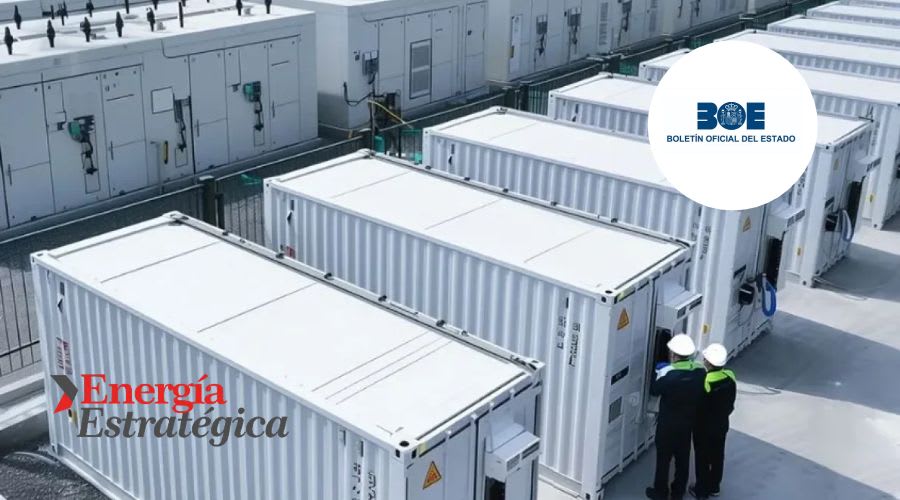
In addition to regional growth expectations, the Chinese firm is advancing in the battery business through its Jinko ESS unit , with specialized commercial, technical and logistics teams and new opportunities in Brazil, Chile, Mexico and Ecuador.
One of the main commercial focuses is on the Brazilian storage auction , where the company is working with its partners to position itself in future projects, especially considering that there are 296 GW BESS registered to participate (that volume will be reduced once the evaluation by the Energy Research Company is carried out)
“We are positioning ourselves very well with our partners, so we are very eager to see how it goes,” Cuter noted, while clarifying that in several countries the integration of batteries is beginning to gain more weight in negotiations, modifying the composition of commercial offers.
“Now almost all projects require batteries; about 20% have to be batteries,” he said.
Furthermore, technological innovation in solar energy remains another key element of their strategy. Tiger Neo 3.0 represents 30% of the company's global module sales in 2026 , while its market share in Latin America exceeds that percentage.
“In LATAM, more than 50% of what we are selling is Tiger Neo 3.0, because the region has understood the commercial advantage of the 3.0 to produce more energy,” the interviewee highlighted.
But the journey will not end there, as Jinko Solar has already presented and started production of the Tiger Neo 5.0 , with a module efficiency of up to 25.52% and a power of 510 W, mainly aimed at residential, commercial and industrial applications.
The product is already accepting purchase orders for Latin America and Europe, with "deliveries expected towards the end of 2026" , so it will be available for new developments during the next fiscal year.
“2027 will be challenging, but we already have a very solid team that has been doing a very good job for many years,” concluded the vice president of Jinko Solar.


 By Emilia Lardizabal


 By Energía Estratégica
 By Ailén Pedrotti